Hakone, Kanagawa Prefecture
Hakone My friend beat me in a petal-catching contest.
I’ve lost count of how many photos I’ve taken of the National Route 1 signs. I’ve driven this road more than any other, and I know every bend in the climb by heart. And yet, every trip turns up a detour I’ve never taken. There’s always another view waiting beyond a familiar stretch of road. That’s what keeps pulling me back up the mountain.
Some days I drive; other days, I leave the car at home. On those days in Hakone, I can spend the whole trip looking out the window, which feels like a luxury in its own way.
SpringEarly to mid-April
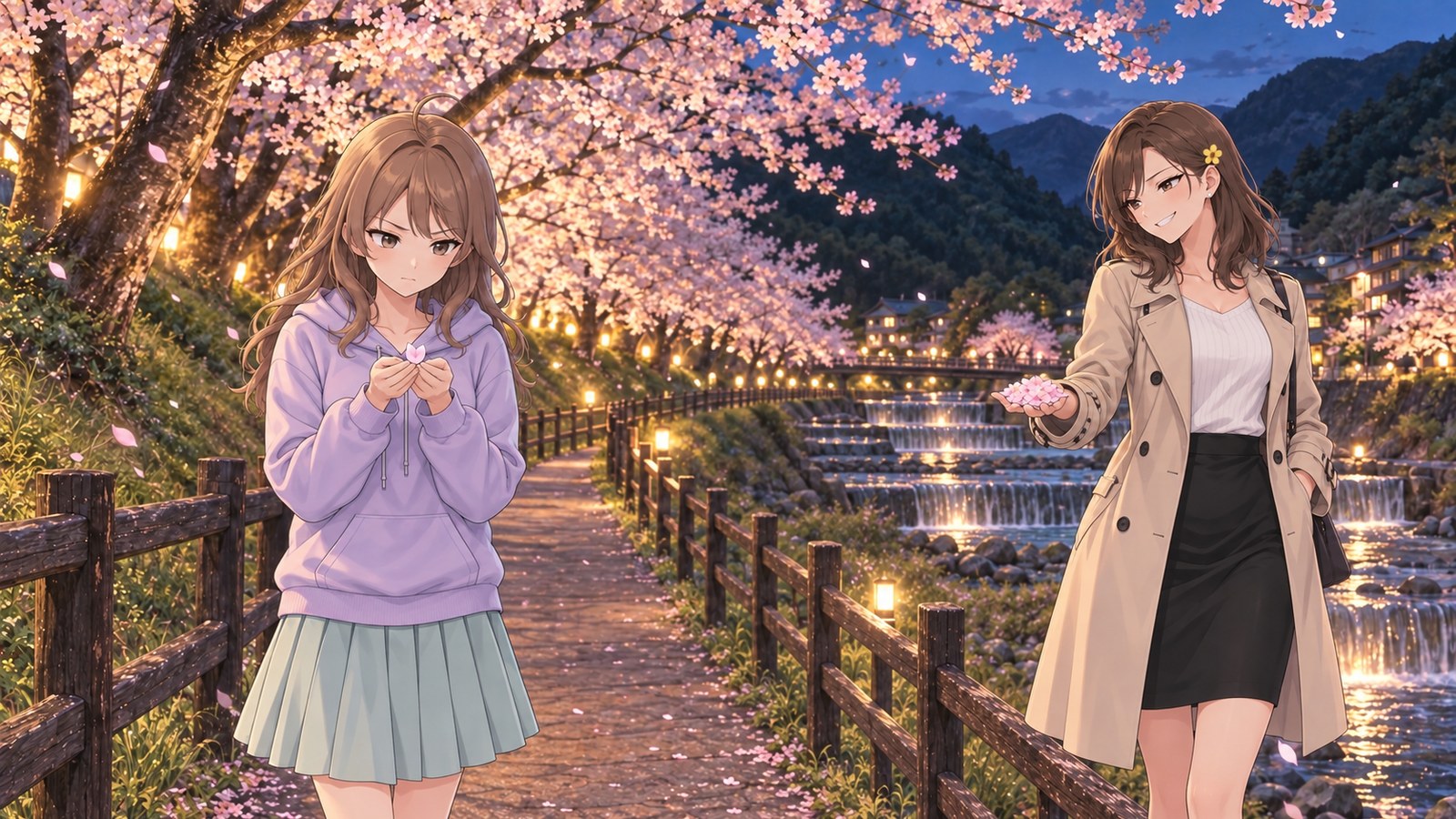
My petal and my friend’s triumphant grin
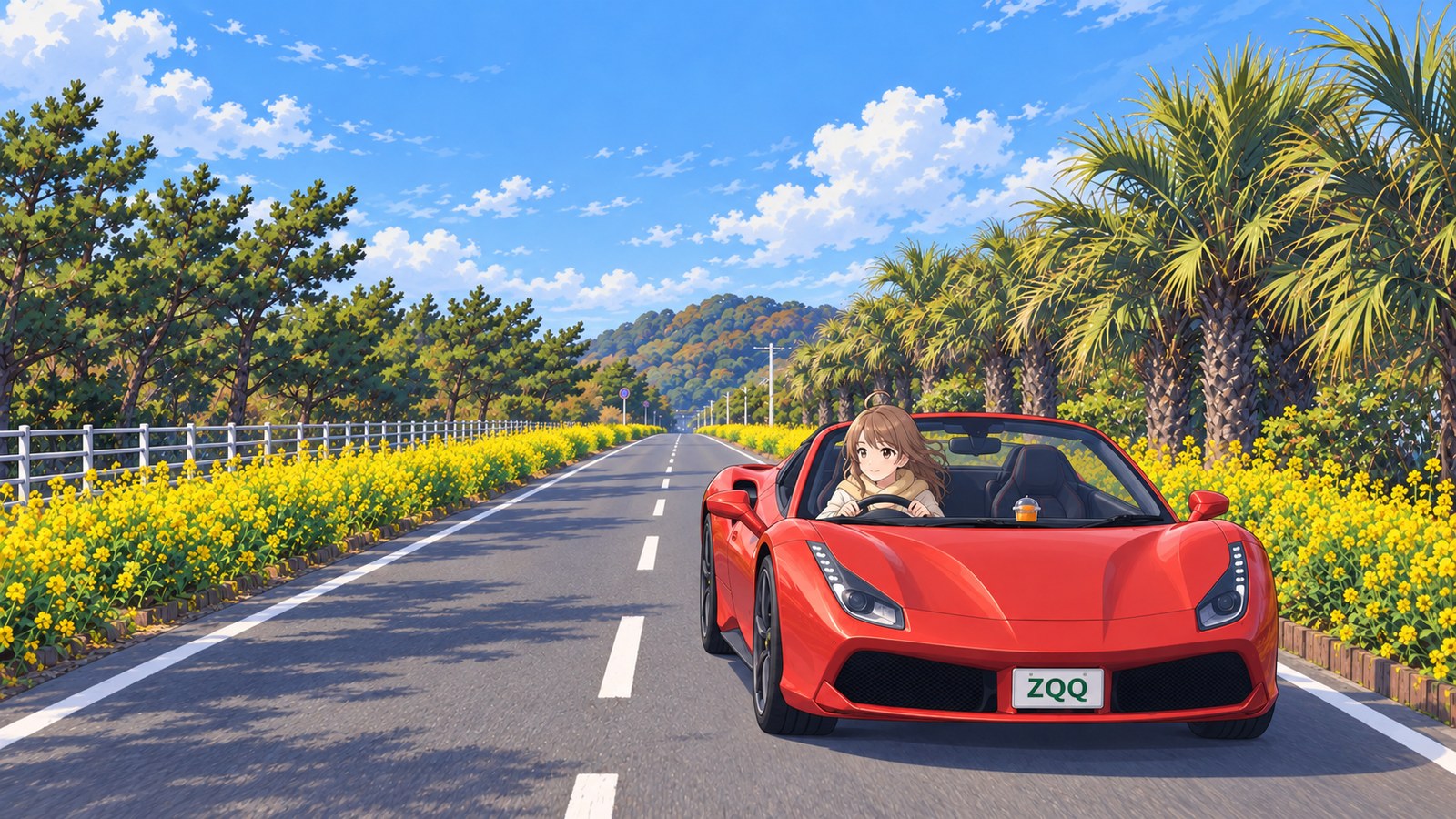
“I always buy my souvenirs first,” I said. My driving friend laughed. “Before we’ve even checked into the inn?” We were spending a night in Hakone so we could see the cherry blossoms after dark. My friend rode shotgun in my red convertible from Tokyo, and we took National Route 1 for the final stretch into Hakone-Yumoto. Before checking in, I walked about five minutes from Hakone-Yumoto Station to Chimoto’s shop on Ekimae-dori and bought some Yumochi. I’d heard the yōkan inside was inspired by rocks in the Hayakawa River, and since that’s where we were going to see the blossoms tonight, even carrying the bag made me happy.
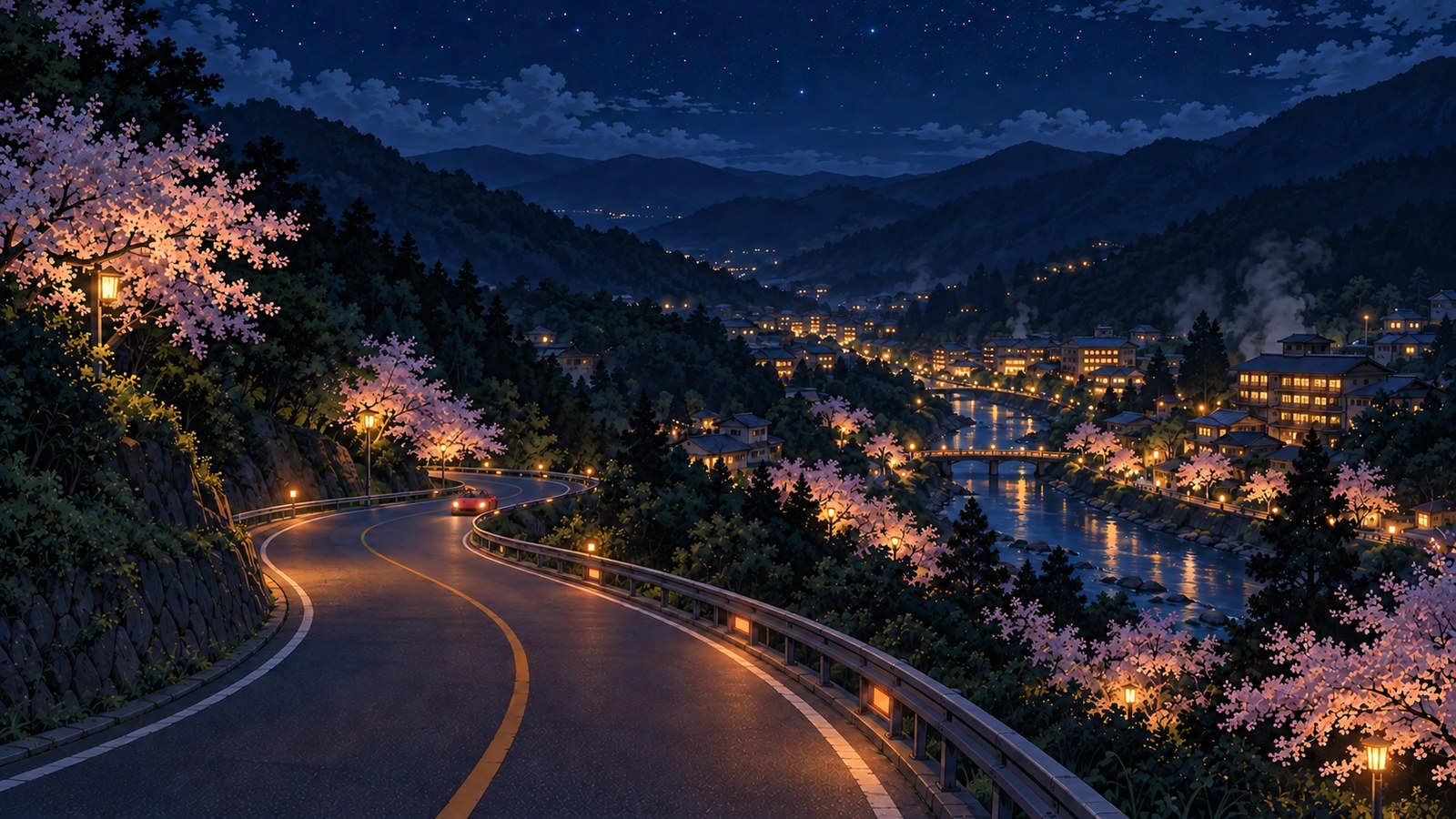
Once the sun was low, I drove to Miyagino, headlights on as we climbed the mountain road into the dark. I know this slope well, but at night I eased off a little compared with daytime and watched the road ahead in the beams of my headlights. In the passenger seat, my friend counted the lights coming on across the hot-spring town. We parked in the car park on the tennis court grounds, which was available during the illuminations. When I opened the door, the night air felt chilly. I knew mountain nights got cold, but I’d let the warm daytime weather fool me and come in just a hoodie. My friend had sensibly brought a trench coat.
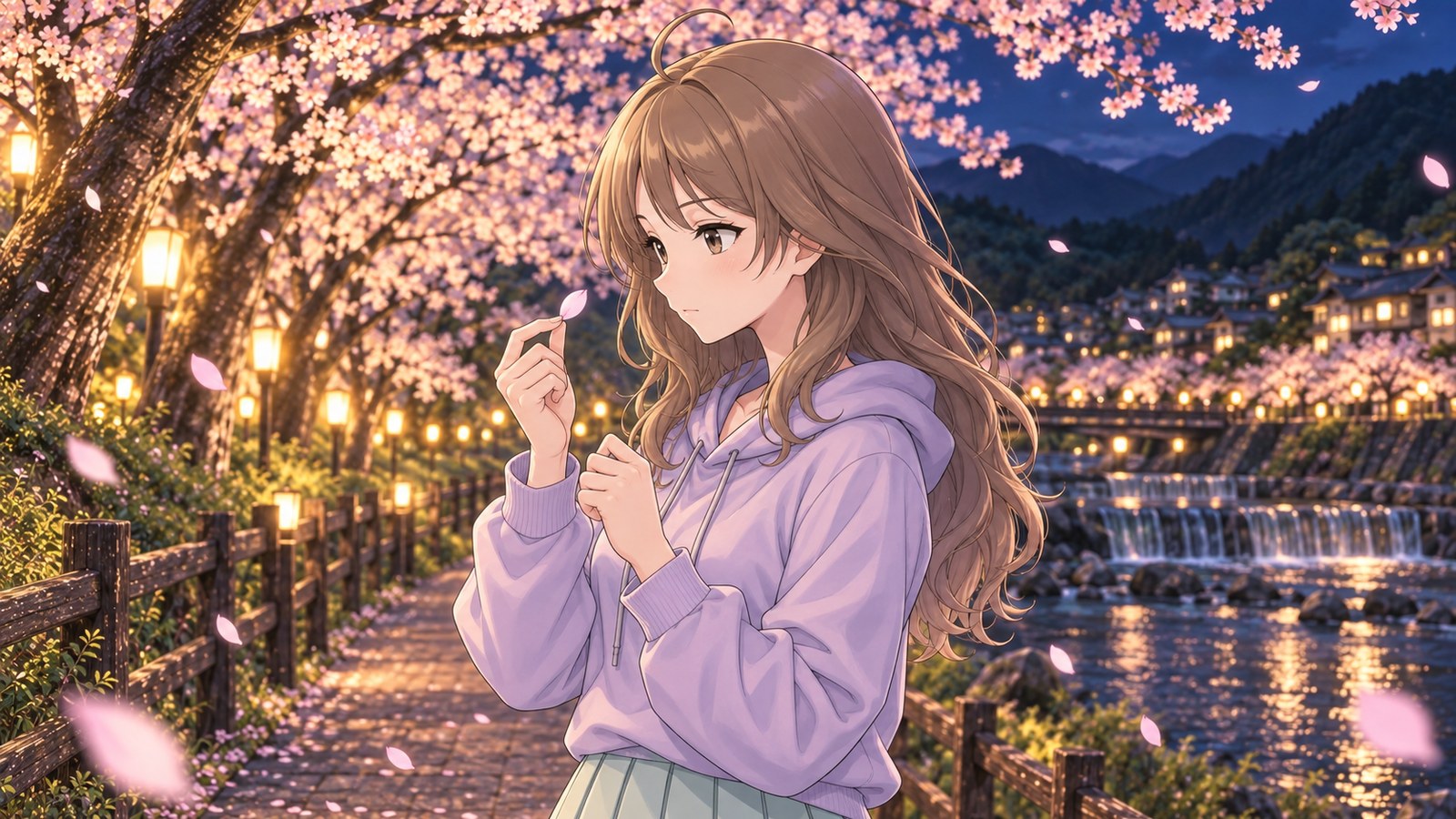
My friend and I walked along the Miyagino Hayakawa Embankment at night. When I looked up to the sound of the river, the illuminated cherry branches stretched right over our heads. We stopped mid-conversation, and my friend fell silent, too. I’d heard that about 120 Somei Yoshino cherry trees line the embankment.
Petals drifted down from the branches, and my friend held out her hand. “Let’s see who can catch the most.” She had that mischievous grin, so I’m pretty sure she already planned to win. I tried to watch closely and catch them, but each time I went after one, another caught my eye, and my hands couldn’t keep up.
I finally had one petal in my hand and held it up close. It was tiny, yet every petal had its own distinct shape. I was looking closely, thinking how many more there must be along the branches, when my friend leaned over and showed me her palm.
She had collected far more petals than I had. When I asked how she’d caught so many, she said she’d been picking them up while I was busy admiring mine. For a second I thought that was cheating, but she looked so pleased with herself that I burst out laughing, too, even though I’d lost.
After our contest, I looked toward the river and watched the Hayakawa flow through the lights. The illuminated branches were reflected on the surface, so it felt as if there were cherry blossoms overhead and at my feet. My friend and I stood side by side and listened to the water for a while.
While we listened to the water, my friend told me how Miyagino got its name. The story goes that there were once lots of bush clover here and that the climate and landscape reminded people of Miyagino in Sendai. It surprised me that a place famous for cherry blossoms took its name from bush clover. “Then we’ll have to come back during bush clover season,” I said. My friend laughed. “You want a rematch?” I hadn’t meant it that way, but now that she mentioned it, I kind of did want to win next time.
On the way back to the inn, we quietly retraced our route. Once in our room, I tucked the petal I’d saved in my palm into the Yumochi bag. I lost the contest, but I think I’ll remember that petal and my friend’s triumphant grin for a long time.
SummerMid-June to mid-July
I left my car at home and chased hydrangeas from the train window
The Hydrangea Train was the whole point of today’s trip, so I left my car at home. When I’m driving, I have to keep my eyes on the road, no matter how lovely the flowers blooming right beside it. Today was my chance to look around. I made my way to Hakone-Yumoto on a rainy morning with just a small day-trip bag, then changed to the Hakone Tozan Railway.
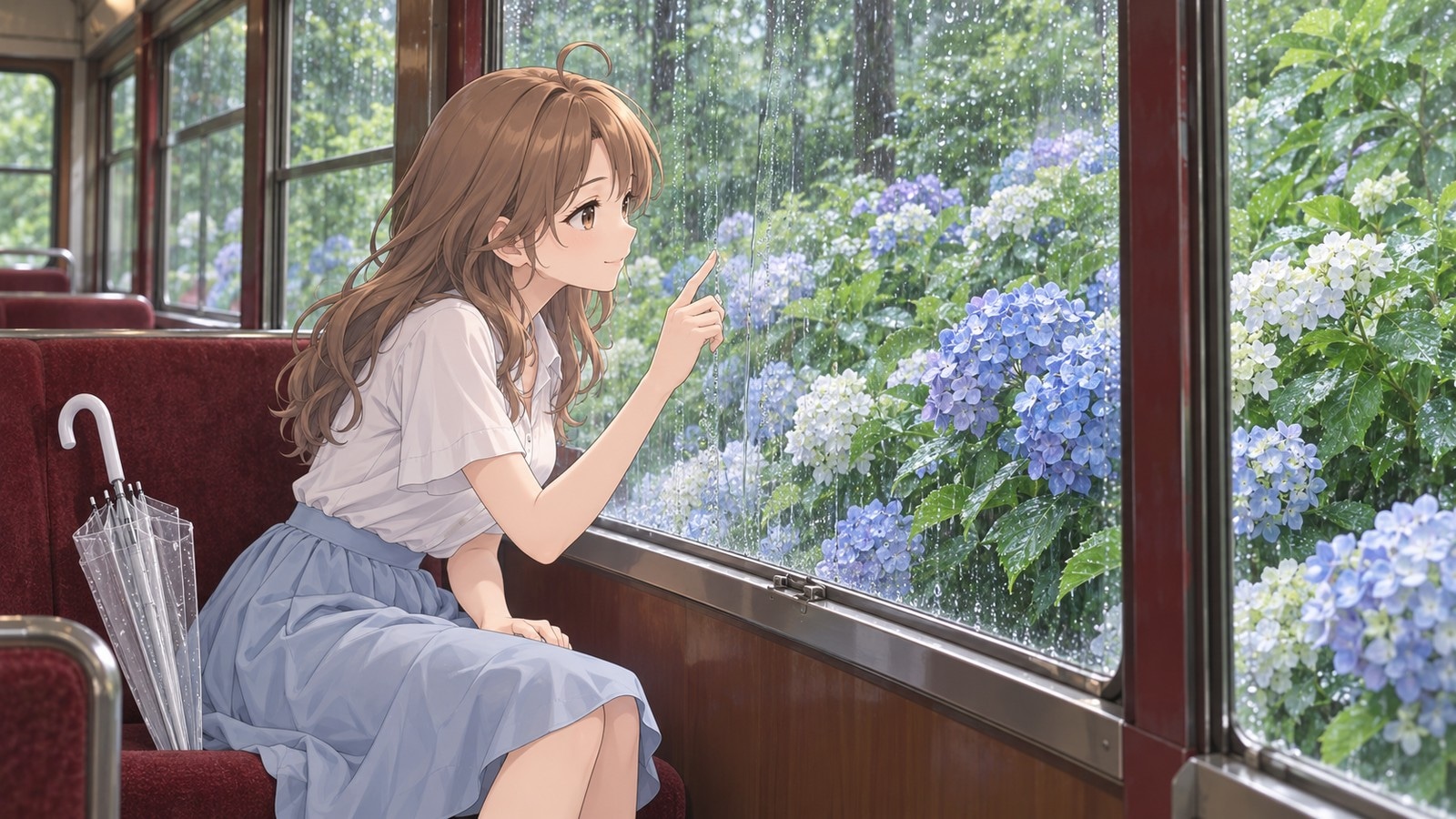
Because every seat on the daytime Hydrangea Train is unreserved, I picked a window seat. It takes about 40 minutes to Gora. Almost as soon as we set off, hydrangeas appeared right outside the window. I’d expected a wide view of the mountains, but the flowers were much closer than I thought. I found myself leaning toward the glass without even leaving my seat.
Through the raindrops, the blooms seemed to overlap, and I could make out even the shape of the nearest one. I lifted a finger toward the window and traced where each flower was, as if telling someone, “Look, it’s blooming right here.” I wasn’t actually showing them to anyone. As one cluster slipped past, another came into view. By the time I tried to remember the last flower, I was distracted by a new one, and I could barely get my phone out.
The rain kept letting up and picking up again, changing the shape of the drops on the window. When a big drop settled there, the flowers blurred; when it ran down the glass, their outlines came back. Watching rain on a window with no wipers felt so peaceful. In the car on rainy days, I’m usually focused on the wiper speed and how far ahead the car in front is.
The story goes that railway staff began tending the hydrangeas along the line after work, back in the Shōwa 30s. Knowing that people have cared for the flowers outside the window for decades made each one feel suddenly dear to me. Even the petals soaked by the rain had been looked after year after year.
Peak bloom comes in mid to late June around Hakone-Yumoto, and in late June to early July around Chokoku-no-Mori and Gora. As the train climbed, I could see the flowers change little by little. They bloomed profusely down below and looked smaller the higher we went. It felt like I’d come to get ahead of the season as it climbed the mountain.
Every time flowers appeared in the window across from me, I wanted to turn around to look, and it kept me busy. If the seat next to me had been empty, I might’ve gone back and forth between the windows. Even after I finally got my phone ready, my eyes kept drifting outside. I decided to check the photo later.
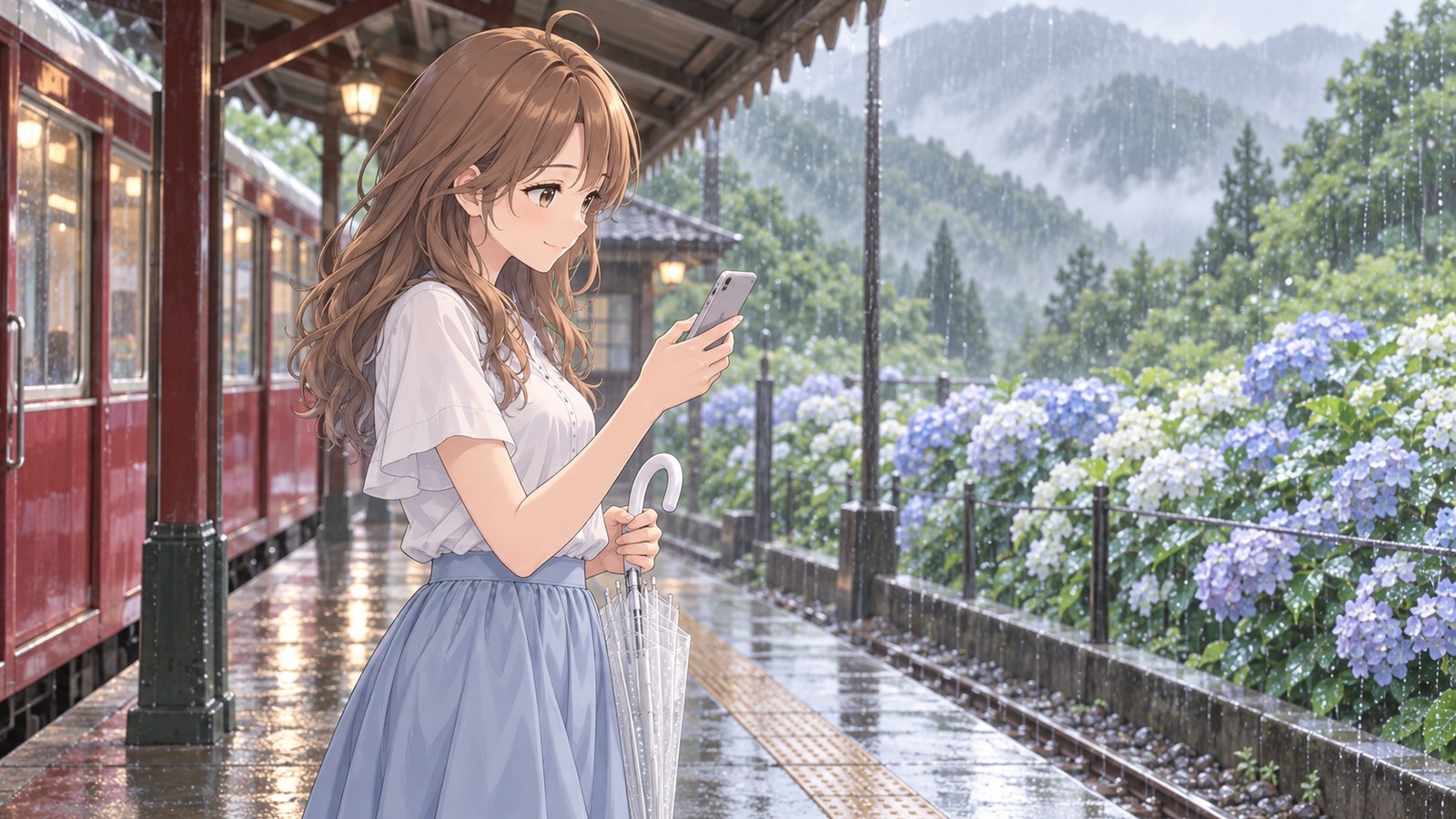
At Gora Station, with my folded umbrella in hand, I sent the photos to my driving friend. The reply was just, “You have days when you don’t drive?” “I do—on hydrangea days,” I texted back with a straight face, and found myself grinning on the platform, umbrella still in hand. I’m glad I took the train that rainy morning.
AutumnOctober
Following my friend’s yellow car to Sengokuhara, then on to Owakudani’s black eggs
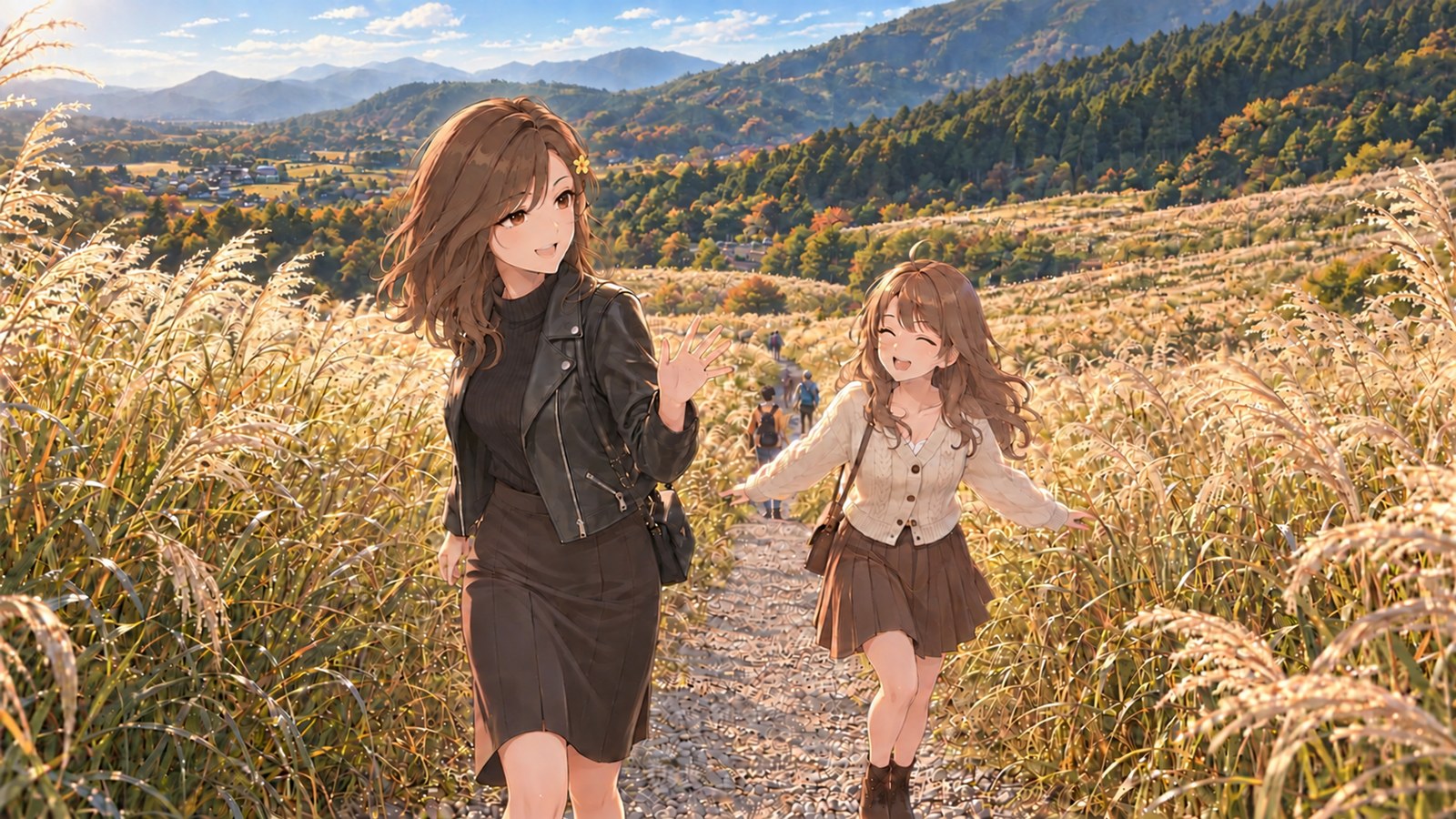
To see the silver grass in Sengokuhara, my driving friend and I took two cars to Hakone for the day. I wanted to walk in the morning light, so I left Tokyo early. After meeting near Odawara, we turned onto National Route 1, my friend’s yellow car pulled out in front as usual. She always leads. My red car follows along behind.
I know every climb on National Route 1 better than any other road. Still, the way I drive changes a little when someone’s in front of me. When my friend’s yellow car dipped just before a bend, I pressed the brake, too. As she accelerated smoothly out of the curve, I kept the same gap and followed quietly behind. As we climbed with the gap between our cars unchanged, it made me happy to feel we were driving together without saying a word. At Miyanoshita, we turned onto National Route 138. At the Sengokuhara intersection, we joined Prefectural Route 75, and the slope was suddenly covered in silver grass. I kept watching my friend’s brake lights ahead, but that gold flickering at the edge of my vision was impossible to ignore.
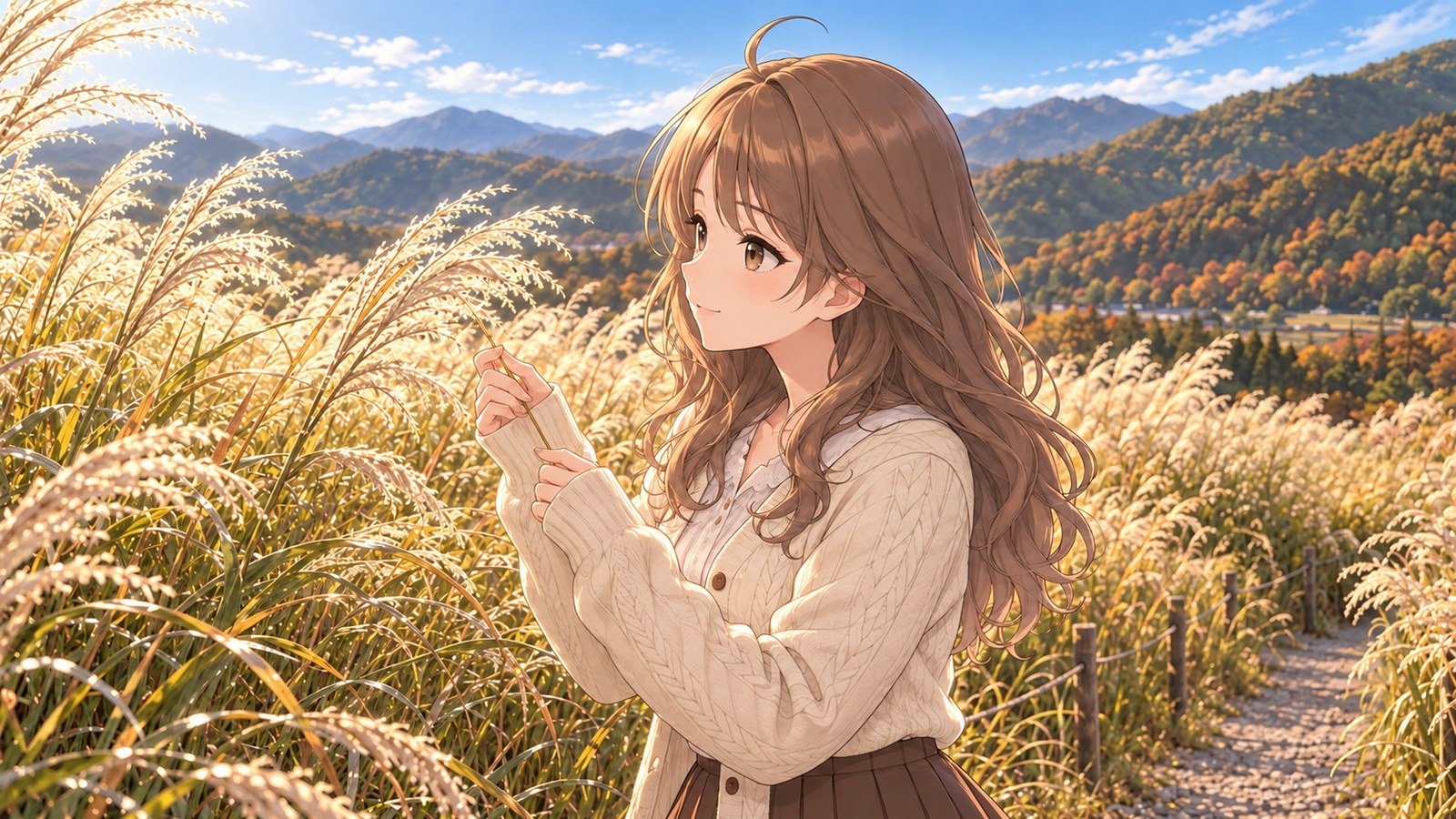
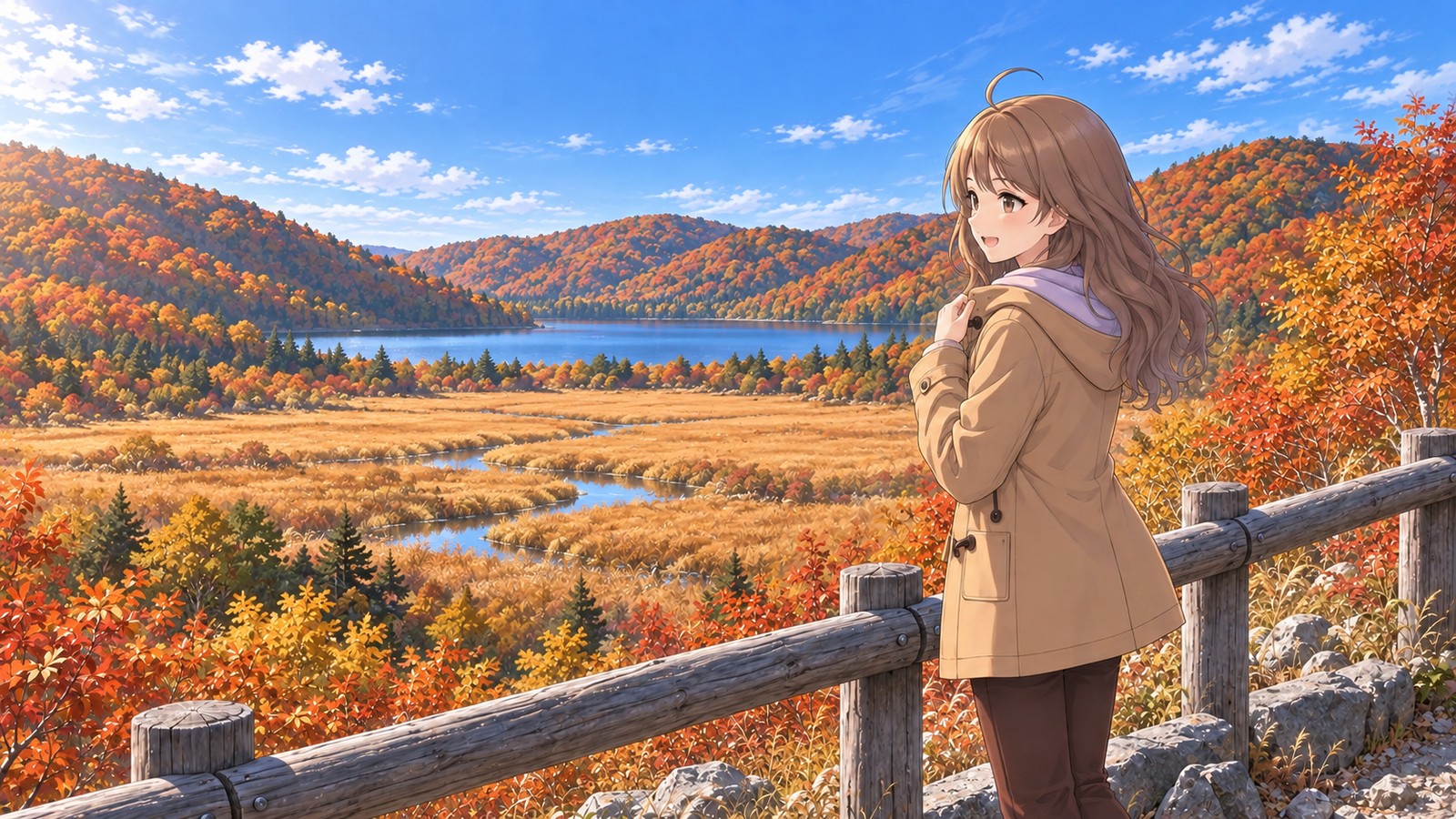
A little after 9, we parked the two cars side by side in the temporary lot for visitors at the Sengokuhara Water Purification Center. As soon as we stepped onto the path, silver grass plumes stretched ahead, glowing in the morning sun. I’d barely started walking when I found myself pausing to take in the view. The morning air was still cold, so I pulled the sleeves of my cream cardigan down over my hands.
My friend walked on ahead, then turned and waved for me to come over. I meant to follow, but whenever the plumes swayed around her, my eyes went straight to them. Some swayed right beside my face, close enough for me to see details I’d missed from a distance. I was supposed to be catching up, but somehow my steps slowed again.
The silver grass meadow spreads along the northwestern foot of Daigatake. I’d heard it was once used to grow thatch for roofing, and the plumes in front of me suddenly looked like things people used in everyday life. Controlled burns on the hillside resumed in 1989 to keep trees from taking over. By autumn, the slopes burned in early spring are covered in tall plumes. It’s a view people have kept alive with care year after year, not just something pretty to look at.
When I caught up with my friend, she laughed and asked what I’d been looking at all this time. “The silver grass,” I said. “I know,” she replied without missing a beat. She seemed to know I’d be slow on the way back, too. This time she didn’t hurry me along; she waited a little farther ahead.
Back at the car park, my friend showed me her phone. There I was, both arms outstretched as I chased after her. “When did you take that?” I asked. She grinned. “While I was waiting for you. More than once.” She sent it to me, then I followed her yellow car out of the lot.
We also stopped at Owakudani, not far from Sengokuhara. I was there for the black eggs. Their shells really are black, but when you peel them, they’re just ordinary white hard-boiled eggs—which seems a little strange to me. They say eating one adds seven years to your life. When I finished one and reached for another, my friend laughed, “Greedy, aren’t you?” I did the math with a straight face: two eggs, fourteen years. That only made her laugh harder. On the way back down National Route 1, my friend’s yellow car was in front again. I felt as if I had enough energy to last fourteen years.
WinterJanuary to February
Photographing Mount Fuji and the torii, then tracing the lake’s past
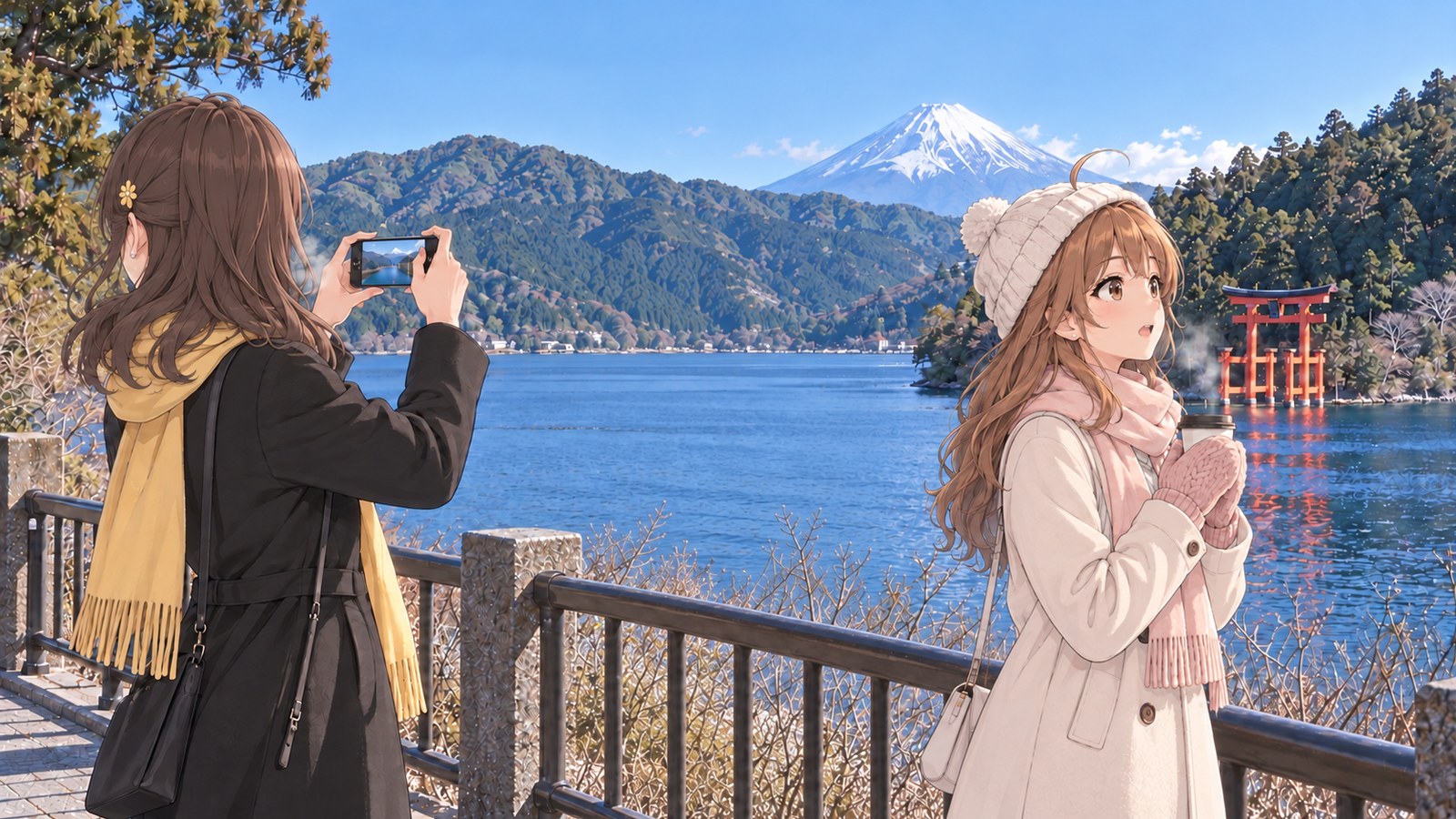
One winter morning, my friend and I headed to Motohakone for the day. We were hoping to see Mount Fuji beyond Lake Ashi and the torii standing in the water. We both left our cars at home and took the train to Hakone-Yumoto because we wanted to see the view together through the bus window as we descended toward the lake. When I’m not driving, I get a window seat, too. We caught a bus from Hakone-Yumoto toward Hakone-machi and got off at Motohakone Port.
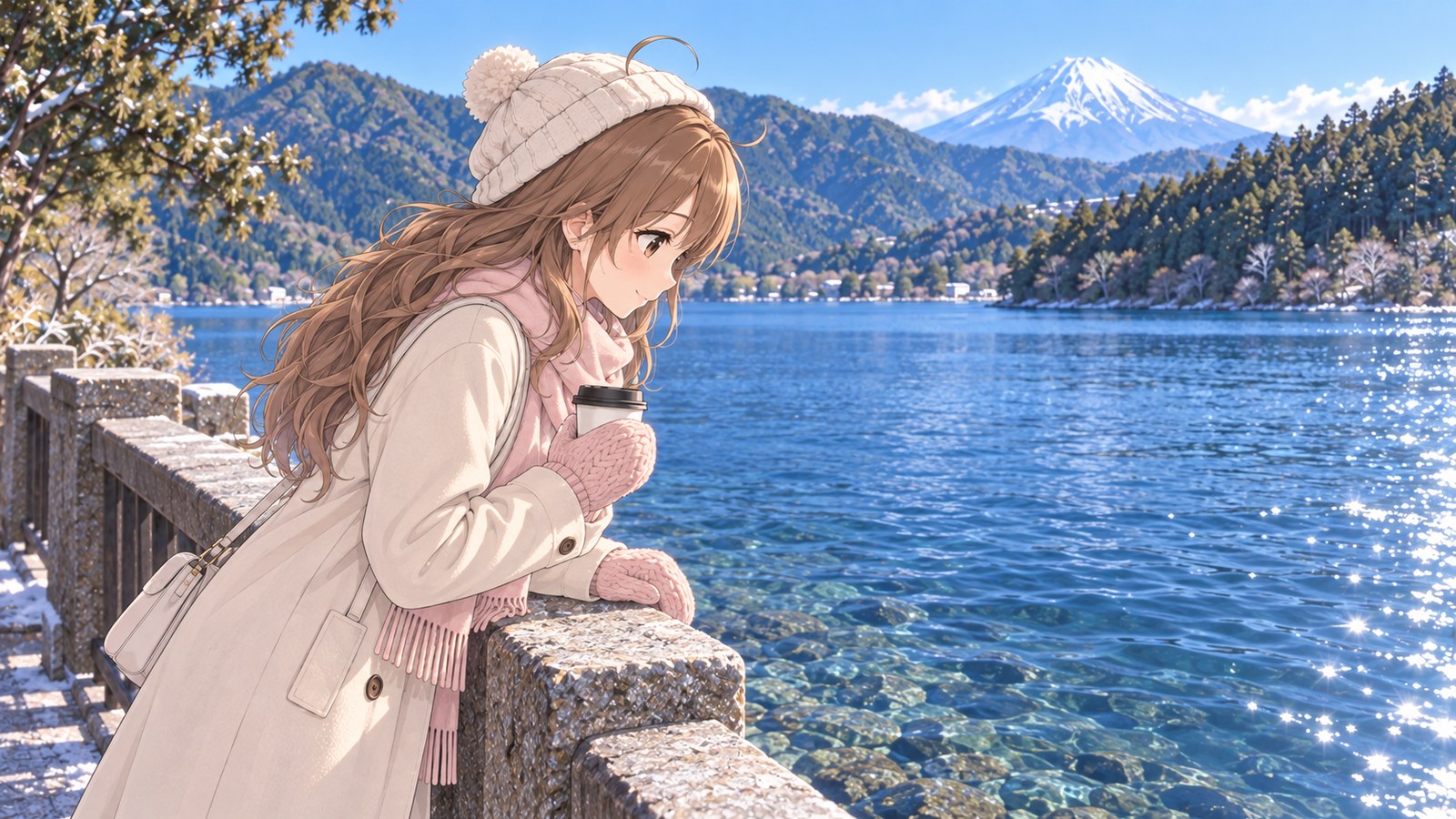
When I got off the bus and turned toward the lake, I saw snow-covered Mount Fuji and the torii standing in the water together. I had a paper cup of something warm in my hands. I could feel its warmth even through my mittens, which was a blessing in the cold wind blowing across the lake. The torii and Mount Fuji looked closer together than I expected. Fuji should have been far beyond the mountains on the opposite shore, yet it fit into the same view as the torii in the foreground. It’s oddly soothing to see something so far away and something so close appear side by side at the same scale.
My friend was already holding her phone up a little way off. I shifted the cup into one hand and pulled out my phone. I shifted my position between shots, framing one with Mount Fuji large and another with more of the lake. On the screen, the first made the torii look small off at the edge, while in the wider shot Mount Fuji seemed farther away. I decided to choose my favorite on the train ride back.
After taking the photos, I looked out over the lake. I’d heard that Lake Ashi formed when a landslide blocked the old course of the Hayakawa River. It’s the same Hayakawa where we watched the cherry blossoms in spring—the riverbank where I chased petals to the sound of the water. I never imagined it was connected to this wide lake.
The 1242 travel record Tōkan Kikō calls it Ashi no Umi, the Sea of Ashi, and it was once known as Hakone no Umi—the Sea of Hakone—as well. Looking at the broad stretch of water on a winter morning, I can see why people called it a sea.
As we walked along the lakeshore, my friend told me one of the lake’s legends. The monk Mangan Shōnin is said to have subdued a nine-headed dragon living in the lake and enshrined it as Kuzuryu Myojin. As she told me the story, I found myself peering into the water through the stone railing. “Can you see the dragon?” she teased. “No,” I answered seriously—but it really did feel as if something might be hiding beneath the still surface.
Water from Lake Ashi flows through the Hakone Irrigation Canal toward Susono City in Shizuoka Prefecture. Apparently, it is also used to generate electricity. I’d never imagined that the lake’s water, which seems so still, could travel all the way beyond the mountains. Around Motohakone there’s also the Hakone Checkpoint, Hakone Shrine, and the cedar-lined stretch of the Old Tokaido. My friend wants to walk the cedar avenue; I’m curious about the checkpoint. We opened a map and planned together how much we could see before catching the bus back.
After taking the bus back to Hakone-Yumoto, I bought some Yumochi from Chimoto before catching the train. It was the same souvenir I’d brought home after seeing the night blossoms in spring. The yōkan inside takes its inspiration from rocks along the Hayakawa River, and earlier today I’d seen the lake formed when a landslide dammed that same river. When I told my friend, she said I sounded like a teacher today. Though I was the one looking for a dragon a little earlier.
The story sections are fiction inspired by this location. For accurate information, please consult official tourism and information websites.
Miyagino at Night
Photos of this place9 images
-
Hakone, Kanagawa Prefecture · Spring
-
Hakone, Kanagawa Prefecture · Spring
-
Hakone, Kanagawa Prefecture · Summer
-
Hakone, Kanagawa Prefecture · Summer
-
Hakone, Kanagawa Prefecture · Autumn
-
Hakone, Kanagawa Prefecture · Autumn
-
Hakone, Kanagawa Prefecture · Winter
-
Hakone, Kanagawa Prefecture · Winter
-
Hakone, Kanagawa Prefecture · Miyagino at Night (Spring)
Local specialties
Yumochi
Yumochi from Chimoto in Hakone-Yumoto is a sweet made with soft rice-flour mochi studded with yōkan, a sweet bean jelly, and lightly scented with yuzu. The yōkan takes its inspiration from rocks along the Hayakawa River. I meant to save it as a souvenir, but after trying just one at the inn, I gave in to its pillowy softness and ate another.
Owakudani Black Eggs
These hard-boiled eggs, sold at Owakudani’s Kurotamago-kan, have pitch-black shells. It’s said that eating one adds seven years to your life. When I reached for my second, my friend laughed, “Greedy, aren’t you?”
Amazake at Hakone Amazake Chaya
This amazake, made at Amazake Chaya in Hatajuku along the Old Tokaido, gets its sweetness from koji. My friend said she wants to walk the cedar avenue, so next time we’ll stop in together on the way back.
Fried smelt from Lake Ashi
At Hiroshiya in Motohakone, you can get fried smelt from Lake Ashi. On our winter visit, my friend and I got caught up talking about the dragon and walked right past the place; I only realized on the bus back. I’ve already picked what we’ll have for lunch next time we’re in Motohakone.
Highlights
A night walk beneath the cherry blossoms in Miyagino
The Miyagino Hayakawa Embankment is lined with Somei Yoshino cherry trees along the Hayakawa River. Peak bloom is from early to mid-April, and there are illuminations during the Sakura Festival, too. The lit branches reflect on the water, making it feel as if there are blossoms overhead and underfoot.
Hydrangeas just outside the train window
Hydrangeas along the railway start blooming around mid-June. The higher up the mountain you go, the later they peak, and you can enjoy them through mid-July. The flowers are at different stages below and above, so you can watch the season slowly unfold as you ride.
Surrounded by silver grass in Sengokuhara
A 700 m path winds through a silver grass meadow covering about 18 hectares. The usual viewing season is around September to November. As you walk, plumes sway right beside your face, giving you a view that feels completely different from the one you get at a distance.
Mount Fuji from the lakeshore at Motohakone
In winter at Motohakone, you can see the Peace Torii standing in Lake Ashi with Mount Fuji beyond it. Should I make Mount Fuji the focus or fit more of the lake into the shot? I took both, then spent the train ride home trying to decide which I liked better.
Road trip route
Getting to Hakone from Tokyo
- From Tokyo
- About 120 kmAbout 2 hours by car via the Tomei Expressway and other routes
- Expressway interchange
- Hakoneguchi ICAbout 20 km and 30–45 minutes to Miyagino
- Routes to Miyagino and Sengokuhara
- National Routes 1 and 138At Miyanoshita, turn onto National Route 138. For Sengokuhara, take Prefectural Route 75.
- By train and bus
- From Hakone-Yumoto StationAbout 40 minutes to Gora on the Hakone Tozan Railway; take a bus to Motohakone Port.
The summer train from Hakone-Yumoto
- Vehicle
- Change to the Hakone Tozan Railway at Hakone-Yumoto
- Places to visit
- Hydrangeas along the Hakone Tozan Railway
Hakone-Yumoto is where you can transfer to the Hakone Tozan Railway and catch buses to other parts of Hakone. In summer, the Hydrangea Train takes about 40 minutes from here to Gora.
The winter lakeshore at Motohakone
- Vehicle
- Buses to Hakone-machi from Odawara Station or Hakone-Yumoto Station
- Places to visit
- Get off at Motohakone Port
On the Hakone Tozan Bus, get off at “Motohakone-ko”; on the Izu Hakone Bus, get off at “Motohakone.” The lakeshore is just steps away, as is the view of the torii and Mount Fuji side by side.
In spring and autumn, drive in from National Route 1. At Miyanoshita, turn onto National Route 138; take Prefectural Route 75 to Sengokuhara. In summer, take the mountain railway; in winter, take the bus. For both, change at Hakone-Yumoto.
More Spot Guides
If you enjoyed this story, you might like these places too. I've gone back to each of them in different seasons, again and again.
Maps & Sources
Official sources
- Hakone Town Tourism Association (Cherry Blossoms) (opens in a new tab)
- Hakone Navi (Hydrangea Train) (opens in a new tab)
- Hakone Town Tourism Association (Sengokuhara Silver Grass Meadow) (opens in a new tab)
- Hakone Town Tourism Association (Winter Views of Mount Fuji) (opens in a new tab)
- Hakone Town Tourism Association (Yumochi) (opens in a new tab)
- Hakone Town Tourism Association (Hakone-Yumoto Area) (opens in a new tab)
- Hakone Town Tourism Association (Getting to Lake Ashi) (opens in a new tab)
- Miyagino-Kiga Tourism Association (Cherry Blossom Illuminations) (opens in a new tab)
- Hakone Town (Town Newsletter, August 10, 2026 issue: temporary Sengokuhara parking) (opens in a new tab)
- Hakone Town Tourism Association (How to Enjoy Hakone’s Silver Grass Meadow) (opens in a new tab)
- Izu Hakone Bus (Hakone Bus Free Pass) (opens in a new tab)
- Owakudani Kurotamago-kan (opens in a new tab)
- Hakone Town Tourism Association (Hakone Amazake Chaya) (opens in a new tab)
- Hakone Town Tourism Association (Hiroshiya) (opens in a new tab)
- Hakone Town Tourism Association (Miyagino Tennis Courts) (opens in a new tab)