Noboribetsu, Hokkaido
Noboribetsu Jigokudani Walk this “hell where demons dwell” before your soak
Park the car and walk a little along the trail, and the valley suddenly opens up beyond the railing. White steam rises in plumes from the rocky slope, and the scent of sulfur rides the breeze. Whenever I stayed at Noboribetsu Onsen, I always walked through Jigokudani before my soak. The hot water I’d sink into that evening had come from this very valley. Thinking about that made what might have been a simple stroll feel like the first step toward the baths.
Walk through the valley, soak in the hot springs, then have manju after your bath. I’d kept to that order in every season—or so I thought.
SpringLate May
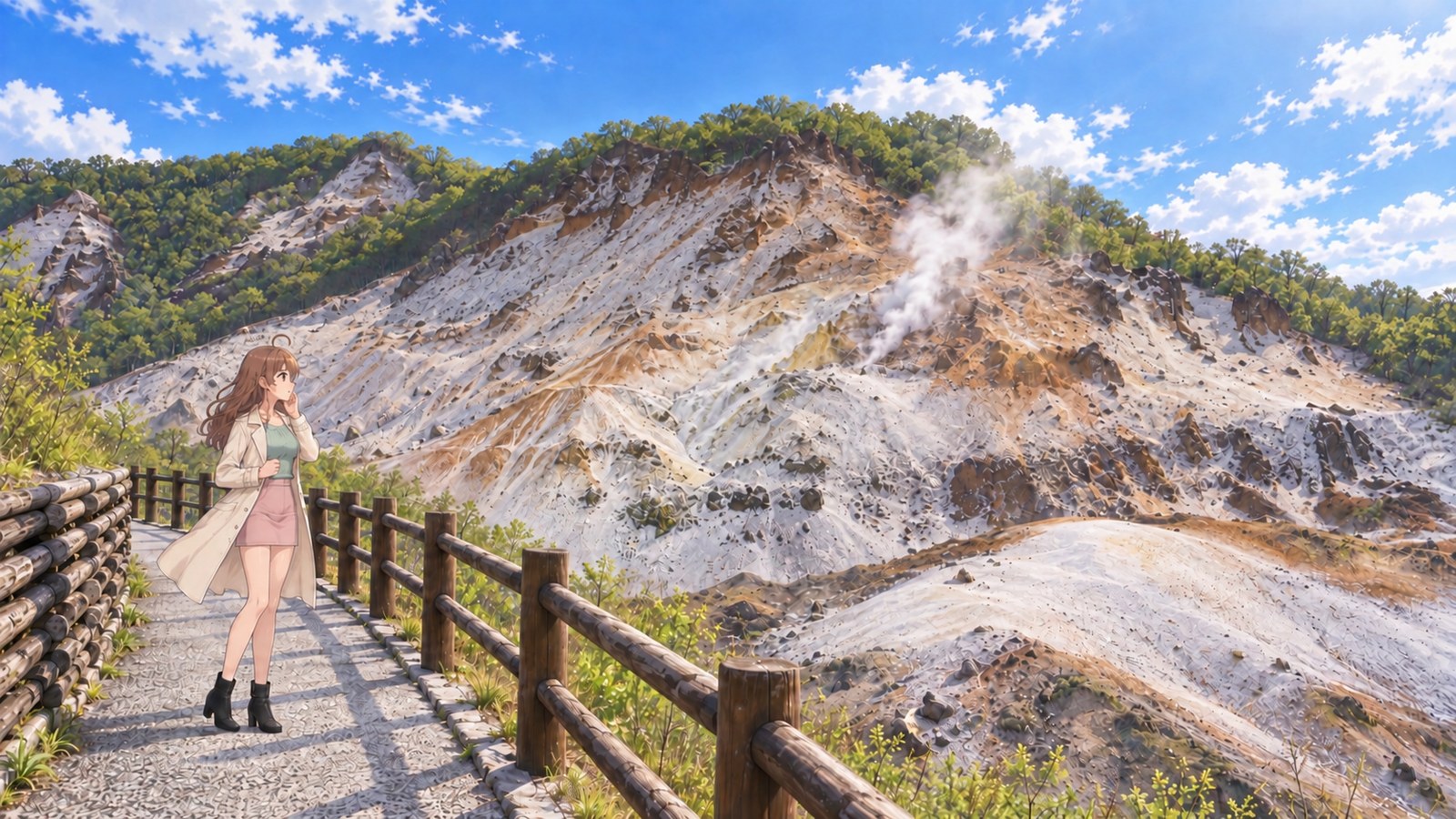
I thought I heard the valley, so I cupped a hand to my ear
I stopped by the railing and heard a low rumble beneath the wind. It wasn’t the soft rustle of leaves; it seemed to go on and on from somewhere at the bottom of the valley. I raised one hand to my ear and turned toward the strongest plume of steam. The sound seemed a little closer.
It was around 9 in the morning on a late-May day. My spring trip around Hokkaido was nearly over, and of course I chose Noboribetsu for my last hot-spring stop. From Noboribetsu-Higashi IC, it was about 10 minutes up the slope toward the hot-spring district. I cracked the window, and the smell of sulfur drifted in. “Ah, here I am again,” I thought. I’d been here in summer, autumn and winter, but this was my first time seeing Jigokudani surrounded by fresh green leaves.
With no one beside me, I could listen without saying a word. Whenever the wind died down, the sound from the valley floor seemed to draw a little closer. I closed my eyes; it felt as if something beneath my feet were moving without pause. Even at the end of May, the morning breeze in the valley was still chilly, and I was glad I’d brought my cream-colored coat. The slope that had been covered in snow when I came in winter was now bare, its brown rock exposed. It was the same valley, but even the sound seemed different.
Jigokudani in front of me was a volcanic crater about 450 m across, left by an eruption of Mount Hiyoriyama. It covers about 11 ha. The bubbling, boiling landscape was said to resemble “a hell where demons dwell,” which is how the valley got its name. I walked along the railing, but the steam vents at the far end never seemed to get any closer. I felt the valley’s vastness in my legs before the numbers could tell me anything. Resting one hand on the log rail, I traced one plume of white steam all the way into the sky with my index finger. Beyond my fingertip, it changed shape and dissolved into the air.
I looked up at the forest around the valley, too. The primeval forest around Jigokudani was designated a national natural monument in 1924. That forest has been protected for more than 100 years, and it reaches right up to the steam. Each time a plume drifted past, the trees behind it seemed to grow closer, then farther away. The fresh young leaves looked bright beyond the white steam.
On my way back along the trail, I checked that Wakasaimo Honpo’s Noboribetsu East shop was next on my list. Manju after the bath, of course. I’d broken that rule once in the snowy valley this winter, so this time I meant to stick to it. Still, I don’t quite trust myself not to give in to that sweet smell every time I pass the shop.
When the car park came into view, I looked back one last time. The steam was still wavering white as it rose into the sky. It felt like just the right sound to end a spring trip on. That night, the manju I had after my bath tasted sweeter than usual, maybe because I’d kept my rule. With the scent of brown sugar came the memory of that low rumble in the valley.
SummerJuly
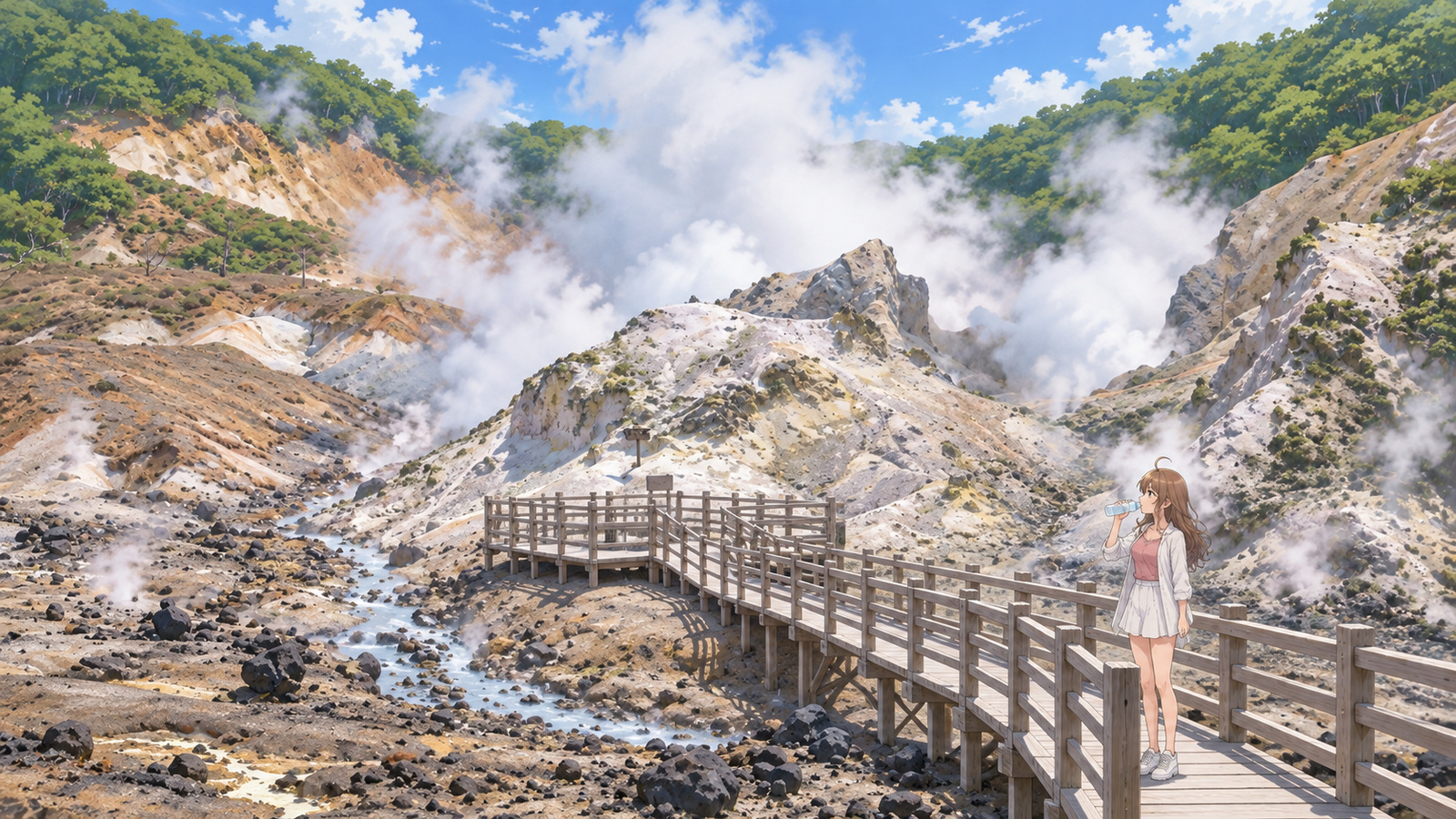
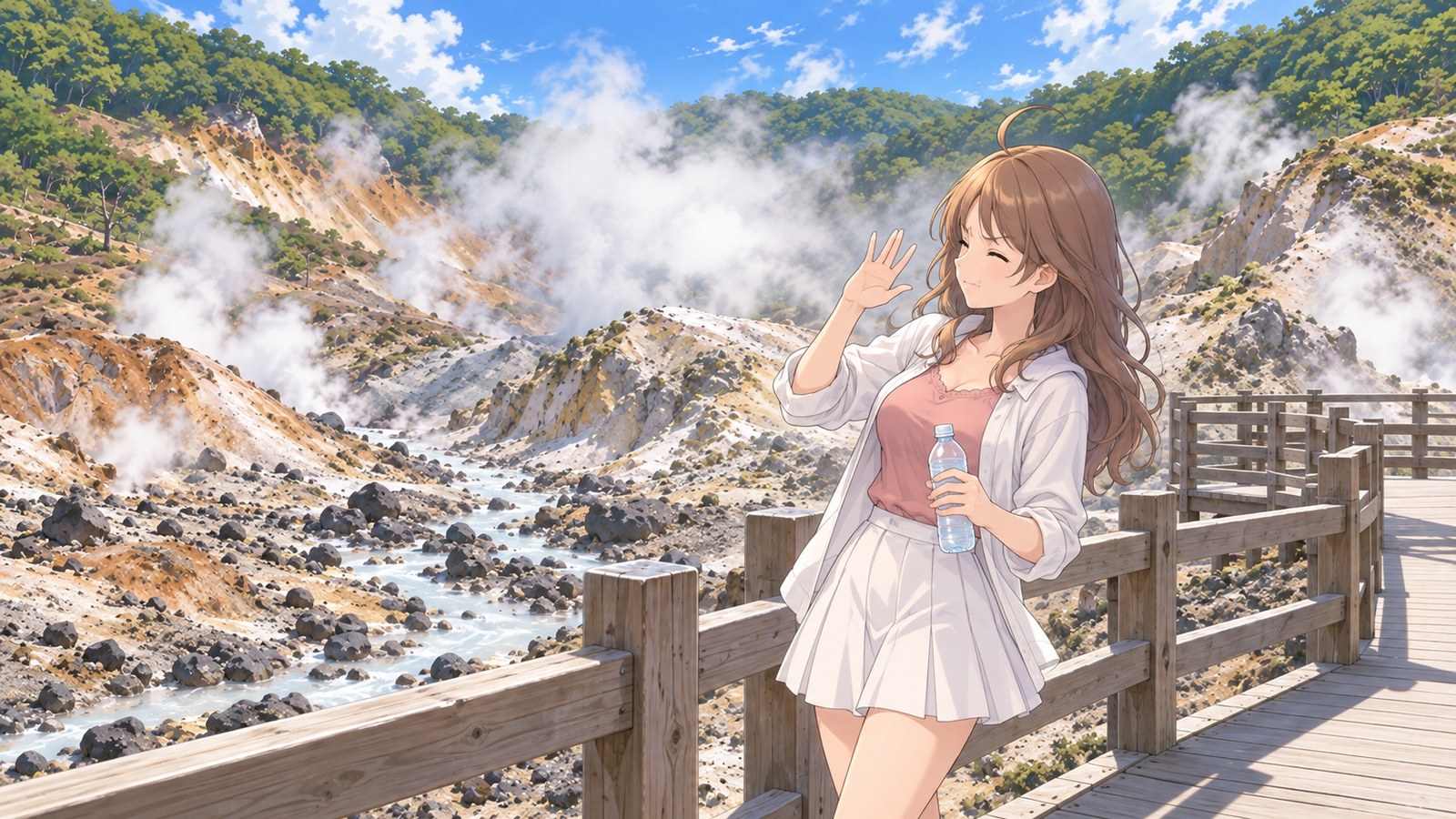
I stepped back as steam drifted across the boardwalk
Halfway along the boardwalk, the wind shifted. A cloud of white steam rolled toward me; I squeezed my eyes shut and fanned the air with one hand. Even the air against my face felt warm. I took a step back, then laughed at how flustered I’d been.
It was my first time in Hokkaido, and I chose Noboribetsu for my first overnight hot-spring stay. I’d driven along the coast from Hakodate, and around 2 pm on a sunny July afternoon I parked at Jigokudani. Looking down from the entrance to the boardwalk, I could see a small viewing deck ahead in the valley. I wanted to make it all the way there.
As I followed the boardwalk, my eye kept being drawn to the big rocks in the middle of the valley and the narrow stream of hot water running between them. The slope I’d seen from far away was full of little ridges and dips up close. The boards were dry beneath my feet, making a light, hollow tap each time I stepped. Then the smell of sulfur came on the breeze, and it really hit me: I was in a hot-spring town.
I took a sip of water and screwed the cap back on. Beyond the steam, I watched a rock face that had been blurred white a moment earlier come into focus as soon as the wind changed. A rock I couldn’t see from the entrance! I wanted to show someone, so I glanced to my side—then remembered I was here alone.
I love how easy solo trips are. But just at moments like this, I find myself wishing I had someone beside me. I pulled out my phone, snapped the boardwalk and steam, and sent it to my friend. “The sulfur smell is so strong,” I wrote. Her reply came right away: “You already feel like you’ve had your soak, don’t you?” I wrote back, “Not yet!” and she sent back a string of laughing-face emojis.
Near the deck, a green forest stretched along the rim of the valley. I’d heard that the primeval forest around Jigokudani is protected, with mizunara oaks and all kinds of plants and flowers growing there. Up here, it’s easy to see the boundary: lush trees on one side, a steaming valley with not a single tree on the other.
I spent a while on my own by the railing, watching the steam. Being alone meant no one was there to hurry me along, but it was up to me to decide when to leave. I told myself I’d head back after the steam drifted my way three more times—and I counted all three before I set off. Even I thought that was a little too earnest.
After retracing my steps along the boardwalk, I looked back from the entrance. The place where I’d stepped back looked no bigger than my fingertip. I’d been so flustered in a spot that tiny. On the way back, I bought some delicious manju at Wakasaimo Honpo’s Noboribetsu East shop. I promised myself right there that I’d wait until after my bath, then held out until I got to the inn. One bite filled my mouth with the sweet, toasty taste of brown sugar, and even a night on my own felt a little nicer. From then on, manju after the bath became my rule in Noboribetsu.
AutumnMid- to late October
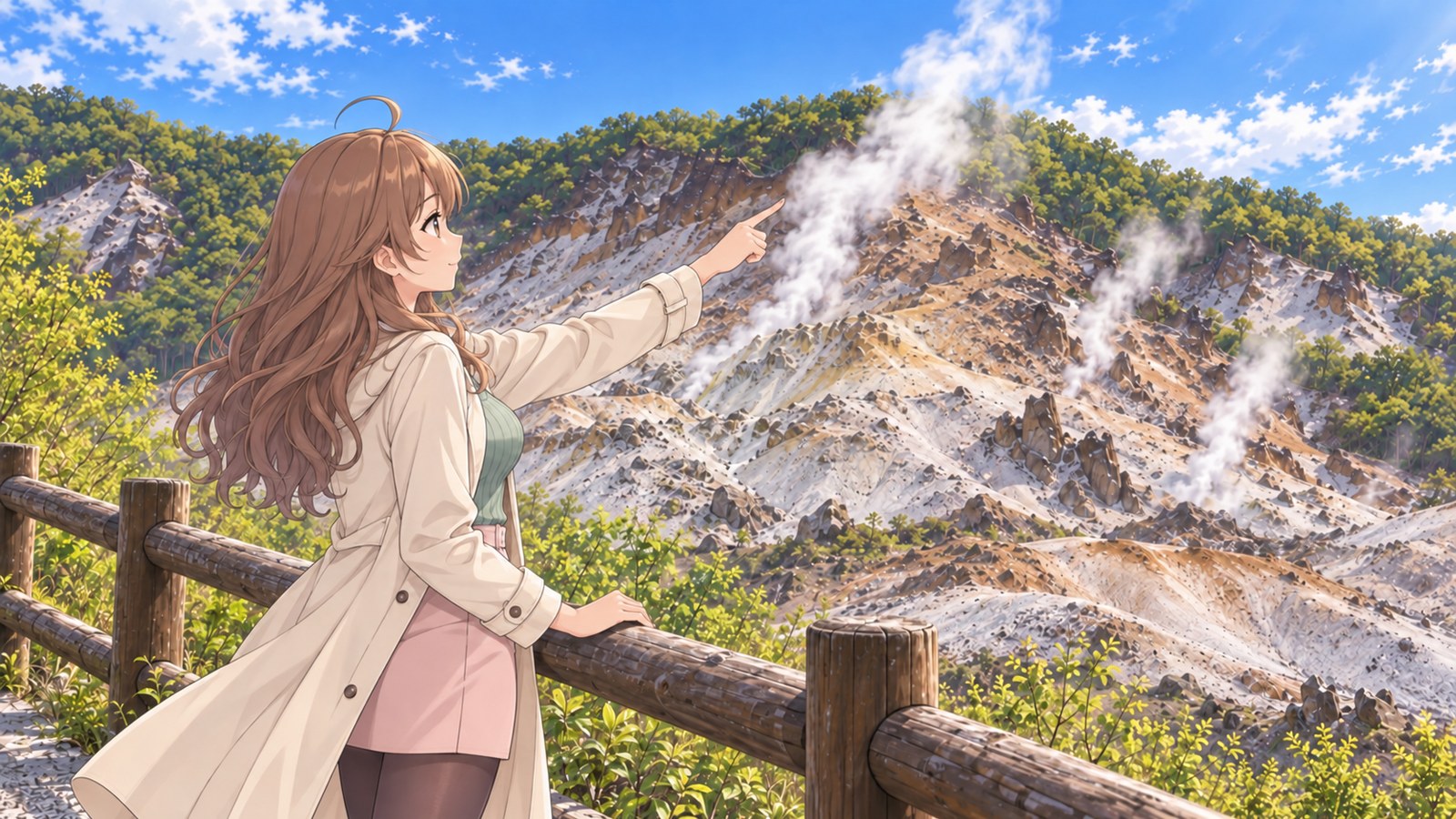
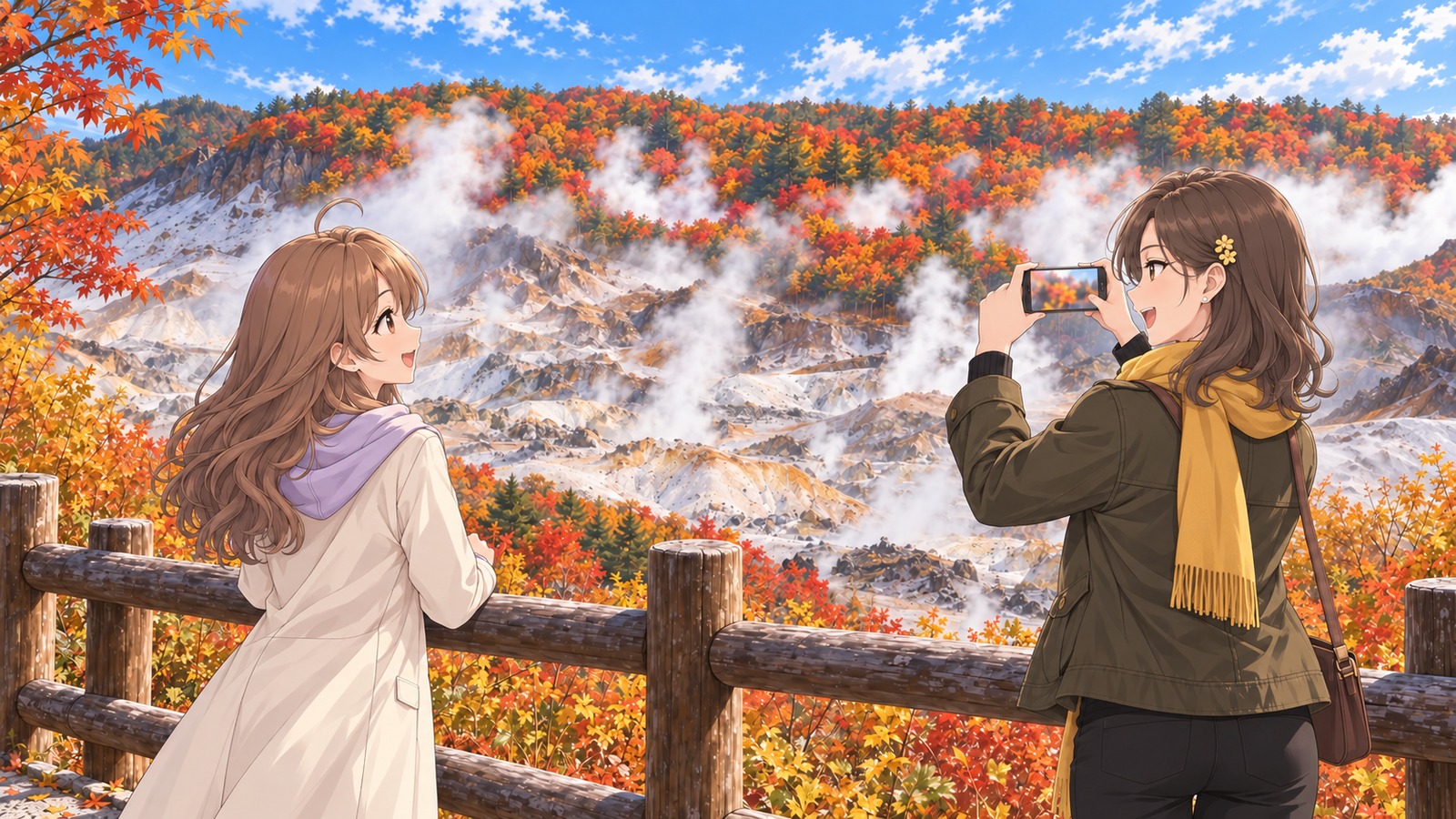
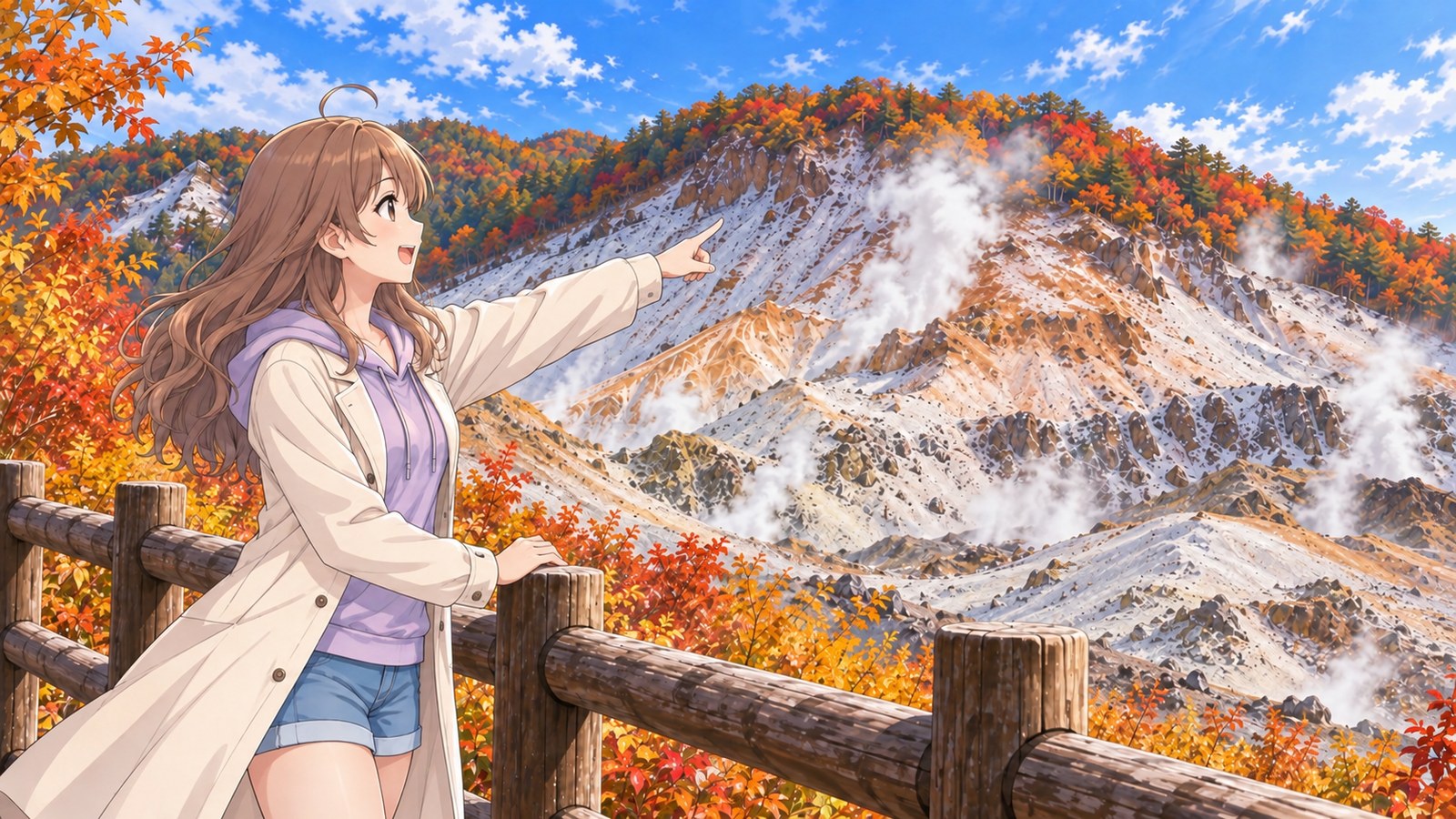
We pointed out the autumn leaves beyond the steam
“Look over there!” came out louder than I expected. As soon as the valley opened into view, I looked up and saw a forest in full autumn color stretching above the bare rock. White steam, autumn leaves—I’d never seen those two together anywhere else.
My friend flew to Hokkaido to catch the autumn colors, and the two of us decided to spend a night at Noboribetsu Onsen. Around 11 am in October, we parked at the Jigokudani car park and headed for the entrance-side trail. When my friend is along, there’s a map, music and somehow snacks, too, in the passenger seat. The car feels a little livelier than when I’m on my own.
I rested one hand on the log railing and pointed toward the edge of the forest with the other. I was still wearing my coat over my lavender hoodie, and I followed my fingertip with my eyes. I wanted my friend to see the green trees still standing among the autumn leaves. The whole forest hadn’t turned one color; every time I shifted my gaze, another spot caught my attention.
When I looked down from the forest to the slope, bare rock stretched below, untouched by trees. It was broad and rugged, nothing like the brilliance of the autumn leaves. Having both in the same view—that’s what autumn in Noboribetsu feels like. The Noboribetsu primeval forest around Jigokudani now covers about 186 ha. I’d heard there were giant mizunara oaks farther along the trail. We decided to take in the view from the entrance today and let our imaginations run wild about the trees deeper in the forest.
Before we left, my friend tried to fit the autumn leaves and steam into a single phone photo. I suggested waiting until the steam drifted in front of the forest. We stood quietly together. The white plume crossed in front of the autumn leaves at just the right moment, and we both said, “Now!” The photo caught even the edge of the forest I’d been pointing to.
For lunch, we went into the hot-spring district for Noboribetsu’s local Enma Yakisoba. My friend loves spicy food and ate the sesame-rich, gently spicy sauce without flinching. By my second bite, I was already reaching for water. I think the sauce clings to the flat noodles made with Hokkaido wheat so well that I just couldn’t stop eating, even with the heat. My friend looked perfectly fine down to the last bite, glanced at my plate and said, “If you’re not going to finish that, I can take it.” Of course I finished.
Back at the car park, my friend had already sent the photo to her family. We leaned over to read the reply—“Where is this?”—typed back, “Noboribetsu!” and started the engine for the inn. Once we arrived and put away the car keys, my friend was already opening the drinks menu for something strong. I went for milk after my bath and, of course, manju. I’ve kept my summer rule.
WinterFebruary
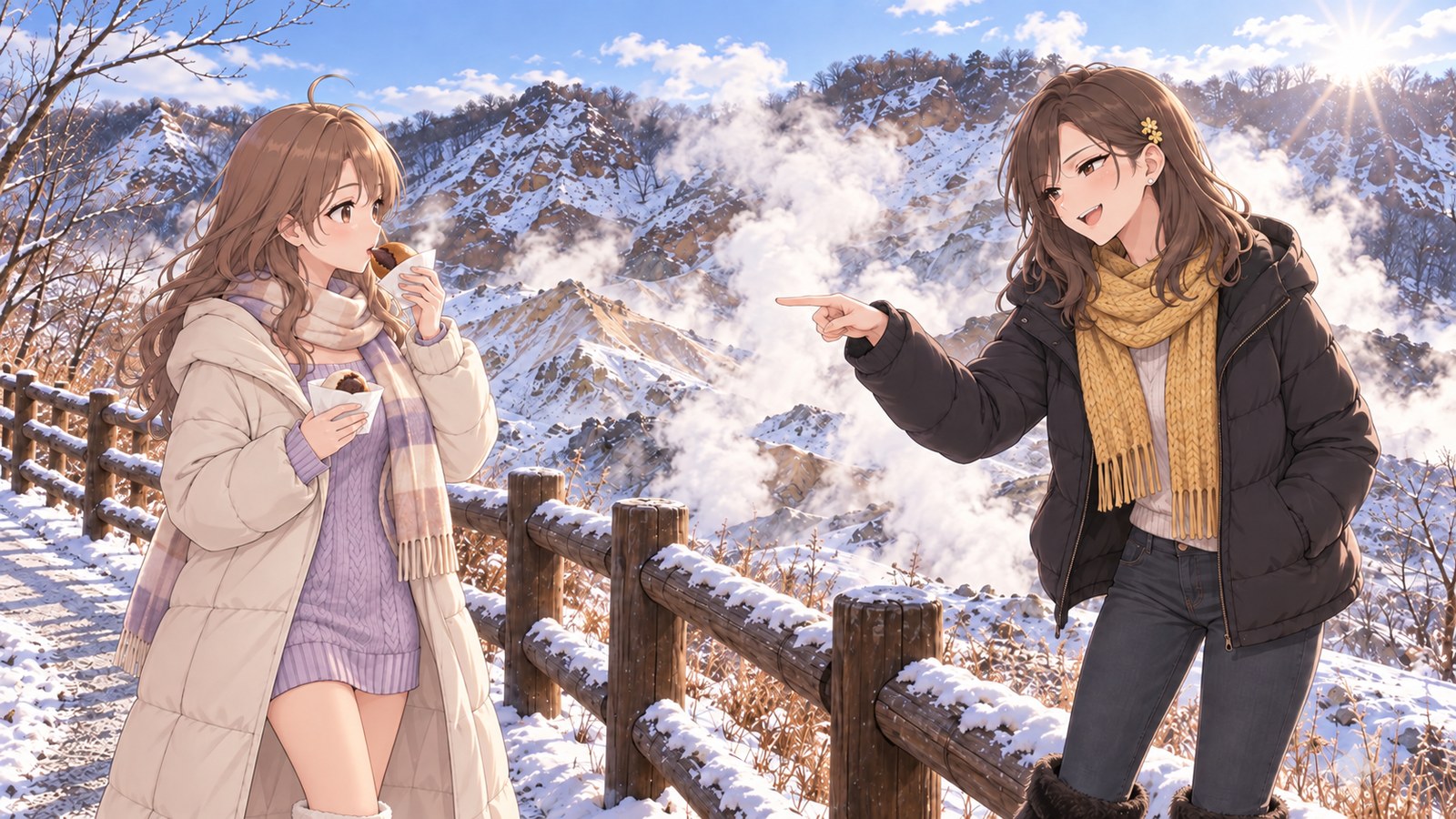
I broke my rule and took a bite of manju in the snowy valley
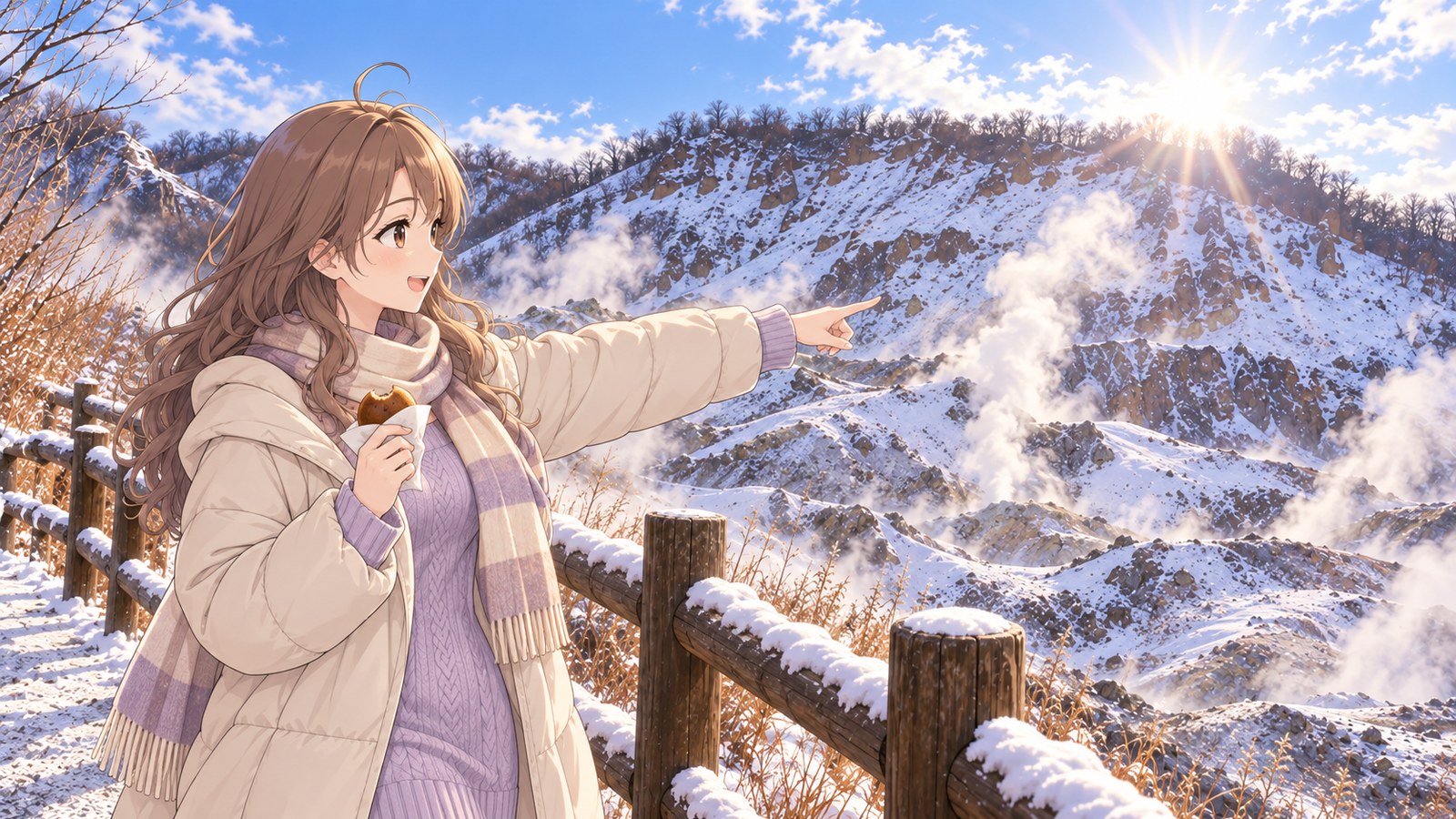
I opened the manju before getting into the hot spring. That was the moment I broke the rule I’d made in summer: “Manju after the bath.” But it was freezing in front of the snowy valley, and I wanted something sweet right then.
It was a February morning. I’d decided Noboribetsu would be the final hot-spring stop of my winter trip around Hokkaido, when my friend flew in and climbed into the passenger seat. With snow on the roads, I was driving the red four-wheel-drive sedan that had crossed over with me by ferry from Oarai. After leaving Noboribetsu-Higashi IC, I eased up the snowy slope into the hot-spring town, feeling the tires grip the snow. My friend in the passenger seat was, for some reason, looking awfully pleased with herself as she said, “As expected.”
Around 10 in the morning, I parked at Jigokudani and walked straight to the trail. Beyond the wooden railing, white steam was rising from gaps in the snowy slope. With snow underfoot, I stayed on the entrance-side trail, checking each step beside the fence. Beneath the crunch of snow, I thought I could hear a low rumble from the valley. When I came in summer, the steam drifted over the boardwalk. Today the breeze was cold, so when the steam came our way, it was oddly reassuring.
I zipped up my cream-colored down coat and pulled my scarf up to my nose. Still cold. That was when I opened the wrapper. The moment I did, a sweet smell rose into the cold air, and I couldn’t wait any longer. One bite filled my chilled mouth with the toasty scent of brown sugar and the sweetness of azuki beans. My friend was quick: “Wasn’t that supposed to be for after your bath?” “I just decided cold days are an exception,” I answered, perfectly seriously. My friend nearly rolled in the snow laughing.
Hot water wells up from the ground at Jigokudani, and steam rises all across the valley. About 10,000 tonnes of hot-spring water comes out here each day. Holding a half-eaten manju, my friend and I played a guessing game, pointing to the vent we thought the water I’d soak in that night came from. We had absolutely no evidence, but both of us insisted we’d picked the right one.
As we looked beyond the railing, the snow and the steam seemed like two completely different whites. Snow stayed put on the slope; the steam kept changing shape as it rose into the sky. Every time the wind came through, a different part came into view. While we kept saying, “You can see it better now,” the hand holding the manju started to get cold first.
I waited until the steam drifted sideways in the wind before taking the last bite. Then I folded up the wrapper neatly, put it in my pocket and headed back to the car park. I planned to soak up to my shoulders in water from this valley as soon as we got to the inn. The final hot spring of a winter journey over snowy roads. Just thinking about it made my eyes prick a little.
The story sections are fiction inspired by this location. For accurate information, please consult official tourism and information websites.
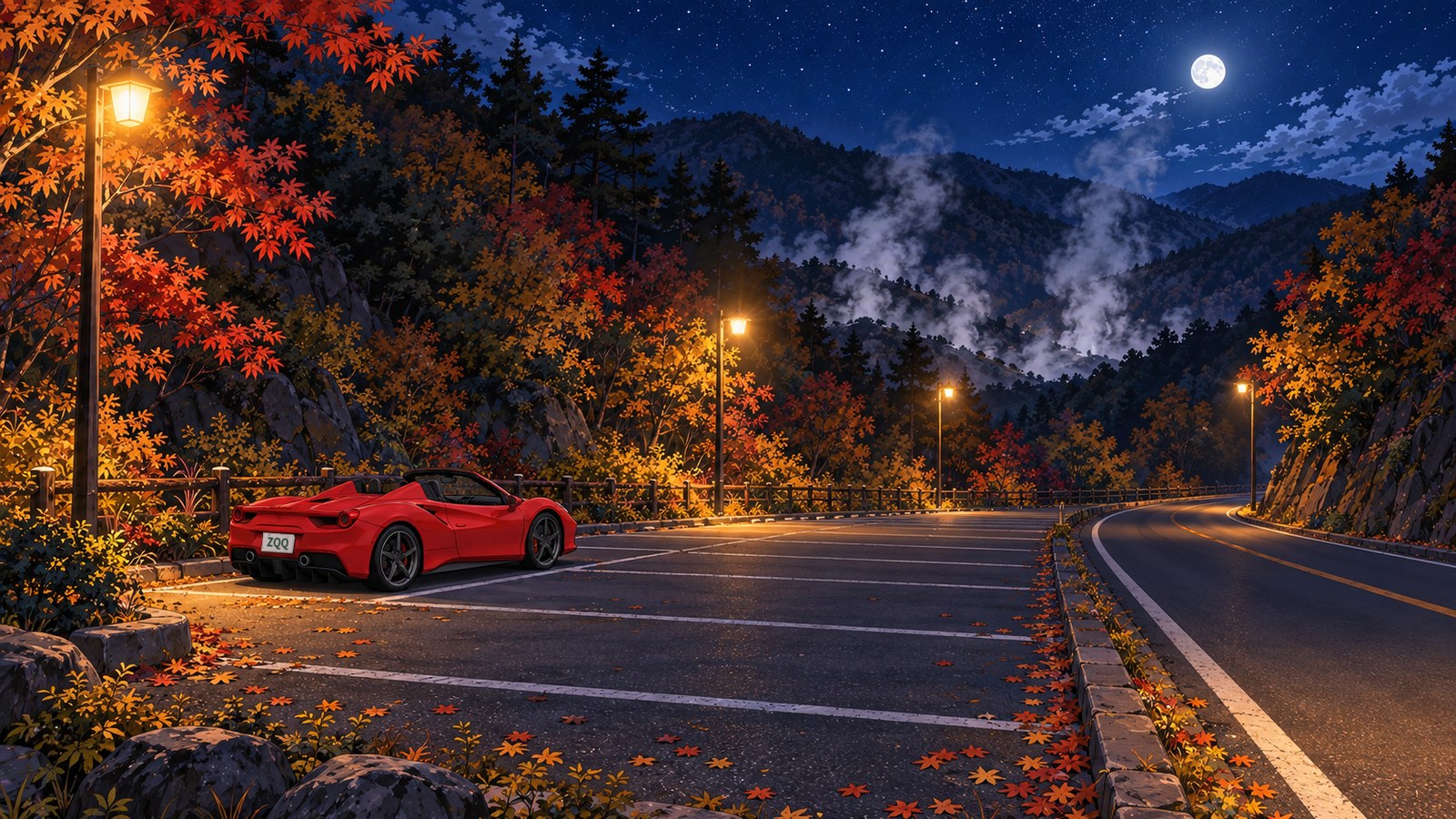
Jigokudani at night
Photos of this place11 images
-
Noboribetsu, Hokkaido · Spring
-
Noboribetsu, Hokkaido · Spring
-
Noboribetsu, Hokkaido · Summer
-
Noboribetsu, Hokkaido · Summer
-
Noboribetsu, Hokkaido · Autumn
-
Noboribetsu, Hokkaido · Autumn
-
Noboribetsu, Hokkaido · Winter
-
Noboribetsu, Hokkaido · Winter
-
Noboribetsu, Hokkaido · Jigokudani at night (Autumn)
-
Noboribetsu, Hokkaido · Autumn
-
Noboribetsu, Hokkaido · Winter
Local specialties
Wakasaimo Honpo’s Oishii Manju
These manju are made with Hokkaido azuki bean paste and dough kneaded with brown sugar and soy sauce. You can get them at Wakasaimo Honpo’s Noboribetsu East shop. When I stay in Noboribetsu, I always buy a box and leave it in my room at the inn.
Noboribetsu Enma Yakisoba
Flat noodles made with Hokkaido wheat are served with a sesame-rich, gently spicy sauce and local ingredients. This local Noboribetsu yakisoba is named after Enma, who rules the demons of Jigokudani. Each shop can put its own spin on the dish as long as it sticks to the noodles, sauce and local ingredients, so it’s fun to try a few places around the hot-spring district.
Onsen Ichiba’s Jigoku-zuke
A seafood kimchi made with catches from Noboribetsu’s local coast and nearby waters, marinated in a special yangnyeomjang sauce. It’s said to be sweet with just a little heat. My friend, who loves spicy food and a good drink, spotted it first and picked some up as a souvenir without hesitation. Later, she happily told me it went well with rice and a drink when she opened it at home.
Highlights
A crater said to look like “hell where demons dwell”
Jigokudani is a volcanic crater formed by an eruption of Mount Hiyoriyama. It measures about 450 m across and covers about 11 ha. The bubbling, boiling landscape was said to resemble “a hell where demons dwell,” which is how the valley got its name. Steam keeps rising from all across the valley, so even on a clear day the area above it looks veiled in white mist.
Primeval forest reaches right up to the steam
The primeval forest around Jigokudani was designated a Natural Monument of Japan in 1924 and now covers about 186 ha. I’ve heard there are giant mizunara oaks farther along the trail. What makes this place so interesting is how the treeless, steaming valley sits right beside a forest that has been protected for more than 100 years.
Road and location details
Getting here from Tokyo
- Tokyo to Oarai Port
- About 130 kmAround 1.5 hours by car on the Joban Expressway
- Ferry
- Oarai Port to Tomakomai PortTake your car onboard on the evening sailing; the crossing takes around 18 hours
- From Tomakomai Port
- About 57 kmAround 50 minutes by car on the Hokkaido Expressway
- Expressway interchange
- Noboribetsu-Higashi ICAbout 6 km and 10 minutes to the Jigokudani car park via Hokkaido Routes 2 and 350
From Noboribetsu-Higashi IC to Jigokudani
- Drive from Noboribetsu-Higashi IC
- About 10 minutes
- Crater diameter
- About 450 m
After leaving the interchange, take Hokkaido Prefectural Routes 2 and 350 up the slope into the hot-spring district. The Jigokudani car park is just ahead.
After your walk through the valley, head straight down into the hot-spring district for a soak. Once you’ve parked, all you need to make time for is the walk and a soak.
More Spot Guides
If you enjoyed this story, you might like these places too. I've gone back to each of them in different seasons, again and again.
Maps & Sources
Official sources
- Hokkaido Official Tourism Site (Noboribetsu Jigokudani) (opens in a new tab)
- Noboribetsu Tourism Association (Wakasaimo Honpo Noboribetsu East shop) (opens in a new tab)
- Wakasaimo Honpo official site (Oishii Manju) (opens in a new tab)
- Noboribetsu Tourism Association (Jigokudani) (opens in a new tab)
- Noboribetsu Tourism Association (Nature and autumn leaves) (opens in a new tab)
- Noboribetsu International Tourism and Convention Association (Onibi no Michi) (opens in a new tab)
- Noboribetsu Brand Promotion Council (Noboribetsu Enma Yakisoba) (opens in a new tab)
- Noboribetsu International Tourism and Convention Association (Shopping) (opens in a new tab)
- Mitsui O.S.K. Lines Sunflower (Ferry schedule) (opens in a new tab)