Biei, Hokkaido
Biei Hills The larches turn yellow along the ridge for just 1 week to 10 days each year
I climb, descend and ease off the accelerator a little at the top; suddenly, the fields on the next hill open up in front of me. I keep heading for Biei whenever I make the trip to Hokkaido, just to see that moment again. The hills keep the same shape whether they're striped with leftover snow in spring, lit by summer wheat at sunset or lined with golden larches in autumn, but I remember each season's view differently. And in front of those autumn larches, I made a mistake I still find a little hard to tell people about.
The hills keep their gentle shape all year, but the colours across them change completely with each season.
SpringLate April
Snow Stripes, a Tractor and the First Asparagus of the Year
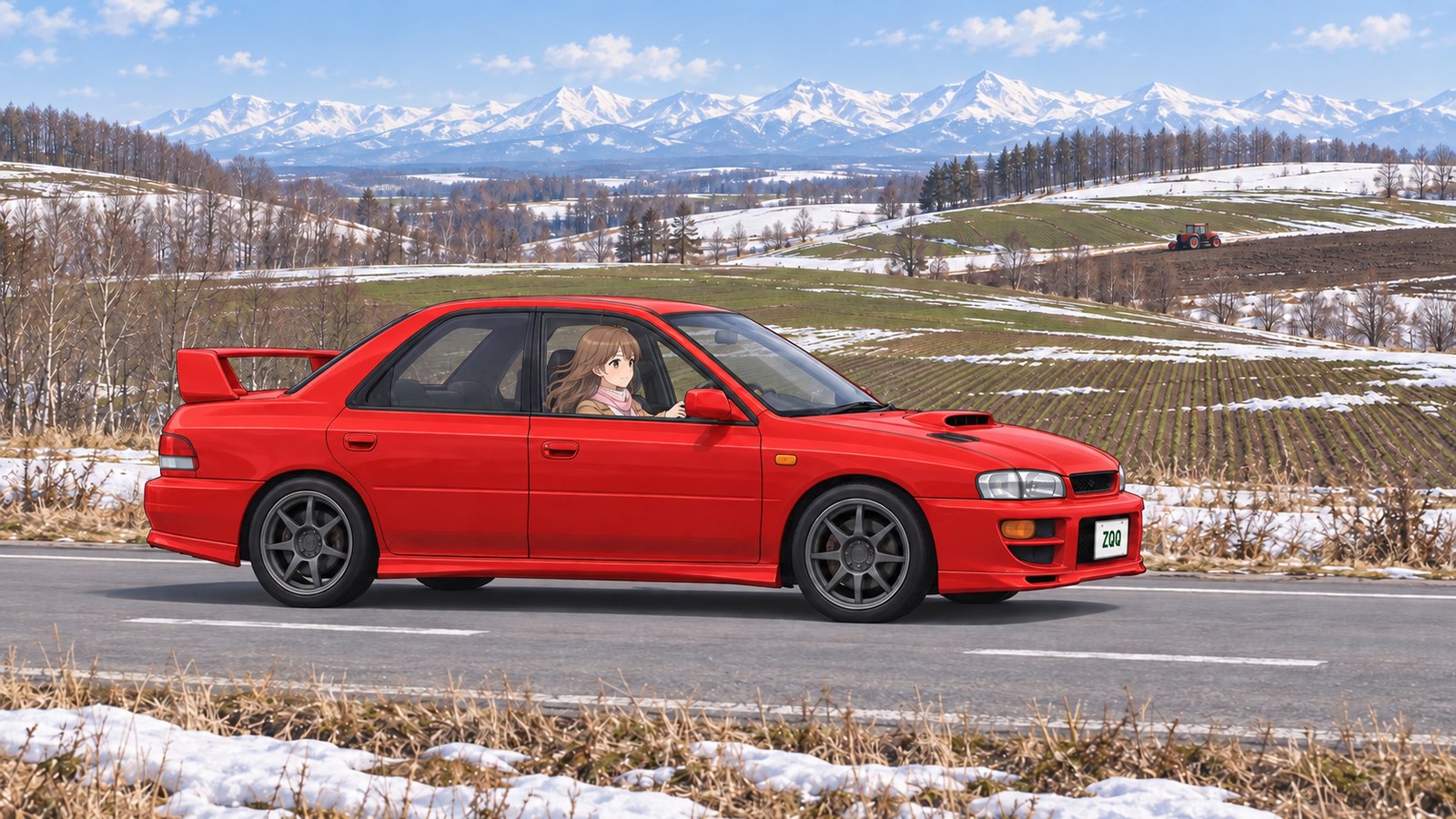
The calendar said spring should've arrived long ago. Yet beyond the next hill, the fields were still earth-brown, striped with patches of snow. Even the distant Tokachi-dake Range was white as midwinter. I'd come to see spring fields, so I felt a little deflated, still gripping the wheel.
I'd seen Biei in summer, autumn and winter, but I didn't yet know the hills in spring as the snow melted. Since I might hit snow-covered roads at the end of April, I came in my red four-wheel-drive sedan instead of my usual convertible. I'd thought that part through, at least. On the morning I left, I still picked a light sweater because “it's spring.” The moment I stepped outside the inn, I hunched my shoulders and laughed at myself: the car was ready for winter, but my clothes had hurried into spring.
I lowered the window a crack, and cold air slipped down the back of my neck; I hurried to close it. Still, I was excited. I feathered the accelerator as the road climbed and dipped. I gave it a little gas on the climb, then eased off at the top. The car felt light as the fields on the next hill opened up in front of me. I love that moment; I think it's why I keep coming back to Biei. With each rise, I began to see how differently the snow lingered on each hillside: slopes in the sun had already turned to earth, while those in the shade still held white stripes.
A red tractor was turning the soil beyond the hill, working a field that had been under snow all winter. As I drove past, I gave a small nod without letting go of the wheel. The man at the wheel lifted one hand in reply. It was such a small thing, but the tension of driving unfamiliar roads eased all at once. I couldn't help grinning to myself as I climbed the next hill.
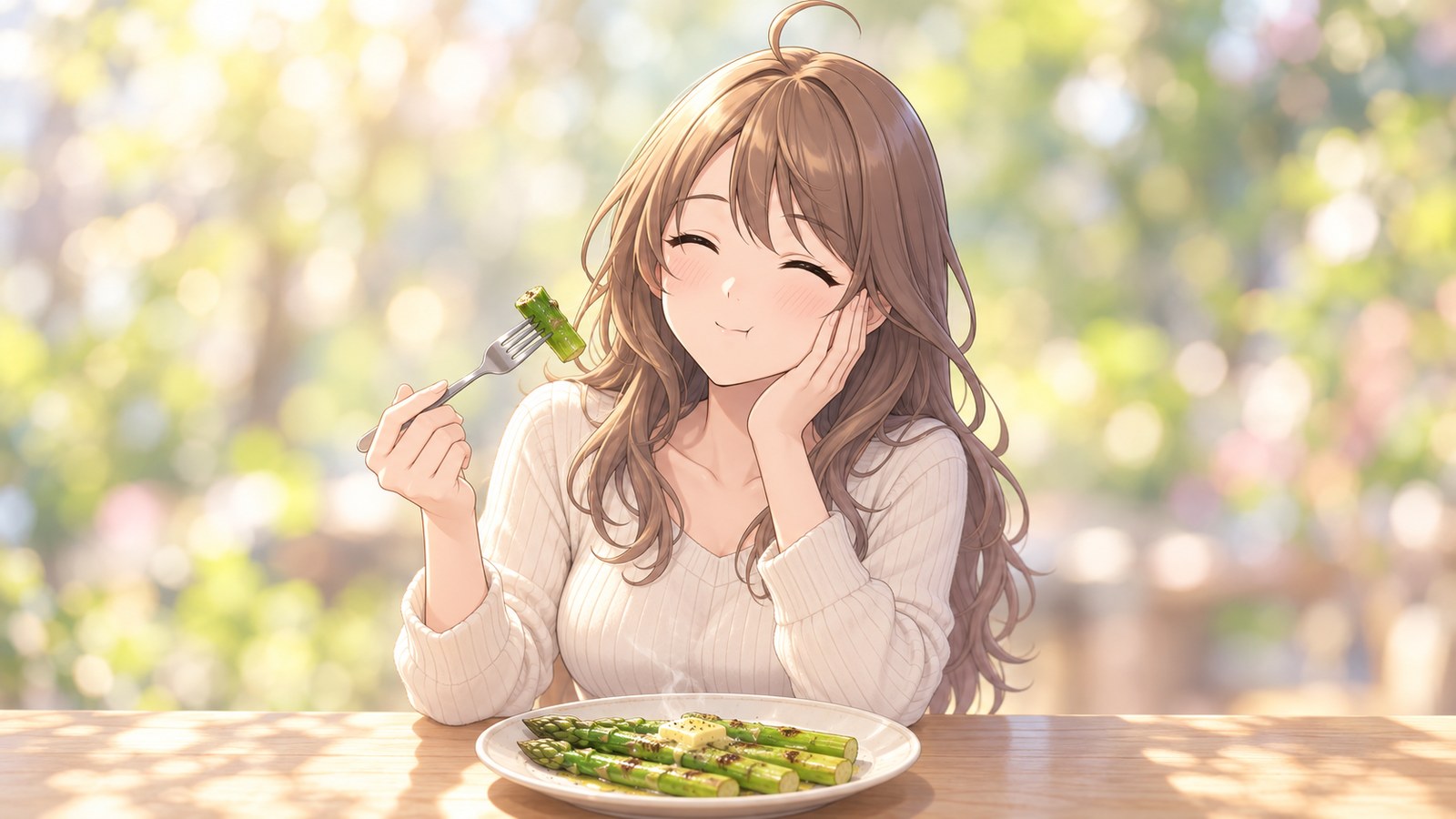
At lunch I headed down into town for the first asparagus of the year, grown in a greenhouse. Butter melted over the thick grilled spears. When I cut into one, steam rose with a scent like a spring field. I couldn't wait; I took a bite, and the sweetness followed the heat. I closed my eyes and held a hand to my cheek, frozen there for a while. How can a vegetable be this sweet? I heard Biei asparagus gets its sweetness from the big day-to-night temperature swings; even in spring, nights can dip below freezing.
That morning I'd been hunching my shoulders against the cold; now one plate of asparagus had me this happy. After lunch I unfolded the map and decided to see how the snow stripes looked from the hills on the other side that afternoon. My spring trip through Hokkaido had only just begun. There were still so many more hills I wanted to visit. The map was full of them.
SummerJuly
A Straw Hat and Wheat Heads Glowing at Sunset
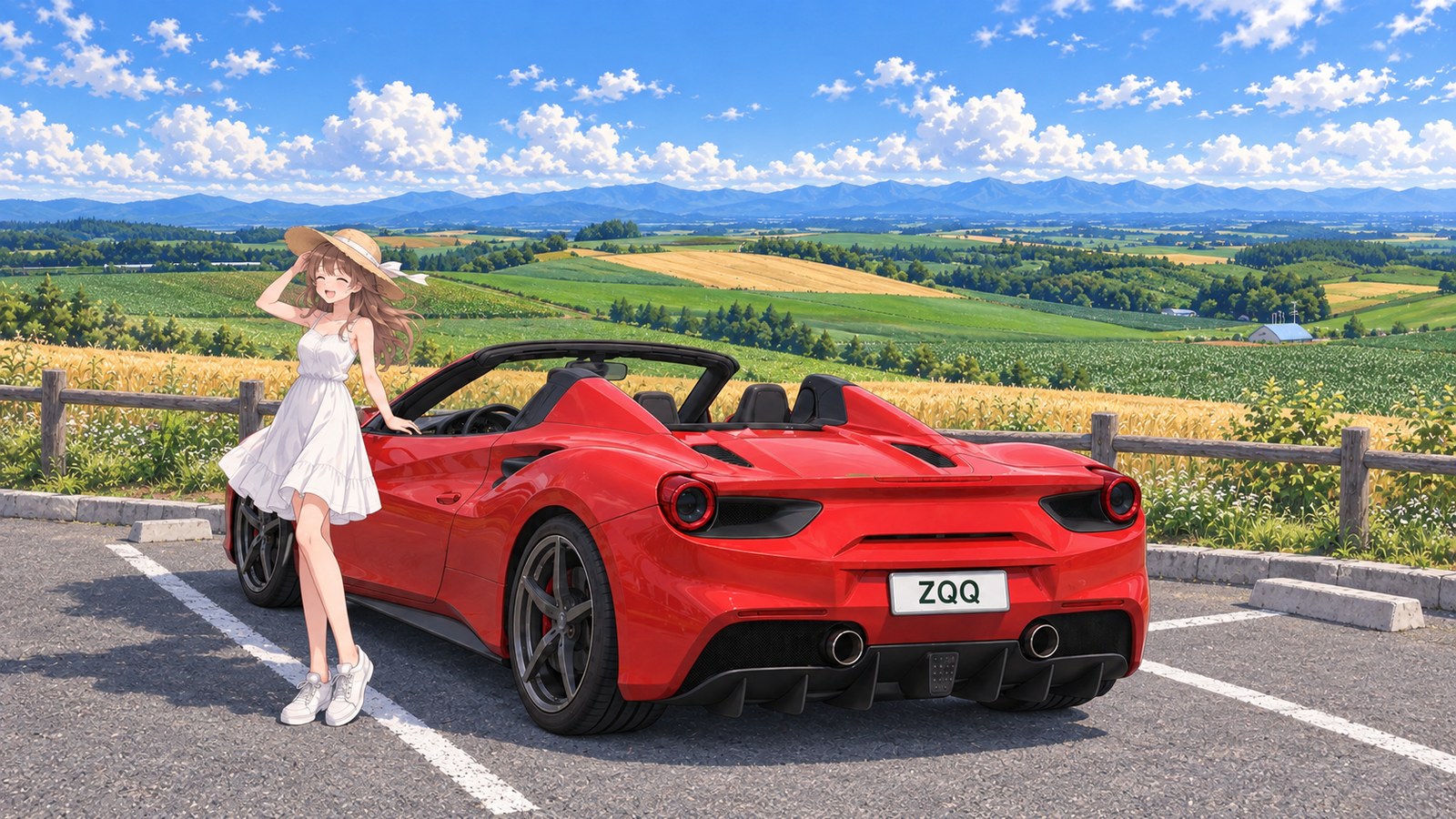
The wind lifted my straw hat the moment I stepped out of the car. I reached to grab it, and the gust caught the hem of my dress too. While I tried to hold down my hat and dress, the sunscreen I'd been carrying rolled to my feet. I picked it up and looked back at the fields: the wheat beyond the fence was swaying in the same wind. I was the only one in a flap. Still holding down my hat, I burst out laughing.
For my first trip to Hokkaido, I brought my convertible across on the ferry. I came to Biei to catch the wheat as it ripened. With the roof down on the hill roads, the scent of fields waiting to be harvested streamed in with the warmth of the sun. Hill after hill, more fields of wheat and potatoes opened up ahead. It felt like a waste to put the roof up on a day like this, so I decided to leave it open all day.
All that hat drama happened in the car park at Shin'ei-no-oka Observation Park. Once I'd calmed down, I stood by the fence and followed the edge of the nearest field with my eyes. But another field began beyond the next hill, and I couldn't tell where one ended. The view was much wider than I'd imagined. Each gust tipped all the wheat heads at once, like a wave rolling over the hills.
I heard that locals call spring-sown wheat “Haruko” and autumn-sown wheat “Akiko.” As soon as I learned that, the field in front of me started to feel like an old acquaintance. I wanted to know which was which, so I compared the shapes of the wheat heads from the other side of the fence, but they looked exactly the same to me. In the end, I quietly greeted the field I couldn't identify as Haruko or Akiko with a little “Hello.”
I heard there was a time of day when the wheat's long awns caught the evening sun and whole fields seemed to glow. I decided I wasn't leaving until I'd seen it. Even though I had no plans with anyone, staying in one place until evening felt like a real luxury. I reapplied sunscreen and leaned against the car door, waiting as the breeze passed over my sweaty neck. When the sunlight finally reached the wheat, I stood up. Each gust made the tips of the wheat heads glow, and the light ran in waves across the fields. I'm so glad I waited. The park closes at sunset, so I watched the light fade before setting off slowly.
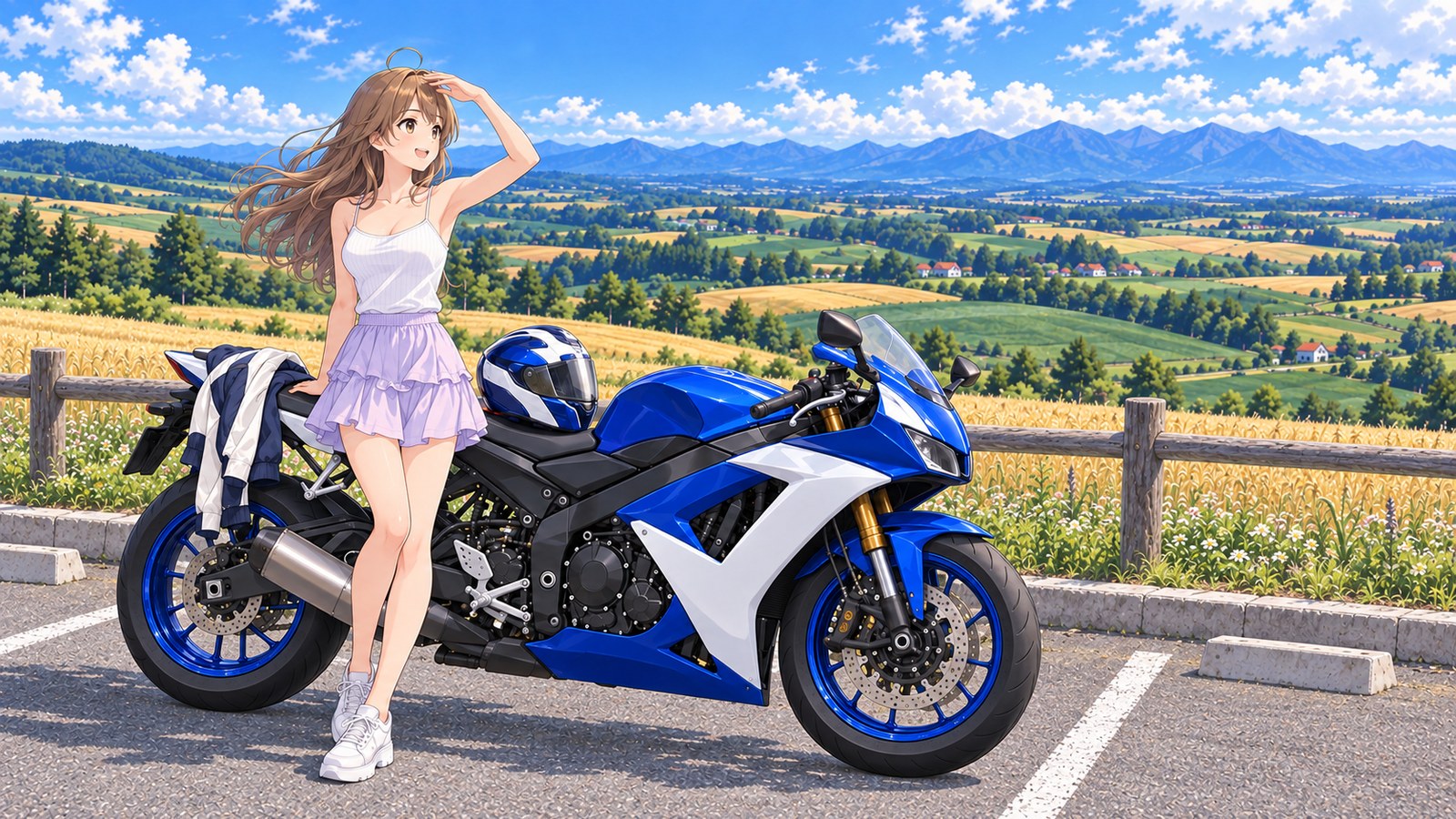
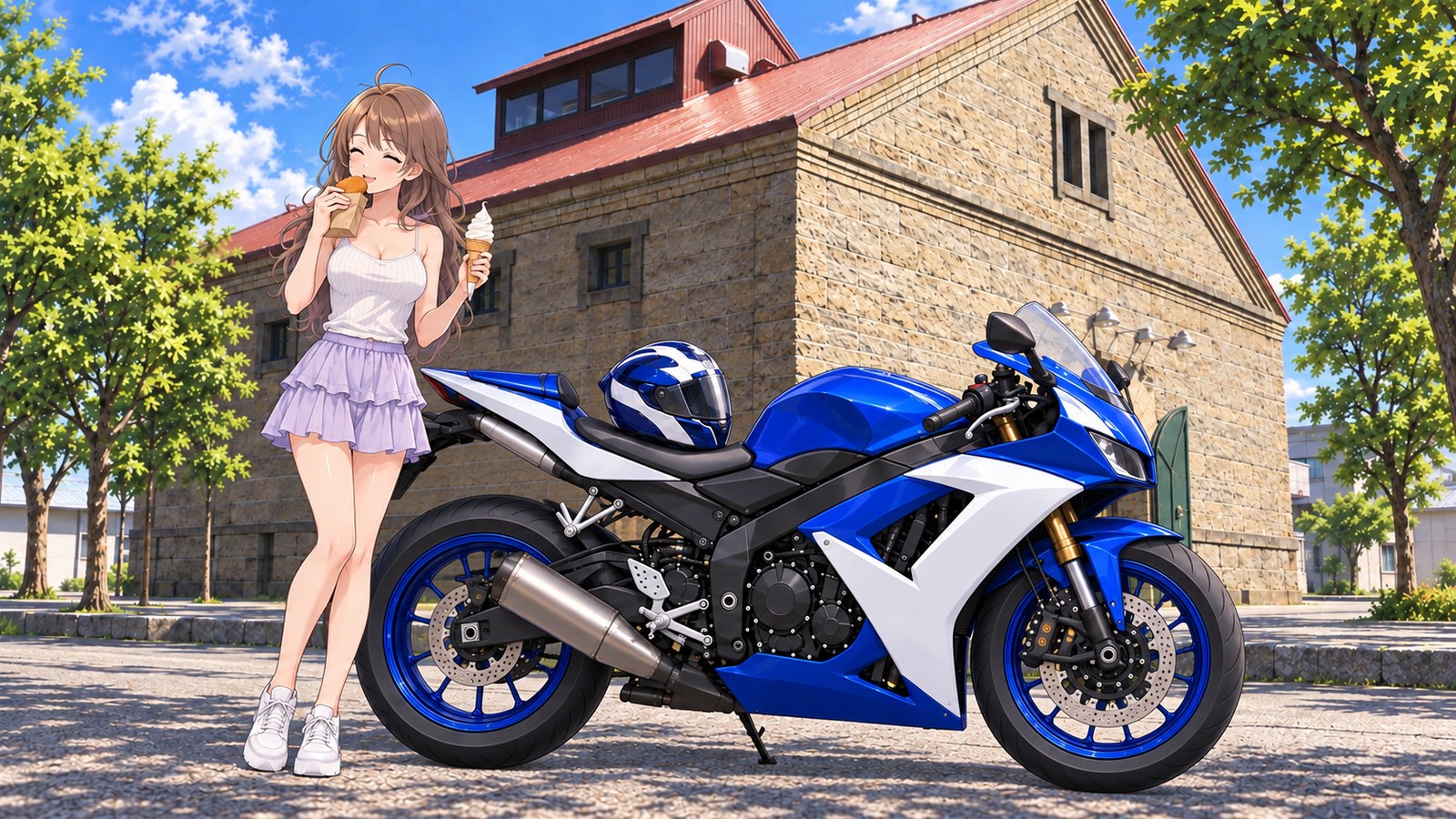
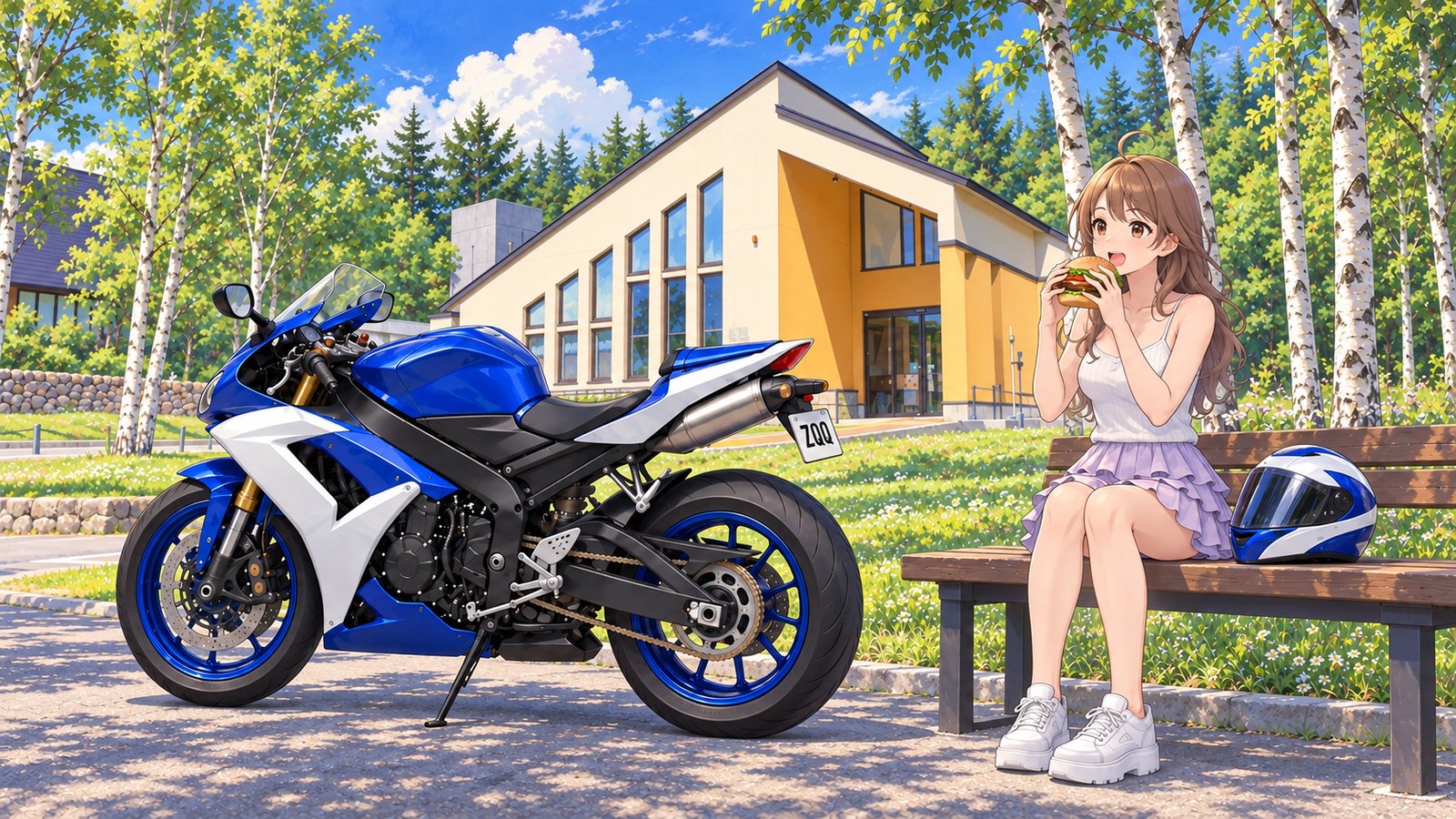
The second summer, I came on a blue-and-white motorcycle. I took it aboard the ferry at Oarai and went straight from Tomakomai to Biei. The wind felt closer than it had in the car, and the smell of wheat reached me even inside my helmet. At the same Shin'ei-no-oka car park as that first summer, I parked between the white lines and set my helmet on the seat. I shaded my eyes and looked over the fields; the wheat was swaying in the wind, just as it had that day.
On the way back, I stopped at Biei Oka no Kura, the roadside station by Biei Station. I couldn't choose between a croquette made with Biei potatoes and soft-serve, so I bought both. Out front by the stone warehouse, I bit into the freshly fried croquette. The crust crunched, and the potato inside was fluffy. Then I took a bite of the cold soft-serve. Going back and forth between hot and cold, both hands full, I was dead serious about which one to bite next. I wish every travel dilemma could be this easy.
AutumnLate October
The Missing Memory Card and a Hill Where Three Seasons Meet
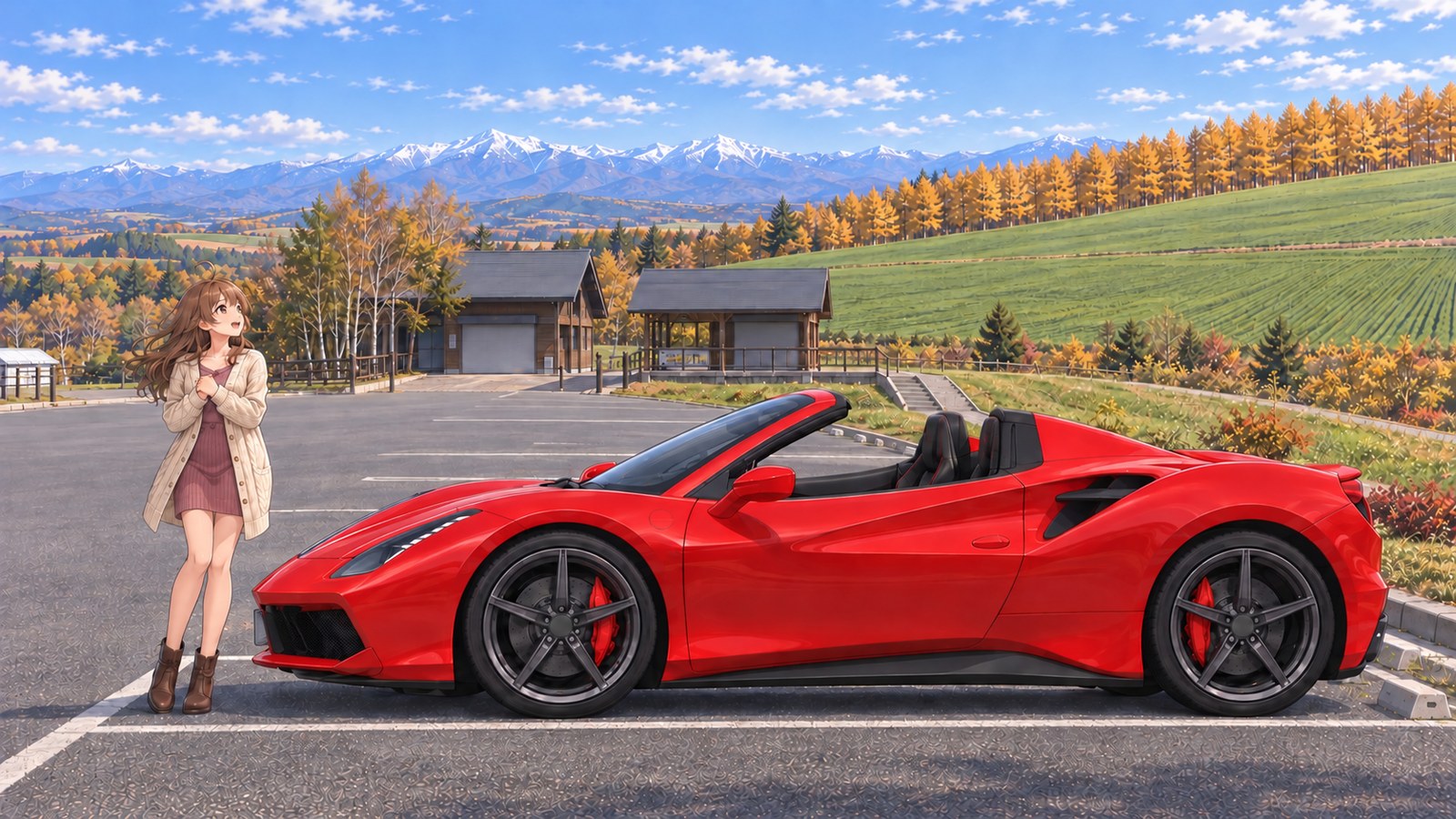
The shutter wouldn't fire. In the car park at Hokusei-no-oka Observation Park, the view I'd been waiting so long to see was right in front of me. Larches lined the hilltop, golden all the way from one end of the row to the other. Yet the camera screen showed a message: no memory card inserted.
These larches were planted as a windbreak, and I heard they turn yellow for only 1 week to 10 days each year. I wanted to catch that brief window, so I checked reports on the larches' changing colour every day, watched the weather forecast and even planned the date of my ferry crossing to Hokkaido around it. I'd finally made it in time, and then this. With the camera in my hand, all that excitement drained away in an instant. The night before, I'd taken the card out while sorting photos at the inn and forgotten to put it back. Knowing the reason straight away somehow made it sting even more.
I felt sorry for myself at the far edge of the car park for a little while. Then I looked up: autumn-sown wheat shoots covered the opposite slope in green; above them were golden larches along the ridge; and beyond, fresh snow covered the Tokachi-dake Range. Green like spring, gold like autumn and white like winter, all in one view. It seemed a shame to waste a view like that by feeling sorry for myself, so I put the camera away in my bag.
Cold air slipped through the collar of my cardigan, and I pulled it closed. Without any photos, I traced the row of larches in the air with my finger, memorising where it broke off and where it disappeared behind the hill. If anyone had seen me, they'd probably have thought I was a bit odd.
I got back in the car, put the roof up and turned the heater higher. As my fingers warmed, I could still see the row of larches I'd traced, unbroken in my mind. But I still wanted to take photos home with me. I decided to come back the next day, but cold rain set in the following morning and lasted 2 days. By the time the skies cleared, it was already the day I had to board the ferry home. I wrote in big letters in my diary: next autumn, for sure.
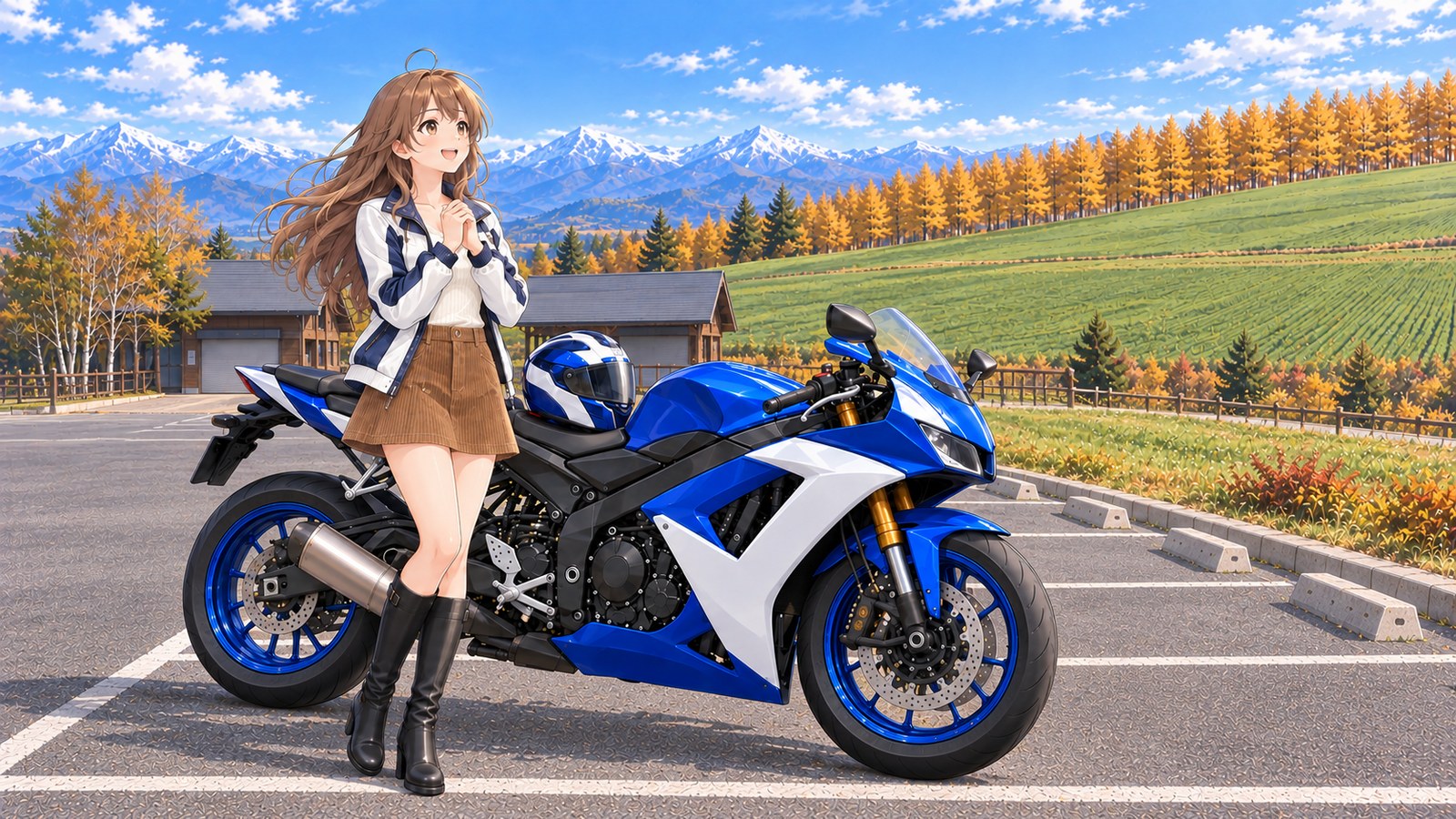
The next autumn, I came on a blue-and-white motorcycle. This time I brought 2 memory cards: one in the camera and one spare in my pocket. At the same car park at Hokusei-no-oka as the year before, I took off my helmet and looked up. The larches ran all the way along the ridge, golden from end to end. Before I knew it, my hands were clasped in front of my chest at the sight I'd waited a year to see. I pressed the shutter—this time for real—and checked that the row of larches had appeared on the screen before I finally smiled.
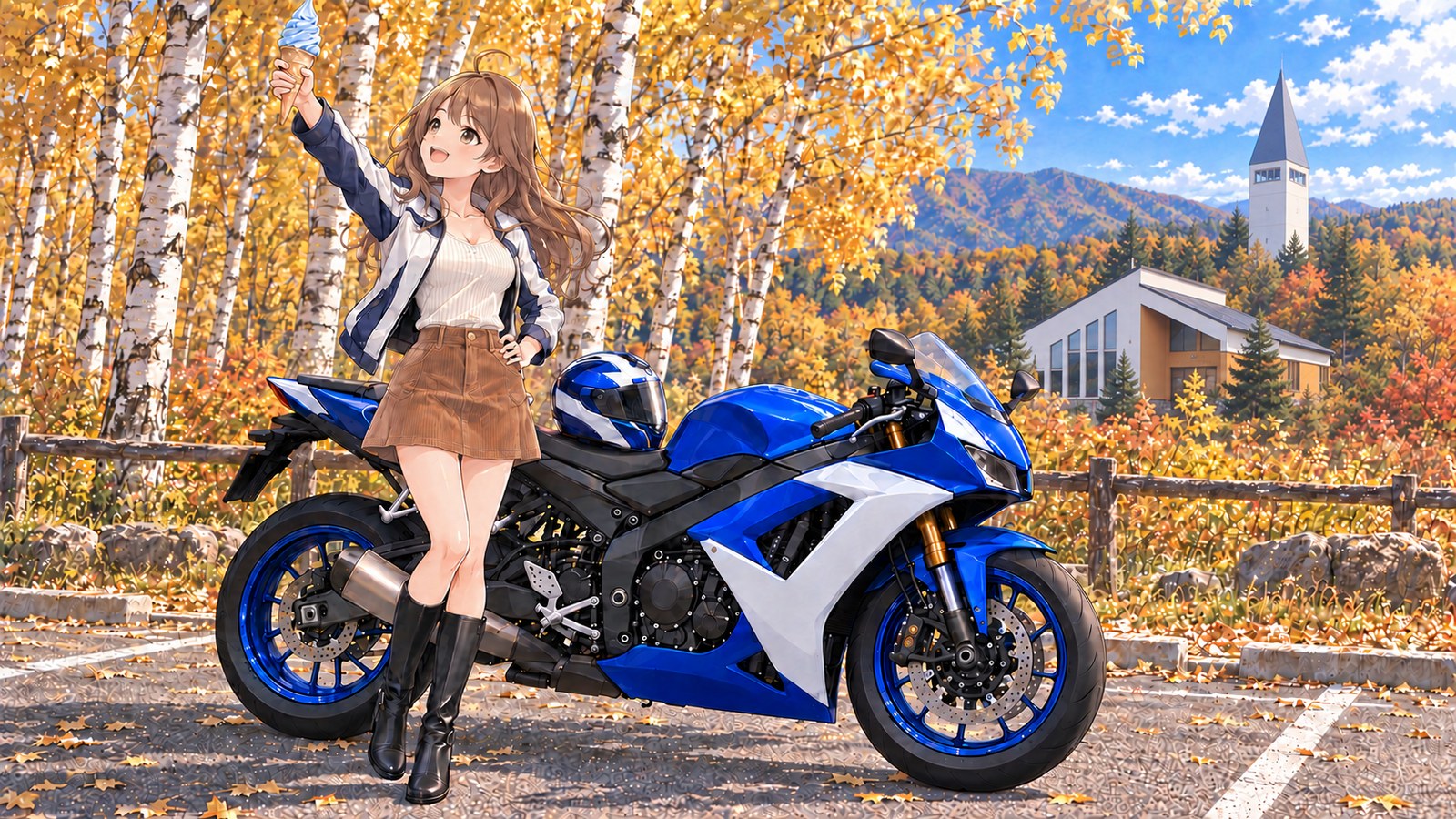
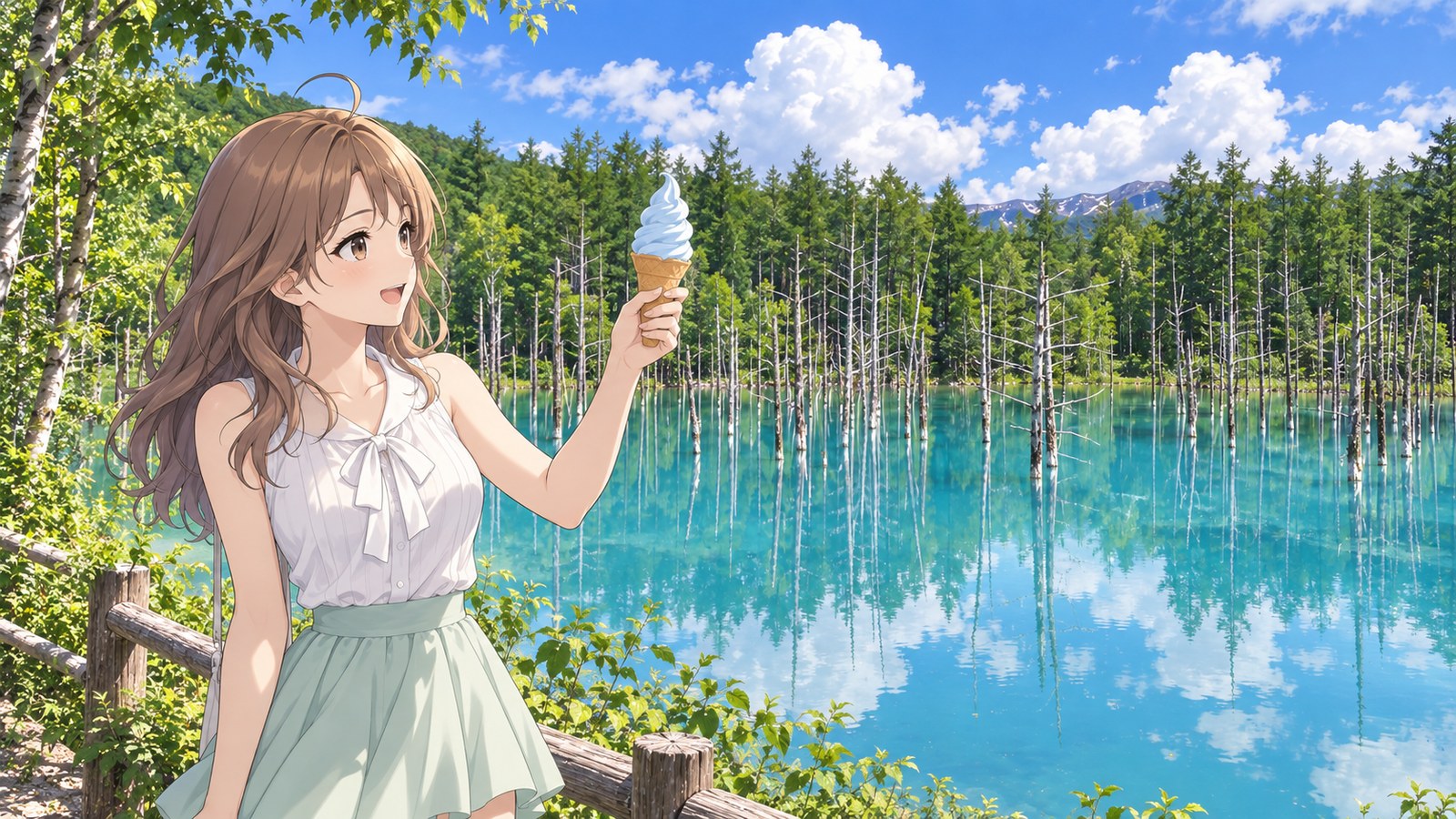
On the way back, I bought a pale-blue soft-serve inspired by the Blue Pond at Biei Shirogane Birke roadside station. I held it up in front of a yellow birch and took a photo. This time, the camera actually took the photo. Pleased with myself, I took one more photo, then a bite. Laughing at myself for choosing something cold in the cold, I kept looking back at the larch photos I'd just taken, over and over.
WinterLate January
Sunlit Peaks and Biei Curry Udon
“You must've been cold,” someone said. “Yes, I thought my fingertips were about to freeze,” I answered, taking the question completely seriously. It was right after I'd sat down at a family restaurant in town. Once I'd said it, I quietly laughed to myself—maybe that was a bit dramatic.
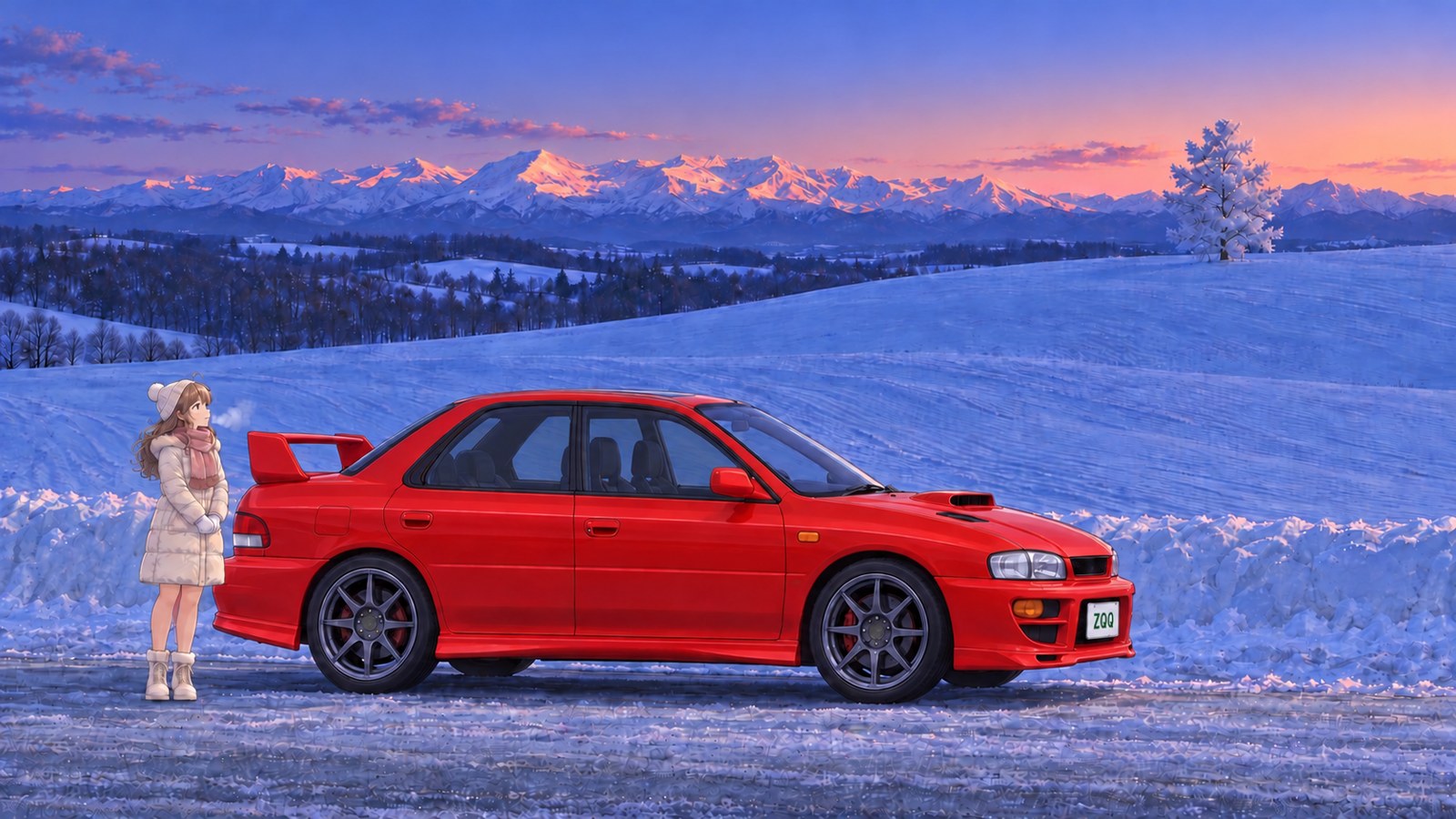
In January, every hill in Biei lay under snow. For my winter trip to Hokkaido, I took my second car, a four-wheel drive that's good on snowy roads. When I passed the hills where I'd watched wheat fields in summer, the view had changed so much I checked the map to make sure I was in the right place. I planned to stay among the hills until evening, so I went into this restaurant first to warm up.
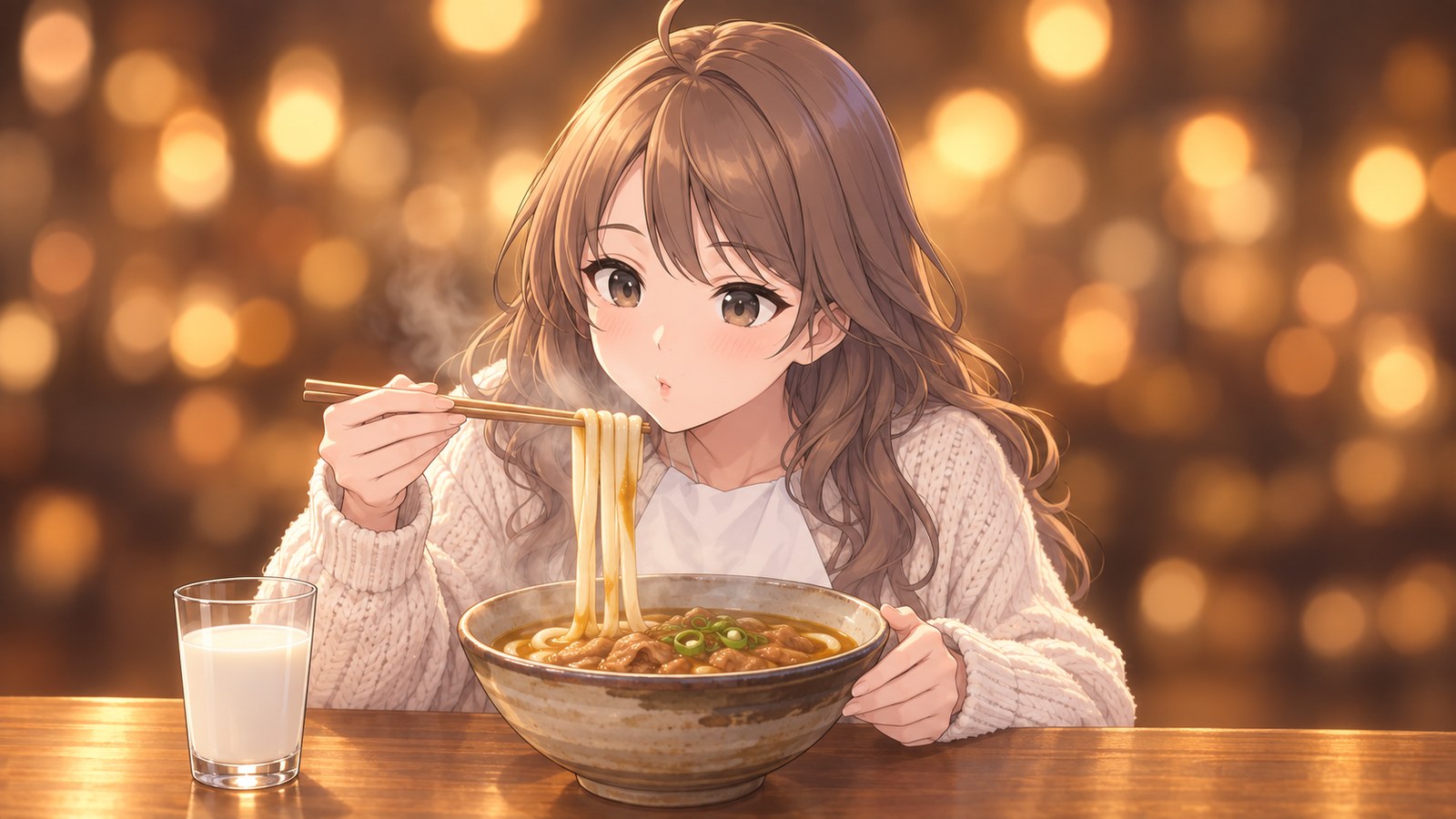
I ordered Biei curry udon with Biei milk on the side. I heard the noodles here are made from wheat grown in Biei's fields. Maybe the wheat in these noodles came from the field I couldn't tell was Haruko or Akiko last summer. The thought made me want to say hello to my noodles. I didn't, of course.
I tucked a paper napkin firmly into the neckline of my white sweater to keep it clean, then blew on the noodles before the first bite. The warmth of the curry spread through my chilled body. Feeling better, I picked up another strand of noodles, and a small spot of curry splashed onto my cheek. I'd gone to the trouble of protecting my clothes, only to get curry on my face. I wiped my cheek and took a sip of milk, then started laughing again.
Once I was warm through, I headed for the snowy hills. In summer I'd gone over this slope with the roof down; today I climbed it carefully, listening to the tyres crunch over snow. I kept the steering steady and worked the accelerator gently. Rushing on snowy roads never does any good, so I took the hills much more slowly than usual. The car park at Shikisai-no-Oka, which stays open in winter, had been cleared of snow. The moment I stepped outside, my cheeks hurt from the cold.
As the sun sank, it began to light only the peaks of the distant Tokachi-dake Range. Apparently, when the setting sun lights only the tops of high mountains, it's called alpenglow. The hills in front of me were already going dark, but the mountain peaks still glowed pink. My breath clouded the air as I watched the glow creep higher up the slopes. I stood there with my hands in my pockets until Shikisai-no-Oka closed at 4:30.
By the time I got back to the car, even my toes were numb. I held both hands out towards the heater; my fingertips tingled as warmth finally returned. When I pulled out of the car park, the distant peaks were still faintly pink. The same hills I'd seen in summer and autumn felt so quiet today. I followed the tracks of the car ahead slowly back to the inn.
The story sections are fiction inspired by this location. For accurate information, please consult official tourism and information websites.
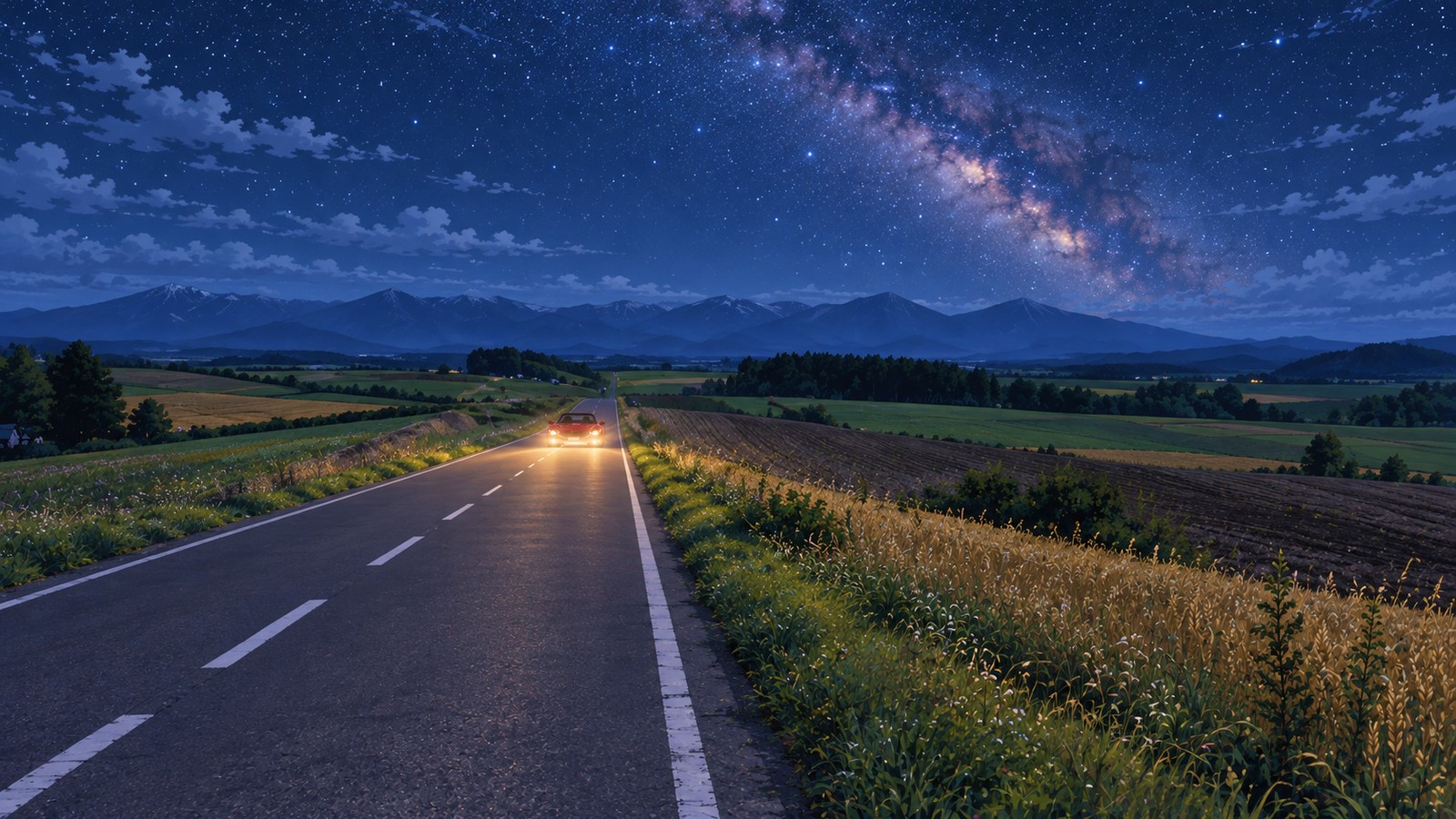
Biei Hills at Night
Photos of this place11 images
-
Biei, Hokkaido · Spring
-
Biei, Hokkaido · Spring
-
Biei, Hokkaido · Summer
-
Biei, Hokkaido · Summer
-
Biei, Hokkaido · Summer
-
Biei, Hokkaido · Autumn
-
Biei, Hokkaido · Autumn
-
Biei, Hokkaido · Autumn
-
Biei, Hokkaido · Winter
-
Biei, Hokkaido · Winter
-
Biei, Hokkaido · Biei Hills at Night (Summer)
Local specialties
Biei Curry Udon
At Family Restaurant Daimaru, featured by the Biei Tourism Association, you can order Biei curry udon served with Biei milk, as well as a grilled-noodle version. The noodles are made with Koumugi, a blend of Kitahonami and Haruyokoi, two wheat varieties grown in Biei. The Biei milk served on the side gently cools your mouth after the heat of the curry.
Biei Asparagus
Asparagus grown in Biei is one of the town's signature products. If you're visiting in spring or early summer, you could even plan lunch around asparagus.
Soft-serve made with Biei milk
I love local soft-serve, so there was no way I could just drive through Biei. Soft-serve made with milk from the town is perfect for a break between hills. Each stop has its own flavours and colours, and I can't help wanting to try them all.
Highlights
How volcanic eruptions shaped the rolling hills
Ash and mudflows from a large volcanic eruption accumulated here, then rivers eroded them over a long period, shaping the rolling hills we see today. The hills, once thickly forested, were cleared by settlers; the first people settled here in 1894. The slopes where I've enjoyed working the accelerator were forest once, too. Since learning that, I find myself noticing the windbreaks left along the field edges every time I climb a hill.
A patchwork that changes every year
Wheat, potatoes, sugar beet and beans are grown in rotation from field to field, so which hillsides are covered with wheat changes from year to year. Crop rotation began in Biei in 1983, and wheat takes up the largest planted area. You may not see last year's view again, but each year brings a different pattern across the hills.
The photographs that made these hills famous
Takushinkan, along Panorama Road, is a gallery of landscape photography by Shinzo Maeda, one of Japan's best-known landscape photographers. It opened in July 1987 on the site of the former Chiyoda Elementary School. Maeda first visited Biei in 1971, and I heard that his photographs helped bring the hills to wider attention. After my autumn memory-card mishap, that story hits a little close to home.
Road information
Getting here from Tokyo
- Tokyo to Oarai Port
- About 130 kmAbout 1.5 hours by car via the Joban Expressway
- Ferry
- Oarai Port to Tomakomai PortTake your car on the evening ferry; the trip takes about 18 hours.
- From Tomakomai Port
- About 180 kmAbout 3 hours by car via the Doto Expressway and National Route 237
- Road around the hills
- Patchwork RoadFrom Hokusei-no-oka Observation Park, about 7 minutes by car from Biei Station
Patchwork Road
- Distance
- About 15 km
- Maximum elevation change
- 160m
This route takes you past Hokusei-no-oka Observation Park, Ken and Mary's Tree, Seven Stars Tree and more. Hokusei-no-oka, where I returned by motorcycle in autumn to retake my photos, is along this route.
Panorama Road
- Distance
- About 25 km
- Maximum elevation change
- 221m
This route takes you past Shin'ei-no-oka Observation Park, Shikisai-no-Oka, Takushinkan, San'ai-no-oka Observation Park and more. I saw the summer wheat glowing in the evening sun and the winter alpenglow along this road.
Both distances and elevation changes are measured from Biei Station. These figures finally explained why the hills I climbed, gently working the accelerator in spring, seemed to go on for so long.
Nearby driving spots
Nearby roadside stations
More Spot Guides
If you enjoyed this story, you might like these places too. I've gone back to each of them in different seasons, again and again.
Maps & Sources
Official sources
- Biei Tourism Association (What Makes Biei's Wheat Fields Special) (opens in a new tab)
- Biei Tourism Association (Haruko and Akiko?) (opens in a new tab)
- Biei Tourism Association (Potato Flower Fields) (opens in a new tab)
- Biei Tourism Association (Straw Rolls) (opens in a new tab)
- Biei Tourism Association (Signs of Spring: Tractors Take Centre Stage in the Fields) (opens in a new tab)
- Biei Tourism Association (All About Asparagus) (opens in a new tab)
- Biei Tourism Association (Autumn Highlights Across the Hills) (opens in a new tab)
- Biei Tourism Association (Yellow Mustard Flower Fields) (opens in a new tab)
- Biei Tourism Association (The Colour of Snow: A Mysterious Winter Landscape) (opens in a new tab)
- Biei Tourism Association (Snowshoeing Through Biei's Spectacular Hills) (opens in a new tab)
- Biei Tourism Association (History) (opens in a new tab)
- Biei Tourism Association (Shinzo Maeda Photography Gallery Takushinkan) (opens in a new tab)
- Biei Tourism Association (Family Restaurant Daimaru) (opens in a new tab)
- Biei Tourism Association (Cycling Map: Patchwork Road Route) (opens in a new tab)
- Biei Tourism Association (Cycling Map: Panorama Road Route) (opens in a new tab)
- Biei Tourism Association (Shin'ei-no-oka Observation Park) (opens in a new tab)
- Biei Tourism Association (Hokusei-no-oka Observation Park) (opens in a new tab)
- Shikisai-no-Oka (Visitor Information) (opens in a new tab)
- Biei Town (BETWEEN THE BREAD) (opens in a new tab)