Shimogo Town, Fukushima Prefecture
A Winter Walk through Ouchi-juku Snow-Covered Thatched Roofs and Negi Soba
Ouchi-juku was a post town on the road linking Aizu-Wakamatsu and Nikko-Imaichi during the Edo period. On a snowy morning, I walked along the main street, then tried picking up soba with a long green onion instead of chopsticks. I’ll tell you about a trip where I found myself taking my time, whether I was admiring the scenery or eating soba.
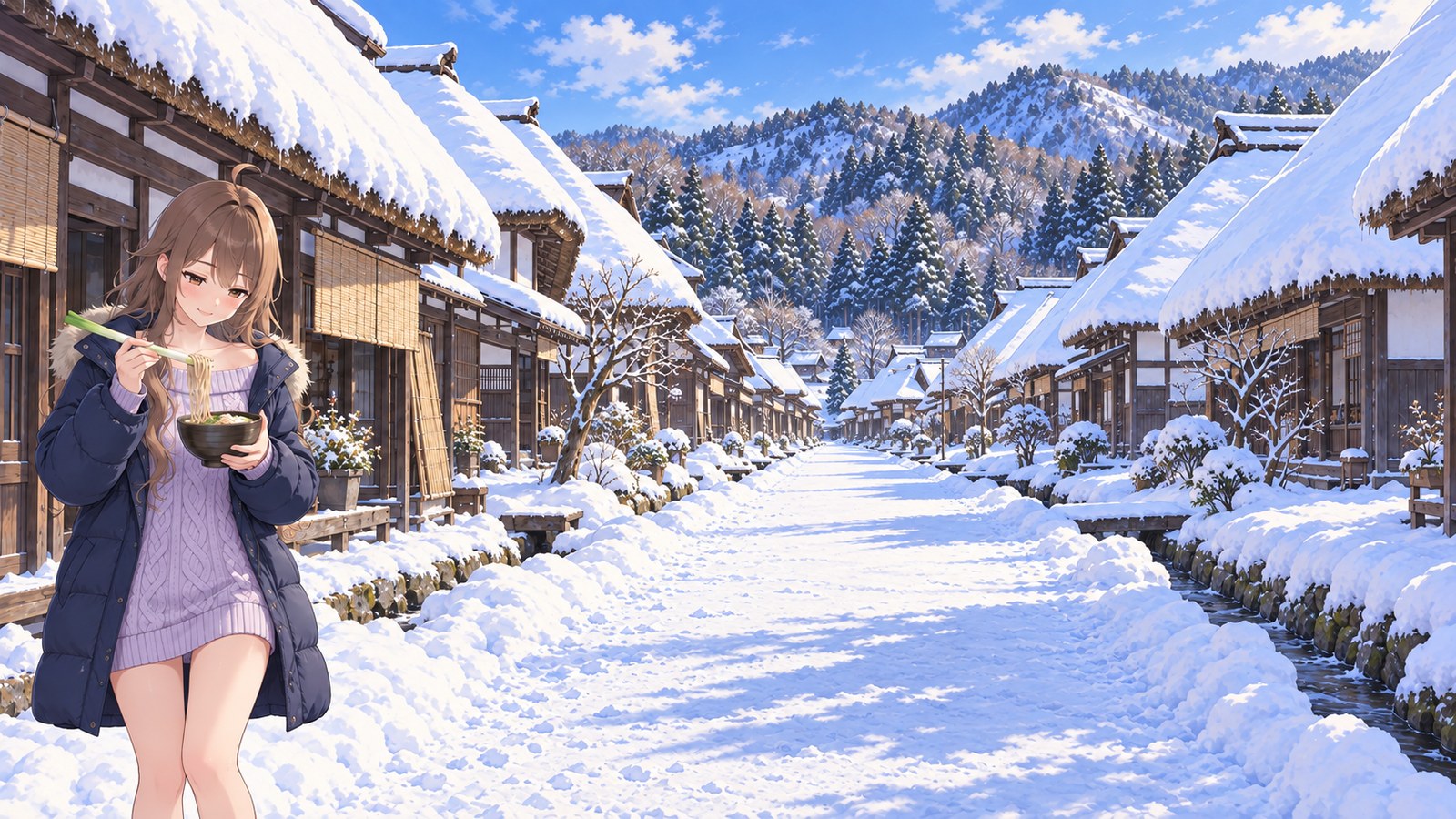
Here’s what I saw on a snowy winter morning in Ouchi-juku.
WinterA snowy winter morning
Snow-Covered Thatched Roofs and Negi Soba
As I stepped onto Ouchi-juku’s main street, I looked up at the roofs first. Snow lay thick across the broad slopes of the thatch. Houses stood in rows on either side, and the road ran up toward the mountains. I hunched my shoulders inside my down coat as I walked, but the moment I took in that long row of houses, I stopped. I wanted to stand right there and gaze at the rooftops stretching into the distance.
A little farther along, I spotted water flowing beside the street. I’d assumed the snow had hidden it completely, so I was surprised to see water moving right beside the houses. I looked down at my feet, then lifted my eyes back to the roofs. The same street kept offering me something new every time I looked up or down. I was craning my neck more than I was taking pictures.
I’d heard that Ouchi-juku was a post town where travelers stopped to rest during the Edo period. It stood along the road between Aizu-Wakamatsu and Nikko-Imaichi, and processions under sankin-kotai (the alternate-attendance system) are said to have passed through here, too. I pictured travelers of the time walking the same street I was on. Thinking of that, the houses on either side felt like more than just a pretty row of buildings. After walking along a winter road, I’m sure seeing these roofs would have been a relief.
After gazing at the roofs, I turned my attention to the bowl in my hands. This is Ouchi-juku’s famous negi soba. The long green onion isn’t just a topping; you use it instead of chopsticks. I held the bowl in one hand and carefully lifted the noodles with the other. I was ready to eat, but it took more concentration than I expected just to get that first bite.
Looking at the soba balanced on the green onion, I couldn’t help laughing. Usually I’d pick up noodles with chopsticks without a second thought, but today I was watching them and thinking I’d better eat them before they slipped off. I brought the bowl up to my face and finally got a bite. I was surprised at how happy I felt just to get that first bite. I think I’ll always remember the snowy street and the way I held the green onion together.
When I looked back along the street, I noticed the thatched roofs even more than before. They’re made from susuki (Japanese silver grass), and I heard that professional thatchers work with the villagers to replace the thatch. The roofs aren’t simply left over from another era; people still take care to maintain them. Wanting one last look from the end of the street, I steadied the bowl in my hands. I came to see the snow-covered roofs, but now I have even more to take home with me: negi soba and the story of the people who care for those roofs.
The story sections are fiction inspired by this location. For accurate information, please consult official tourism and information websites.
Local specialties
Negi Soba
At Ouchi-juku, the famous negi soba is eaten with a long green onion in place of chopsticks. I got so focused on picking up the noodles that even managing that first bite became part of the fun. I came to see the scenery, but the way you eat this soba turned out to be part of the trip, too.
Grilled Char on a Skewer
Ouchi-juku’s specialties also include char grilled on a skewer. I got completely caught up in the negi soba this time, but now I have something else I want to try on my next walk through town.
Highlights
An Edo-Period Post Town
Ouchi-juku flourished as a post town along the road connecting Aizu-Wakamatsu and Nikko-Imaichi. In 1981, it was selected as a Nationally Important Preservation District for Groups of Traditional Buildings. Walking down its snowy street, I find myself lingering over the roofs, imagining the travelers who once stopped here along the way.
Thatched Roofs Still Replaced Today
The roofs are made from susuki (Japanese silver grass), and the villagers work with professional thatchers, known as kayate, to replace them. That’s how these snow-covered roofs have been looked after all this time. It’s the kind of story that makes me want to look up one more time before I leave.
Road Information
Ouchi-juku on the Shimotsuke Kaido (Aizu West Road)
Long ago, travelers and processions under sankin-kotai (the system of alternate attendance) passed through this post town. Today, Ouchi-juku is best explored on foot after parking your car. I kept stopping to admire the snowy roofs, so I didn’t get very far.
Park your car and explore Ouchi-juku on foot. I kept looking up at the snow on the roofs, then turning to the water channels, and what I meant to be a short stroll turned into a leisurely wander through town.
More Spot Guides
If you enjoyed this story, you might like these places too. I've gone back to each of them in different seasons, again and again.