Poropinai, Chitose City, Hokkaido
Lake Shikotsu Shading my eyes to see all the way across the lake
Poropinai sits on the north shore of Lake Shikotsu, about an hour’s drive from central Sapporo. The lake opens up just beyond the car park: in spring, I have soft-serve ice cream with snow still clinging to the mountains; in summer, I share a kokanee salmon lunch with my friend; and in autumn, I get my motorbike ready among the leaves. I’ve stopped at this lakeside spot on each of my long trips around Hokkaido, taking the ferry from Ariake with my car.
In spring, snow still covers the mountains; in summer, the lake sparkles; and in autumn, the woods fill with colour. Choose the spring, summer or autumn tab and come along to Poropinai with me. My spring trip began with soft-serve ice cream on the terrace, the morning after I arrived in Hokkaido.
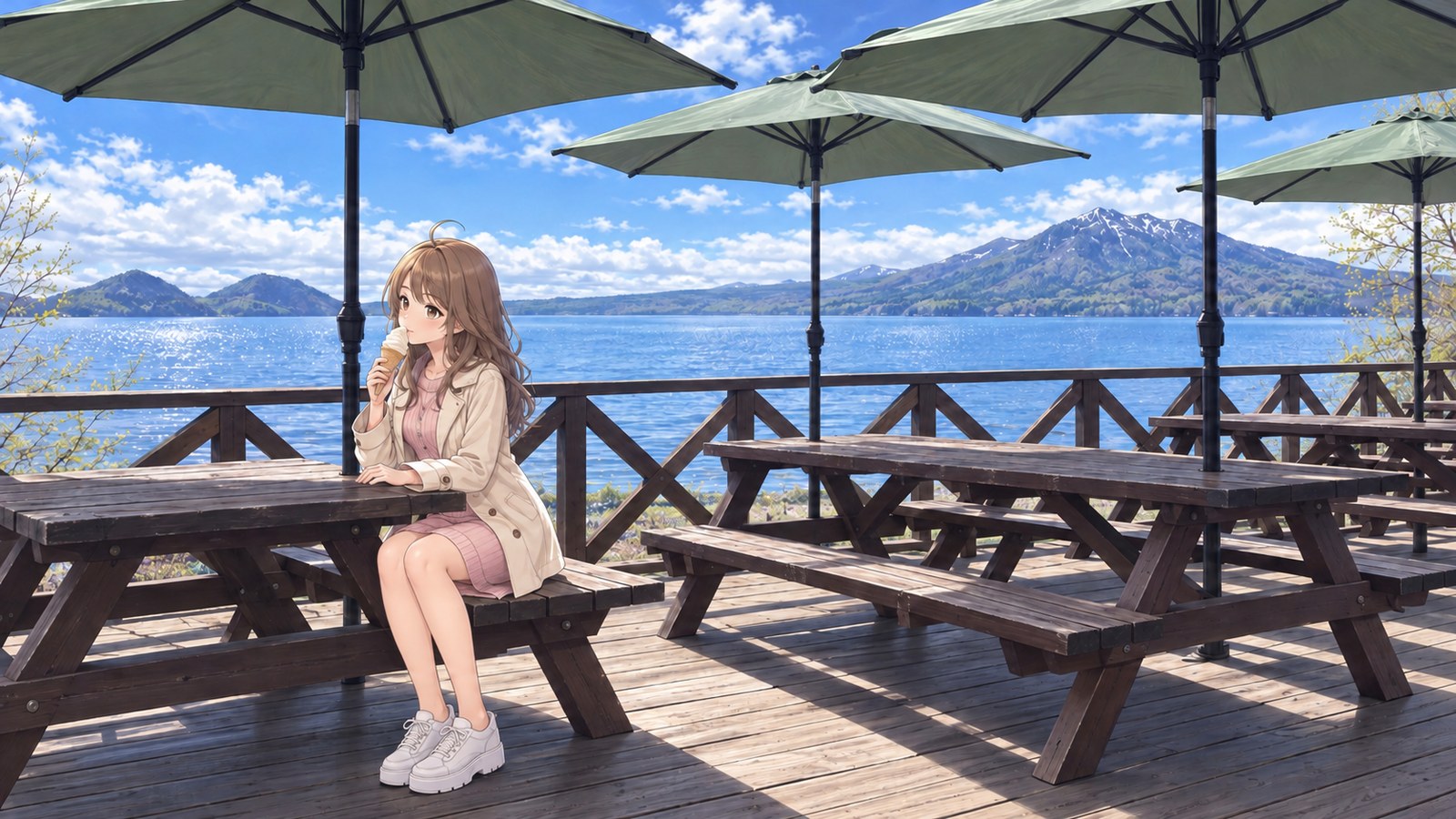
SpringLate April to early May, before noon
Soft-serve ice cream on the terrace, with snowy mountains in view
My spring trip around Hokkaido took about a month. On the day the ferry from Oarai brought me to Tomakomai, I stayed near the port. The next morning, I chose Lake Shikotsu as my first stop. I’d decided to start the trip with something sweet and a lake view. The ship had left Oarai Port in the early evening; after watching the harbour lights recede from the deck, I turned in early and woke feeling fully rested. I arrived on a sunny late morning toward the end of April and parked in the car park, which has space for about 50 cars. Then I bought a cone of soft-serve ice cream and headed to a wooden table facing the lake.
I smoothed down the hem of my cream-coloured coat and sat on the bench. The view opened up in front of me. Even beneath the parasol, I could see the lake and mountains beyond the railing. Little flashes of light danced across the water, while snow still clung to the mountains. So this is what spring at Lake Shikotsu is like: soft-serve ice cream with a view like this.
I took a bite of my soft-serve ice cream and rested my other hand on the wooden table. As I savoured the cool sweetness, my gaze moved from the snow on the mountains to the lake, then to the trees nearby. I loved seeing the early spring leaves and distant mountains all in the same view. I wondered how much I could fit into a photo, but in the end, I chose to stay seated and take it all in. The green parasol’s shadow shifted little by little; before I knew it, the patch of sun on my sleeve had slid down to my wrist.
I’d heard Lake Shikotsu is so deep and holds so much water that it hardly ever freezes, even in winter. Beneath the snow-covered mountains, the surface still shimmered softly. So even through winter, the lake kept moving, its waves never quite freezing over. Thinking of that, even the little waves lapping at the shore seemed somehow reassuring.
In spring, you can get takeaway soft-serve ice cream and light bites at Poropinai. I decided I wasn’t going anywhere until I’d finished mine. One bite, a look at the mountains, then another at the lake. When a drip ran down the edge of the cone, I hurriedly licked it up and looked back at the water. Somewhere in that little rhythm, I’d eaten right down to the bottom of the cone.
Later, I walked down toward the lake. You can fish from the pier with a rented rod; apparently, Japanese dace and white-spotted char are among the fish you might catch. I pictured myself borrowing a rod and casting a line, then got stuck wondering how I’d get the hook out if I actually caught one. Looking down from the end of the pier, I could make out the stones in the shallows so clearly I felt I could count them one by one. While I was busy thinking it all through, the water beyond the pier caught the light in a different way from the terrace.
Back at the car, I wrote “Soft serve at Lake Shikotsu” on the first page of my travel notebook. Underneath, I added that I’d try a dish made with Lake Shikotsu chipp next time I came in summer, then set off for the next town.
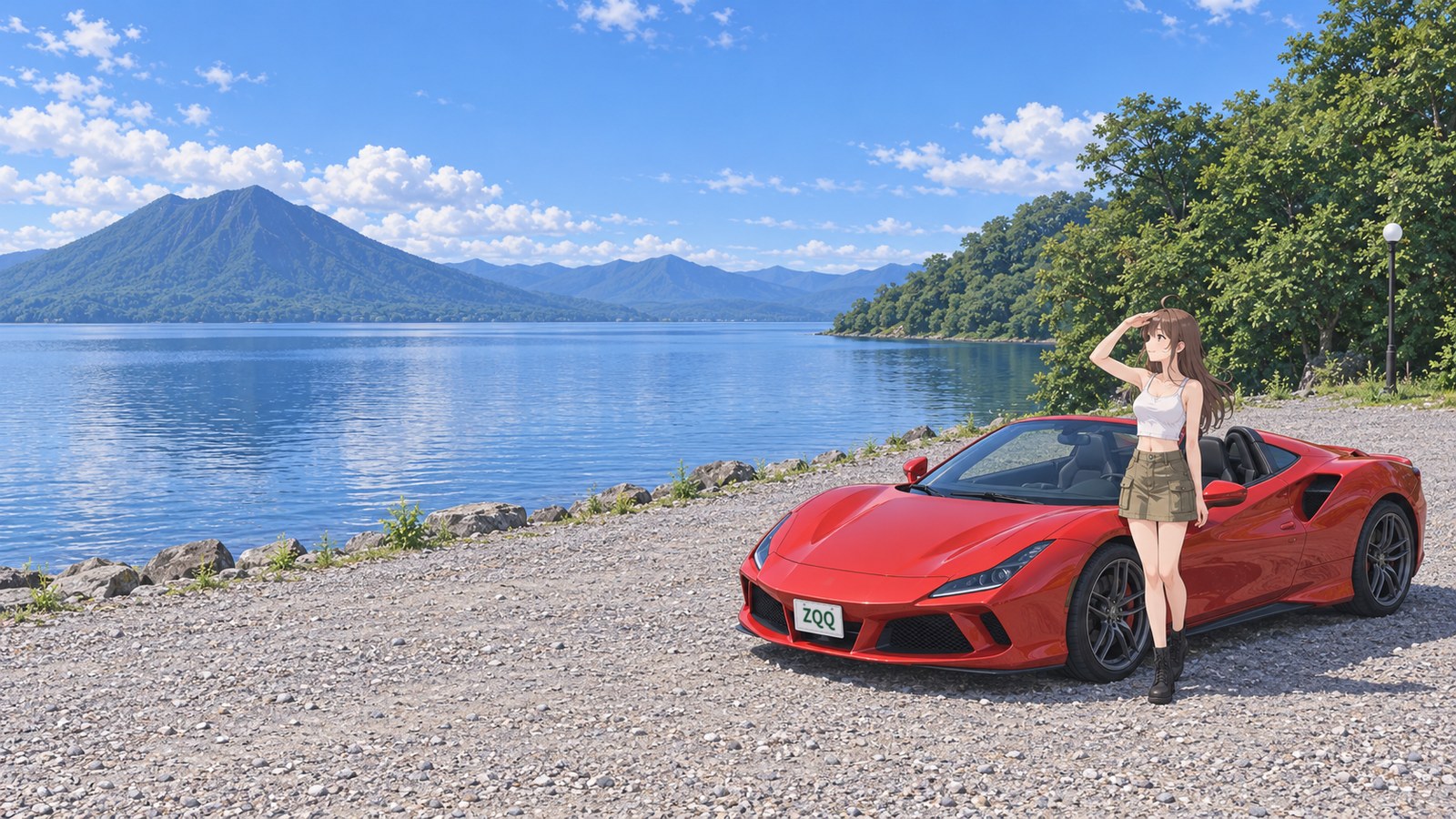
SummerA sunny late morning in August
Shade your eyes and look all the way across the lake
I had one week left of my summer trip around Hokkaido. I’d taken the ferry from Oma to Hakodate with my convertible. My friend flew up to Hokkaido to join me for the last few days. I picked her up at the airport and drove to Lake Shikotsu with the convertible’s top down. After parking in Poropinai’s gravel car park, I opened the door to a view of the lake and the mountains on the far shore. I loved being able to take it all in as soon as I stepped out. The late-morning sun in August was bright, so I raised a hand to my brow and looked all the way across the lake.
With my black boots crunching on the gravel, I stood beside the car. Trees stretched behind me, and the lake stretched out ahead of me. My friend walked around to the other side of the car and took in the same view. I just wanted to stand there before doing anything else. Those few quiet minutes after arriving are part of a lakeside drive, too.
Lake Shikotsu is a caldera lake with a circumference of about 40.3 km and a maximum depth of 360 m. I’d heard it’s the second-deepest lake in Japan. Formed by volcanic activity about 40,000 years ago, it’s surrounded by mountains and forest. It was hard to imagine that such deep water began just beyond the gravel at my feet; even standing at the shore and peering down, I couldn’t picture the bottom.
Up close, the water rippled; in the distance, the mountains traced the horizon. I’d always thought of Lake Shikotsu as just a blue lake, but there was so much more to see once I looked from the ripples nearby to the mountain ridge in the distance. My friend said, “You could keep looking even after taking a photo,” and I nodded, still shading my eyes with one hand.
Walking toward the lake, I spotted the pedal boats and rental boats. My friend grinned and asked, “Want to race one of those to the far shore?” I answered seriously that it was probably much too far; she laughed and said she was only joking. We didn’t go out on the water that day. I just imagined what the view might be like from out there.
For lunch, I was curious to try the lake’s kokanee salmon, known locally as chipp. It’s a relative of sockeye salmon that spends its whole life in the lake instead of heading out to sea. It’s said to have been brought from Lake Akan in 1894, and it apparently feeds on tiny creatures like water fleas. In summer, the restaurant at Poropinai serves it grilled with salt or fried. My friend and I talked about getting the grilled fish or trying the fried fish as well; I decided on the salt-grilled one.
I carried the meal out to a table on the terrace and took a bite with the lake in view. The skin was crisp and the flesh soft and tender. Knowing the fish had grown in the lake I’d just been looking at made me keep glancing between the water beyond the railing and the food on my plate. My friend gave me a piece of the fried fish, and I shared a little of my salt-grilled one in return. Sharing a taste of each preparation became a happy memory of that summer.
After lunch, I felt I could take my time deciding where to go next. Today, I wanted to spend a while here rather than cover a long distance. I looked at the lake, savoured the chipp, then turned my eyes back to the water. On the drive back, my friend and I couldn’t stop talking about the salt-grilled fish.
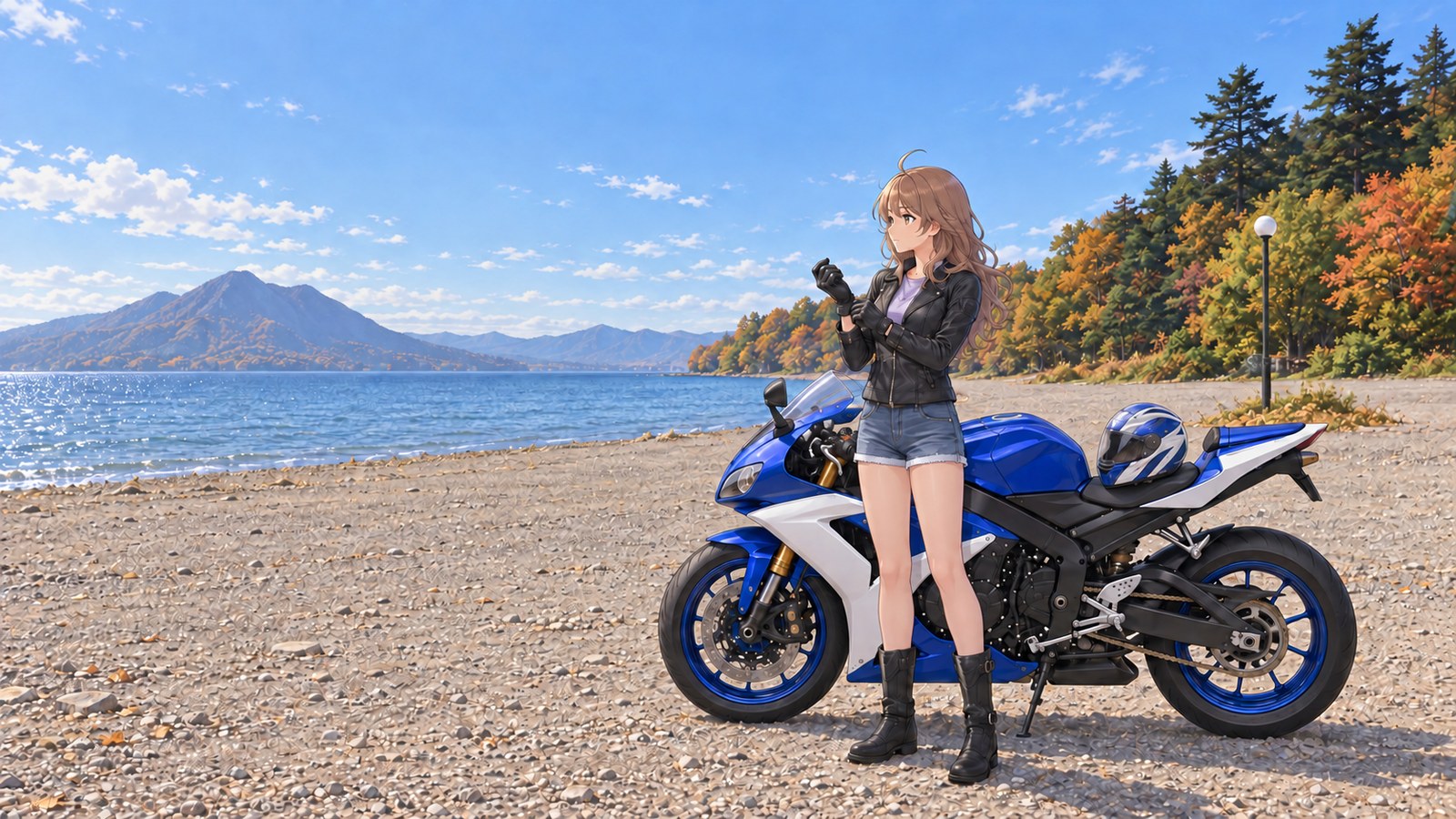
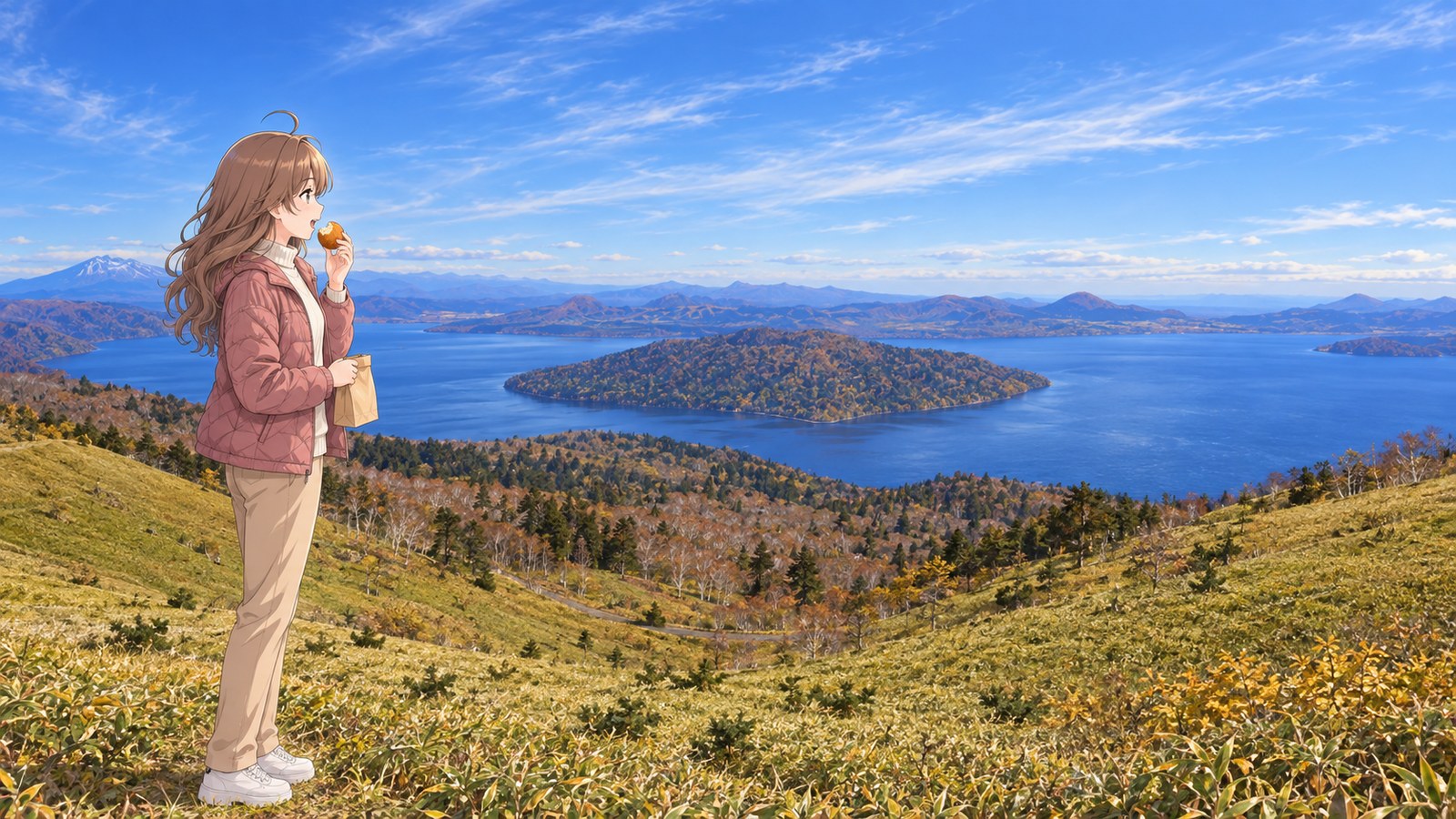
AutumnA sunny afternoon in October, with no snow on the ground
Autumn leaves by the lake, on the motorbike I shipped ahead
On my autumn trip around Hokkaido, I brought my car over from Oarai by ferry, then switched to my motorbike partway through. Before setting off, I arranged to have my blue-and-white motorbike shipped to my hotel in Chitose. On a sunny afternoon in October, I rode National Route 453 through the autumn leaves to Lake Shikotsu. I kept my eyes on the road and a firm grip on the handlebars; every time I rounded a bend and a new stretch of autumn colour came into view, I found myself making a little sound inside my helmet. When the lake came into view, I eased off the throttle and turned slowly into Poropinai.
I parked the motorbike on its side stand in the gravel car park just inland from the lakeshore. Still in my black riding jacket and boots, I left my helmet on the seat and looked out over the lake. Foliage covered the mountains across the water and the forest at the far end of the car park, with some trees still green among the leaves.
When I came by car in summer, the wide lake was what caught my eye first. In autumn, I kept looking toward the mountains and woods. After taking in the lake, I turned to the trees and spotted a hillside in autumn colour beyond the frame of the photo I’d just taken, so I took one more. That shot framed the hillside with the line of the lakeshore beneath it.
With my gloves off, I walked toward the water. Autumn is the spawning season for chipp, and apparently you can sometimes see them turning bright red near springs. I didn’t even know where the springs were, but I kept walking a few steps along the shore and crouching to look, over and over. I couldn’t find any. Still, knowing that somewhere in the lake fish like the ones I’d eaten in summer were changing colour had me searching every gap between the pebbles at the water’s edge.
At the water’s edge, the breeze felt chilly, so I turned up the collar of my riding jacket. I hadn’t noticed while riding, but in October the temperature by the lake changed a lot between sun and shade. Back in the sunlight, I felt my shoulders relax. On the sunlit gravel, I rubbed the gloves together in my hands before walking to the terrace.
After that, I stopped for a break on the restaurant terrace at Poropinai. The restaurant had light bites and sweets, and I picked something sweet. I opened my jacket and sat down, facing the mountain in its autumn colours. The seat by the railing was where I’d shared salt-grilled fish with my friend in summer, and even the taste of the fried fish she’d given me came back. With every bite, my eyes drifted to the coloured hillside across the lake, and my cold hands gradually warmed up.
As the sun began to dip, I went back to my motorbike, pulled on my gloves and adjusted the cuffs. I wanted to reach my hotel while it was still light, so I got ready quickly. I put on my helmet, started the engine and headed out of the car park, listening to the crunch of gravel beneath my tyres. Once I got to the hotel, I planned to put today’s photos next to the ones from my summer visit.
The story sections are fiction inspired by this location. For accurate information, please consult official tourism and information websites.
Photos of this place3 images
-
Poropinai, Chitose City, Hokkaido · Spring
-
Poropinai, Chitose City, Hokkaido · Summer
-
Poropinai, Chitose City, Hokkaido · Autumn
Local specialty
Lake Shikotsu chipp (kokanee salmon)
The restaurant at Poropinai serves the lake’s local specialty grilled with salt or fried. I’d like to have it for a meal after taking in the lake view.
Highlights
Lake views right by the car park
Poropinai sits on the north shore of Lake Shikotsu. The lake and the mountains on the far shore are right there when you step out of the car. In the summer sun, I shaded my eyes and looked all the way across.
The lake’s local specialty: kokanee salmon
This kokanee salmon is known locally as chipp. Try it grilled with salt or fried for lunch.
Road and location details
National Route 453 to Poropinai
- Drive time from central Sapporo
- About 1 hour by car from central Sapporo
- Maximum lake depth
- Lake Shikotsu’s maximum depth: 360 m
The drive time is an estimate from the Chitose Tourist Association; the depth refers to the lake itself.
Take a lakeside break for the view and lunch.
More Spot Guides
If you enjoyed this story, you might like these places too. I've gone back to each of them in different seasons, again and again.
Maps & Sources
Official sources
- Hokkaido Official Tourism Website (Lake Shikotsu) (opens in a new tab)
- Chitose Tourist Association (Poropinai Company) (opens in a new tab)
- Lake Shikotsu Management Council (Lake Shikotsu chipp) (opens in a new tab)
- Chitose City Official Tourism Website (Poropinai in spring) (opens in a new tab)
- Chitose Tourist Association (Shikotsu Blue and seasonal scenery) (opens in a new tab)