Esashi, Hokkaido
Driving Esashi Inishie Kaido Lattice-fronted merchant houses and an evening stroll
Esashi Inishie Kaido is a historic streetscape of trading houses, storehouses and merchant houses along the former national highway through Nakauta and Ubagami. Just before sunset in July, I drove through slowly, parked and went for a walk. Learning about Kitamaebune ships and the town's herring trade made the old houses all the more intriguing. I'd pair a stroll with a bowl of local herring soba.
Take an evening stroll past the lattice-fronted houses. My story of the time I spent here continues beneath the photos.
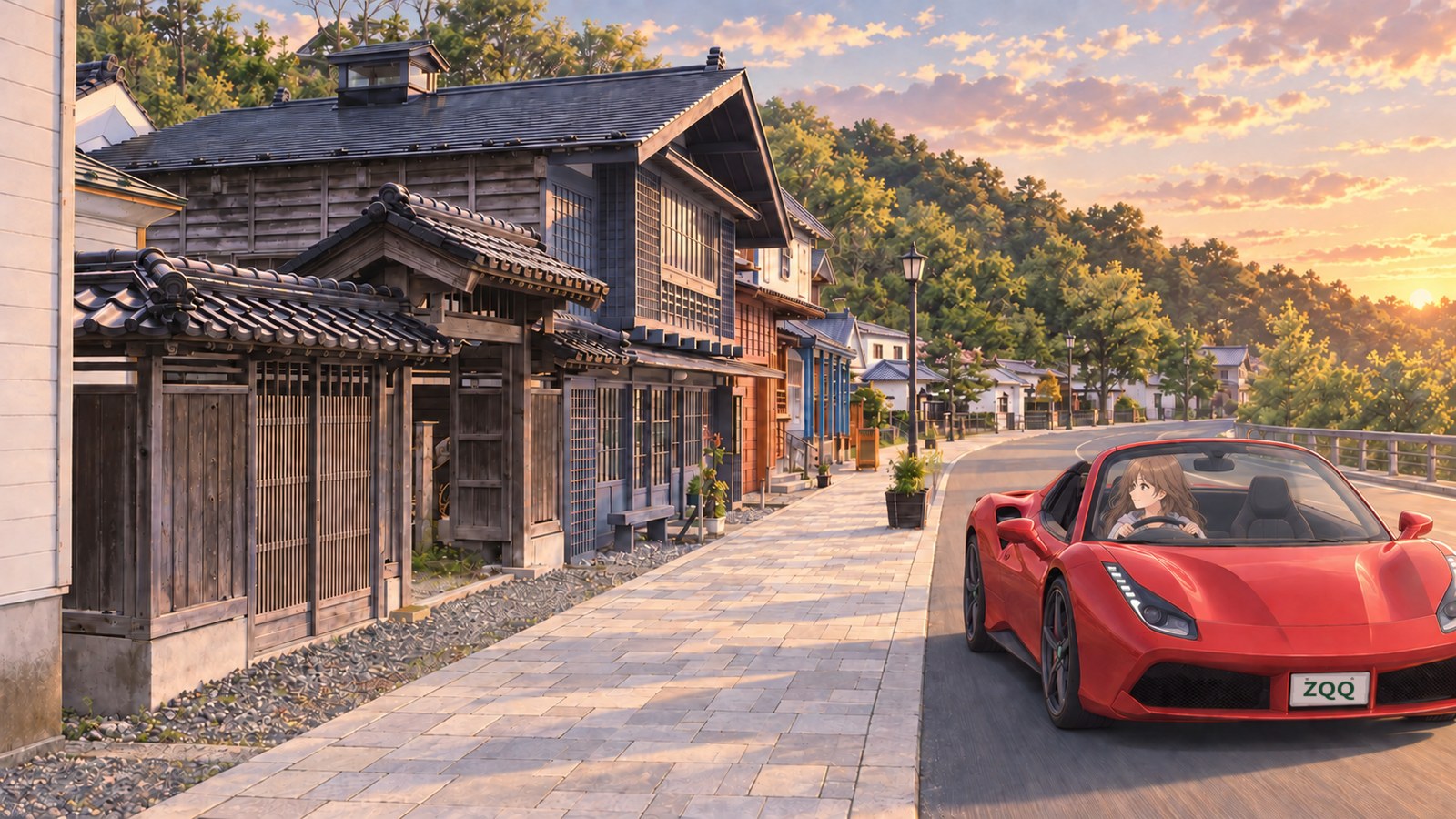
SummerJust before sunset in July
An evening stroll through the lattice-lined streets
When I turned onto Esashi Inishie Kaido, wooden houses lined the road. Just before sunset in July, the evening air drifted into my open-top car. I drove slowly through town, eyes on the road and both hands on the wheel. I held off stopping to admire the houses until after I parked; I wanted to leave myself time to explore on foot.
Once I'd parked and returned to the sidewalk, the wooden latticework I'd passed by car came into view, one slat at a time. On foot, I could pick out the overlapping roof tiles and the little plants outside each home. The row of buildings carried on into the distance, and the next corner looked as if it might hold another surprise. I put my map away and took my time looking at the houses right in front of me.
The evening light fell across the wooden walls, drawing thin shadows between the lattice slats. The walls in front of me had far more detail than the old houses I'd seen in photos, and they looked different every time I moved. After driving close to the sea, I'd expected to want to look at nothing but the water. Instead, the shapes of the roofs and walls kept catching my eye, and I stopped again and again as I walked.
From the 17th century onward, Esashi prospered through Kitamaebune shipping and trade in Japanese cypress timber and herring. Trading houses, storehouses and merchant houses tied to that trade still line the former national highway through Nakauta and Ubagami. The houses I'd been admiring were connected to the days when people and goods moved through the port. I found myself wanting to linger over a few more buildings, even if I didn't know their names.
As part of the streetscape improvements, Esashi Inishie Kaido was widened and traffic changed from one-way to two-way. I heard the overhead power lines were moved underground, too. The work preserved the old streetscape while keeping Esashi Inishie Kaido in use as a road through town. I felt like I was beginning to understand why I enjoyed both driving through and exploring on foot.
After exploring the street on foot, I stopped for a bowl of herring soba. After a sip of warm broth, I felt my shoulders relax. As I broke off pieces of herring and tasted them with the noodles, I thought back to what I'd just learned about the herring trade. I loved how the town's history and the pleasure of eating came together. Before heading home, I wanted to step back out onto the sidewalk once more; I wanted to take one last look and remember those lattice-fronted houses in the evening light.
The story sections are fiction inspired by this location. For accurate information, please consult official tourism and information websites.
Local food to try
Herring soba
Herring soba is a local specialty of Esashi, a town that prospered through the herring trade. After my walk, I ate the herring with the noodles and thought back to the merchant houses I'd just seen. I loved how the town's history and the pleasure of eating came together in one meal.
Highlights
How Kitamaebune shipping and herring brought prosperity to Esashi
From the 17th century onward, Esashi prospered through Kitamaebune shipping and trade in Japanese cypress timber and herring. After seeing the merchant houses and storehouses, I found myself imagining the goods that once passed through the port.
Esashi's historic street, still used today
The street improvement project was completed in November 2004, and the road became two-way. Work to move power lines underground and improve building exteriors to suit the streetscape is also under way. I drove through before exploring on foot, and the drive and walk felt like natural parts of the same trip.
A place to pause mid-stroll
Esashi Town Kaisho Kaikan serves as a free rest area, among other uses. Looking at the houses one by one made me want to keep walking longer than I'd planned, so I wanted to make sure I had somewhere to take a breather along the way.
Road details
Esashi Inishie Kaido
The road follows the former national highway through Nakauta and Ubagami. I drove slowly with my eyes ahead, then parked and walked back to admire the lattice-fronted houses.
Leave time for a walk after your drive, too. Once I got closer to the places I'd spotted from the car, the details of the roof tiles and walls kept catching my eye, and I ended up walking longer than planned.
More Spot Guides
If you enjoyed this story, you might like these places too. I've gone back to each of them in different seasons, again and again.