Skip to content
PROJECT ZQQ
English

Hakone, Kanagawa Prefecture

Hakone through the seasons

I’ve driven up Hakone time and again on National Route 1. I know the road well, but with every change of season, it shows me a side I’ve never seen before. Along with the seasonal scenery, I’ve gathered stories of travelers who once crossed this pass on foot, the dragon legend of Lake Ashi, and the legend that a black egg adds “7 years” to your life.

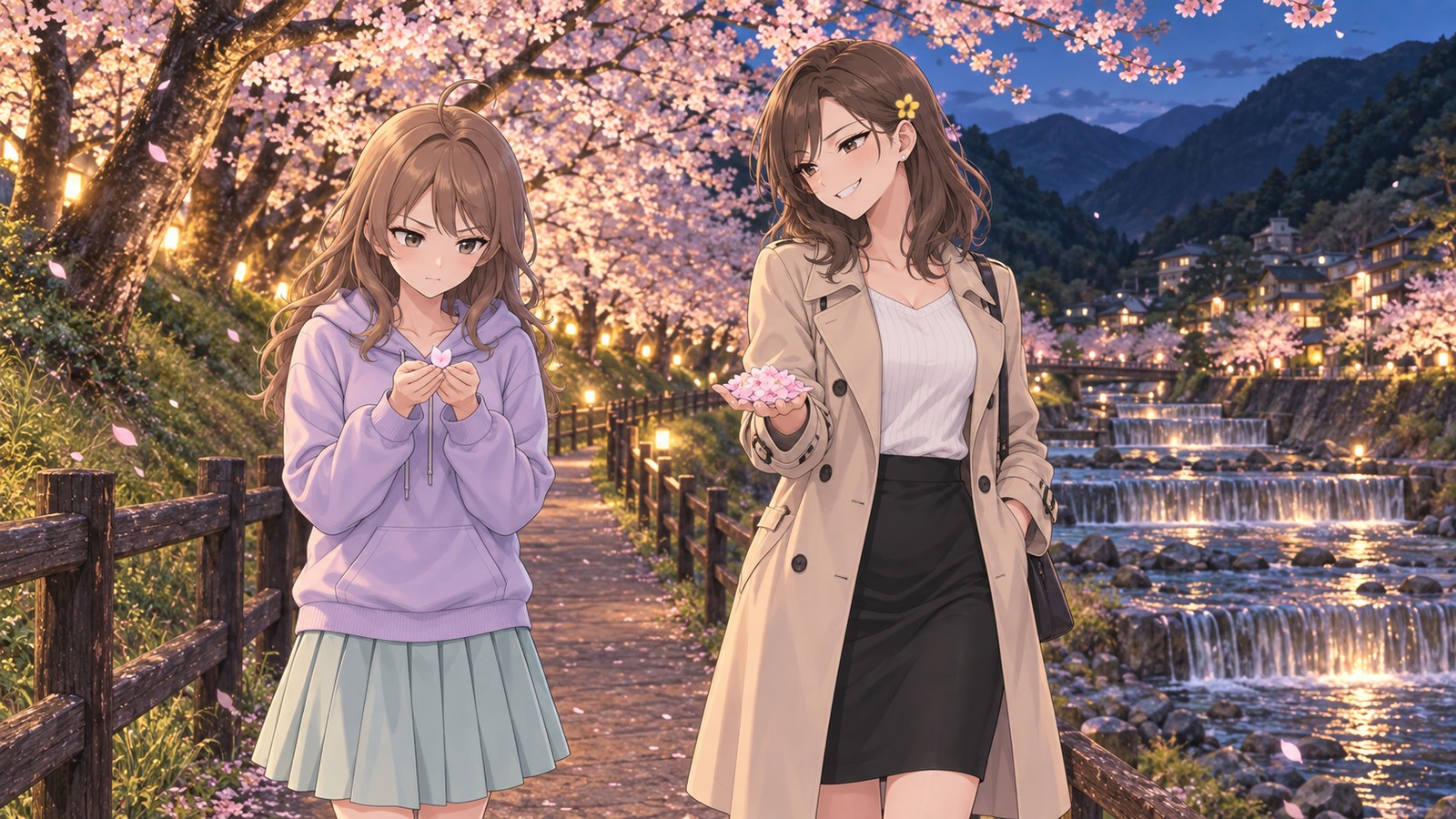
Under the illuminated cherry trees along the Hayakawa riverbank in Miyagino, a woman studies a single petal while her friend, standing a little way off, proudly displays a palmful of petals. Stepped weirs run along the Hayakawa beside them.
SpringEarly to mid-April

Cherry Blossoms along the Hayakawa River in Miyagino

At night on the Miyagino riverbank, the sound of the Hayakawa tumbling over its stepped weirs carried all the way up to the cherry trees. The lit branches reached right overhead, and I didn’t realize I’d stopped until my driving friend called my name. That’s when I noticed how chilly my arms felt in just a hoodie.

I was utterly outmatched in the petal-collecting contest that followed. I had just one petal in my palm, but I still remember its shape perfectly.

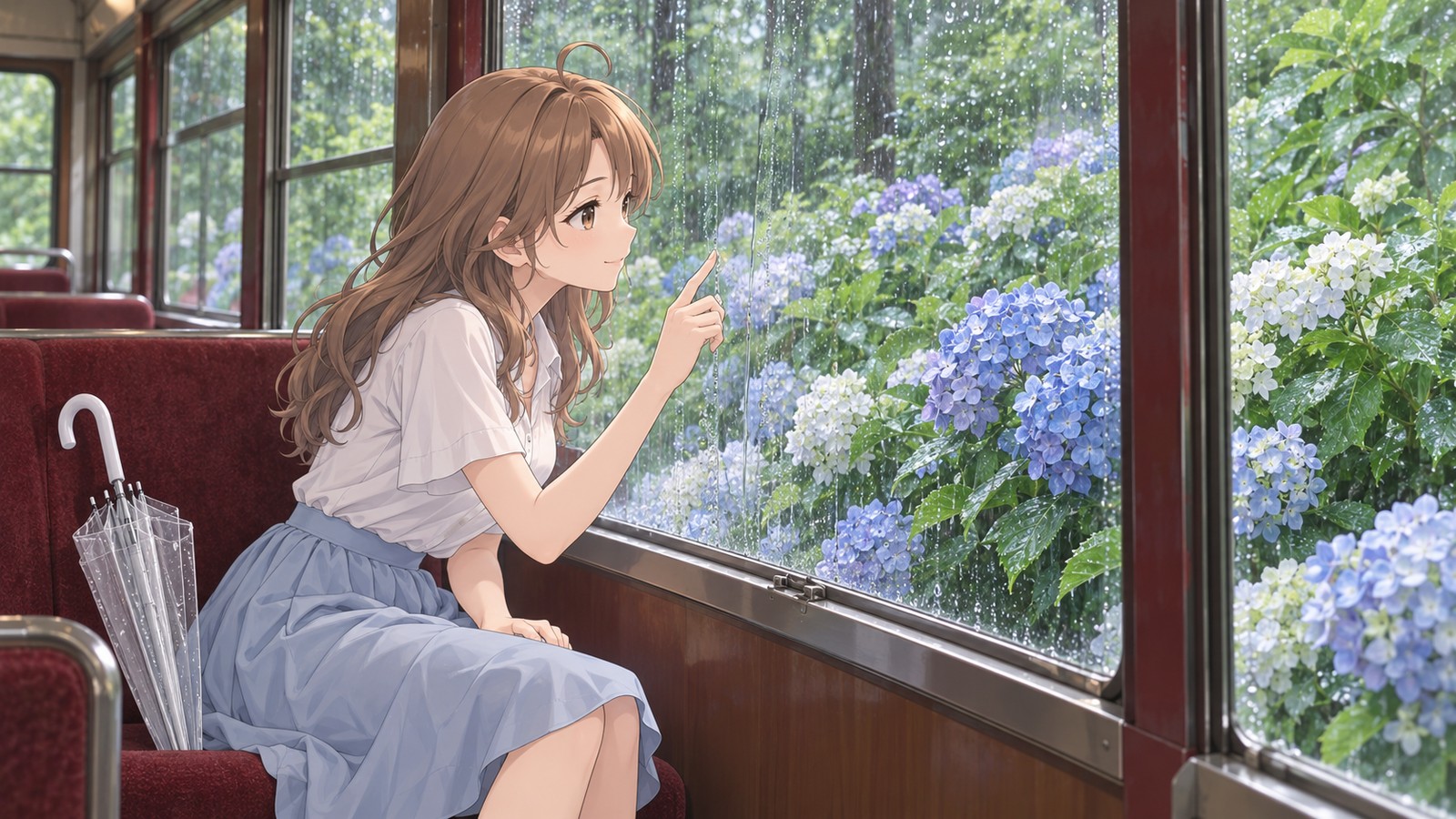
Inside a Hakone Tozan Railway train on a rainy day, a woman gazes at hydrangeas blooming just outside the window.
SummerMid-June to mid-July

Hydrangeas along the Hakone Tozan Railway

When I’m not driving, I’m glued to the window. On a rainy morning aboard the mountain railway, I followed the hydrangeas blooming just beyond the glass, one by one.

Raindrops blurred the flowers; when they ran down the glass, the blossoms came back into focus. I watched this happen again and again, and before I knew it, I’d arrived in Gora.

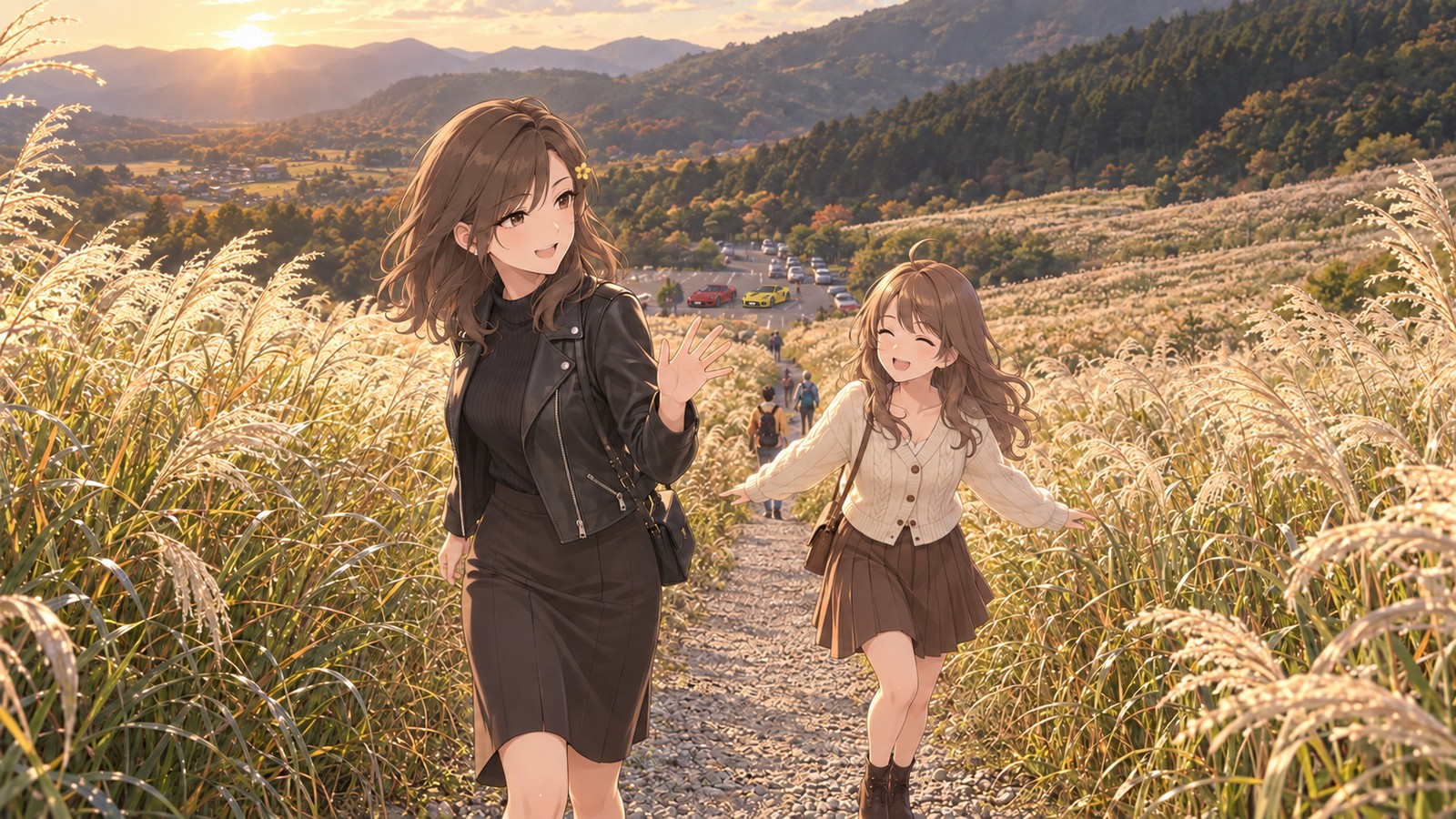
On a path through Sengokuhara’s pampas grass glowing in the morning sun, a woman with arms outstretched runs after her friend, who has turned to wave. A red car and a yellow car are at the foot of the hill.
AutumnSeptember to late November

Sengokuhara Pampas Grass Fields

As I walked through Sengokuhara’s pampas grass in the morning sun, my driving friend, a little way ahead, turned back and waved. At the foot of the hill were the red and yellow cars we’d parked side by side a little earlier. Thinking of the slope we’d just driven up in the two cars made me feel a little proud.

I spread my arms and brushed the tips of the plumes with my hands as I chased after my friend. I was supposed to be catching up, but the glowing plumes kept stopping me in my tracks, and every time I paused, the gap between us grew again.

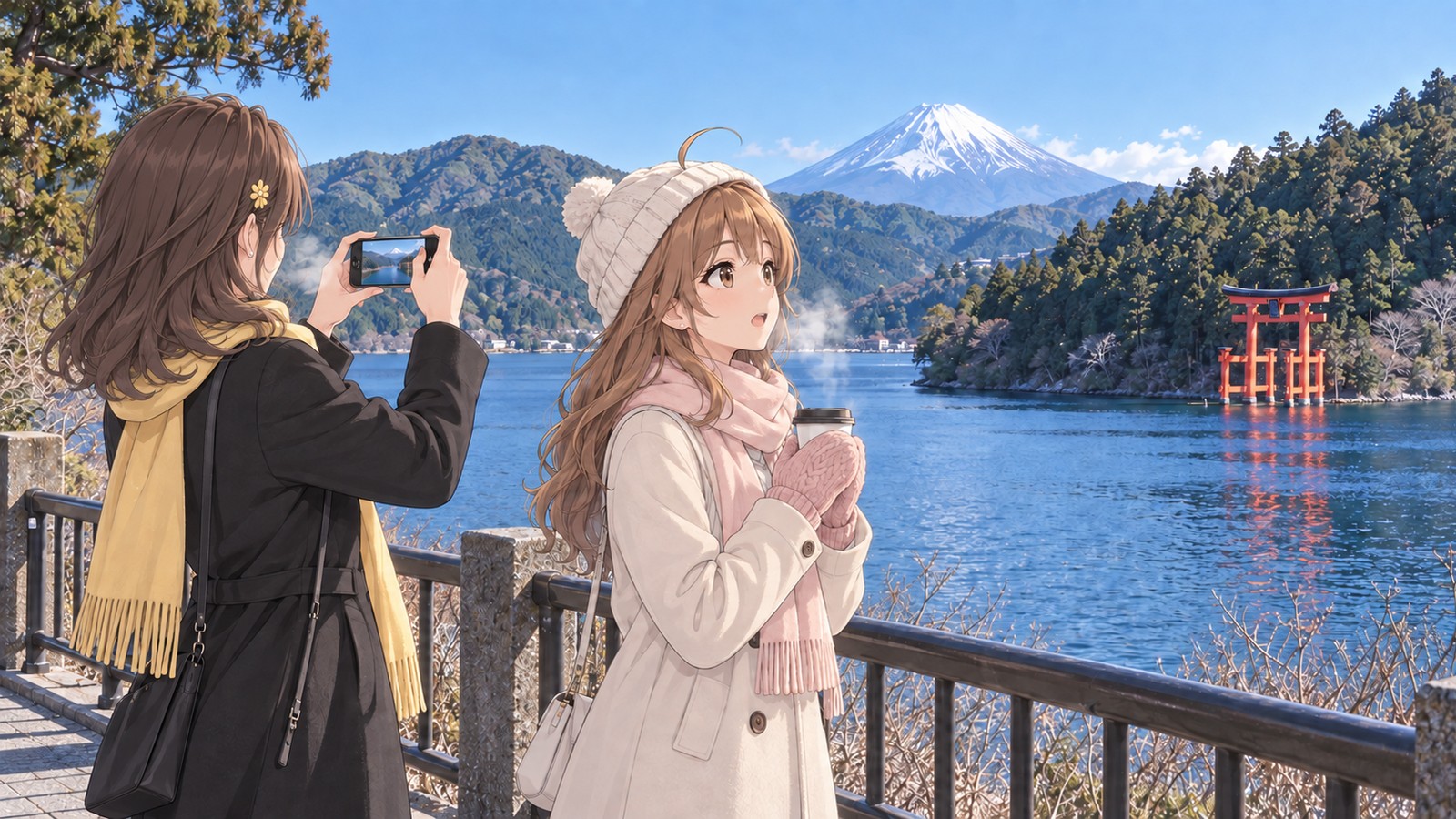
On a winter morning by Lake Ashi, a woman holding a paper cup gazes at snow-covered Mount Fuji and a red torii standing in the lake. A little way off, her friend is already taking a photo on her phone.
WinterDecember to February

The Peace Torii and Mount Fuji at Moto-Hakone

On a winter morning by Lake Ashi, I could see snow-covered Mount Fuji clearly beyond the torii standing in the lake. It felt strange how the mountain, which should have seemed so far away, and the torii in the foreground lined up so perfectly in the same view.

I was holding my warm paper cup in both hands, taking it all in, when I noticed my driving friend a little way off had already finished taking her photos. Only then did it hit me: I was so caught up in the view that I’d forgotten to take one myself.

History

The Old Road Over the Pass

Every time I climb Hakone’s slopes on National Route 1, I think about how people used to cross them on foot. Edo-period travelers had to be inspected at the checkpoint before crossing the pass. I feel a little proud just for driving smoothly up those winding slopes, so their journey on foot must have been much harder.

  • Hakone Shrine began in the first year of Tenpyō Hōji (757), during the Nara period, when the monk Mangan Shōnin built its sanctuary. It was once known as Hakone Daigongen. When Shinto and Buddhism were separated during the Meiji period, its name changed to Hakone Shrine.
  • Minamoto no Yoritomo had great faith in the shrine during the Kamakura period, and Tokugawa Ieyasu oversaw construction work on its buildings during the Edo period. Several names I recognize from school textbooks appear in the shrine’s history.
  • Hakone Checkpoint was established in 1619, the fifth year of Genna. In 2007, it was fully reconstructed using the techniques and materials of Edo-period carpenters and stonemasons.

Spiritual Sites

Hakone Shrine

Hakone Shrine is known for blessings for safe travel and matchmaking. Safe travel is the most important thing I pray for. When it came to matchmaking, though, I had no idea what to wish for with my hands clasped, and I found myself hesitating a little.

  • It is known as “the god who opens the way to good fortune” and revered for blessings of good luck and protection from misfortune, fulfillment of heartfelt wishes, safe travel, and matchmaking.
  • The Peace Torii standing in the lake was erected in 1952. The plaque reading “Peace,” installed in 1964, bears the original handwriting of former Prime Minister Shigeru Yoshida.
  • At the shrine stands Anzan Sugi, a cedar more than 1,000 years old that is revered for blessings of conception and safe childbirth. There is also Yatate Cedar, a cedar associated with the Kachimamori charm for victory. According to legend, the dragon enshrined at the Kuzuryu Shrine (Shingū) on the grounds was subdued by the monk Mangan Shōnin and became the guardian deity of Lake Ashi. On a winter day by the lake, I found myself peering over the stone railing into the water, searching for a dragon because of that story.

Local Specialties

Ōwakudani’s Black Eggs

On the way back from Sengokuhara one autumn, I stopped at Ōwakudani and ate 2 black eggs. My driving friend laughed and called me greedy, but after hearing the legend that each one adds “7 years” to your life, I don’t think I could’ve stopped at one.

  • Ōwakudani’s black eggs are a local specialty said to add “7 years” to your life when you eat one. The story is said to come from the Enmei Jizō statue at Ōwakudani.