Skip to content
PROJECT ZQQ
English

Nikko City, Tochigi Prefecture

Nikko through the seasons

The bends on Irohazaka have signs reading “i”, “ro” and “ha”. I love collecting national-road signs, so even before setting off, I opened a map and traced the bends while imagining the characters. I climbed calmly with my eyes ahead, then looked down from the lookout at the road I’d take back. Thinking that those bends were next made my heart lift.

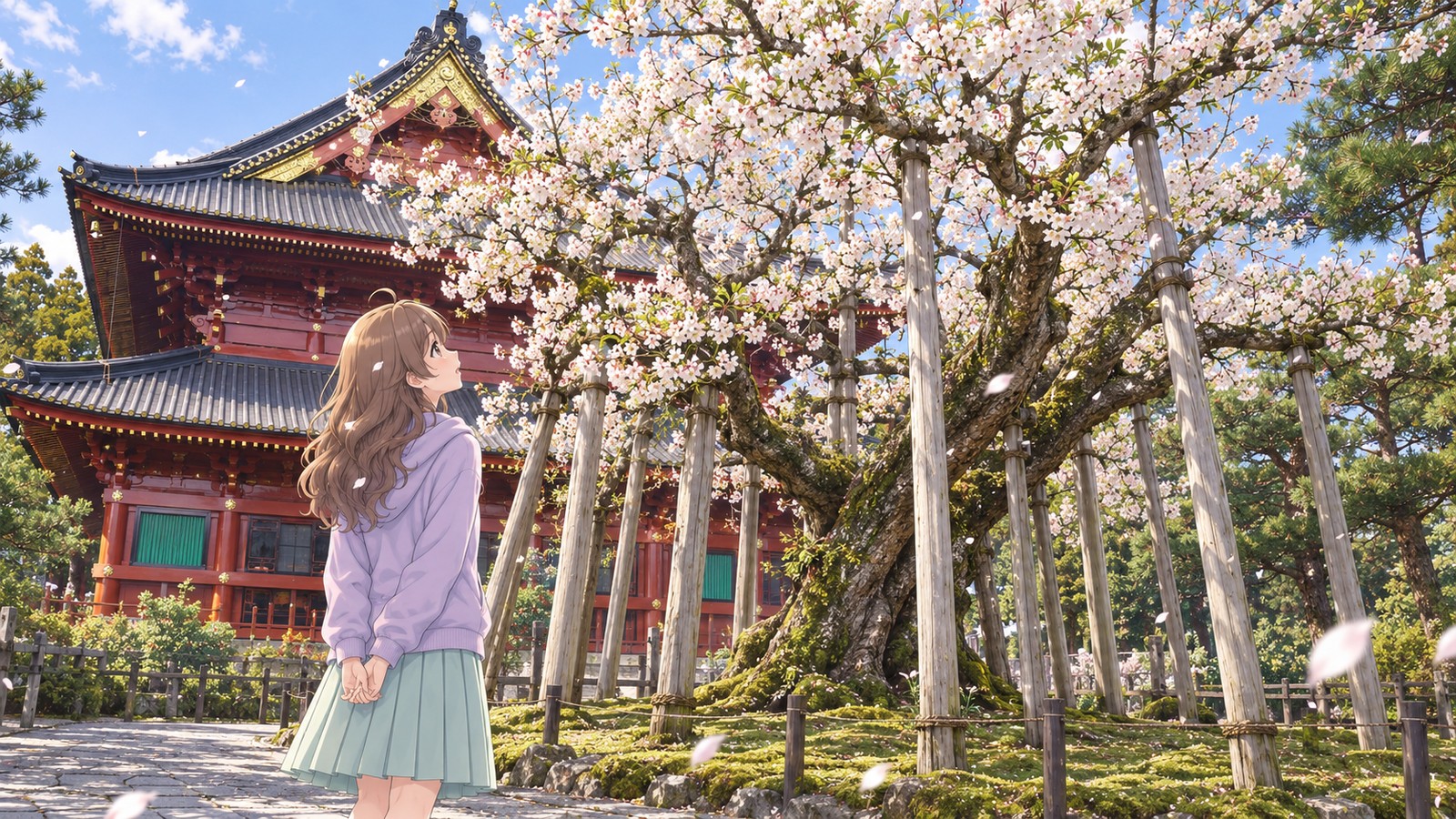
Seen from behind, the narrator looks up at the white blossoms of Rinnoji Temple’s Kongo cherry tree, supported by numerous props
SpringLate April to early May

The Kongo cherry tree at Rinnoji Temple

Rinnoji’s Kongo cherry tree is said to be about 500 years old. Its thick, mossy trunk and branches rested on many supports. It had welcomed so many springs and still bloomed today. Thinking that, I looked up steadily at the supported branches, hoping it would flower here again next year.

Pink buds open into large white flowers. Looking up at the wide-open blossoms, I found my own mouth had opened too. A petal almost drifted in, so I quickly closed it, but I couldn’t take my eyes off the flowers.

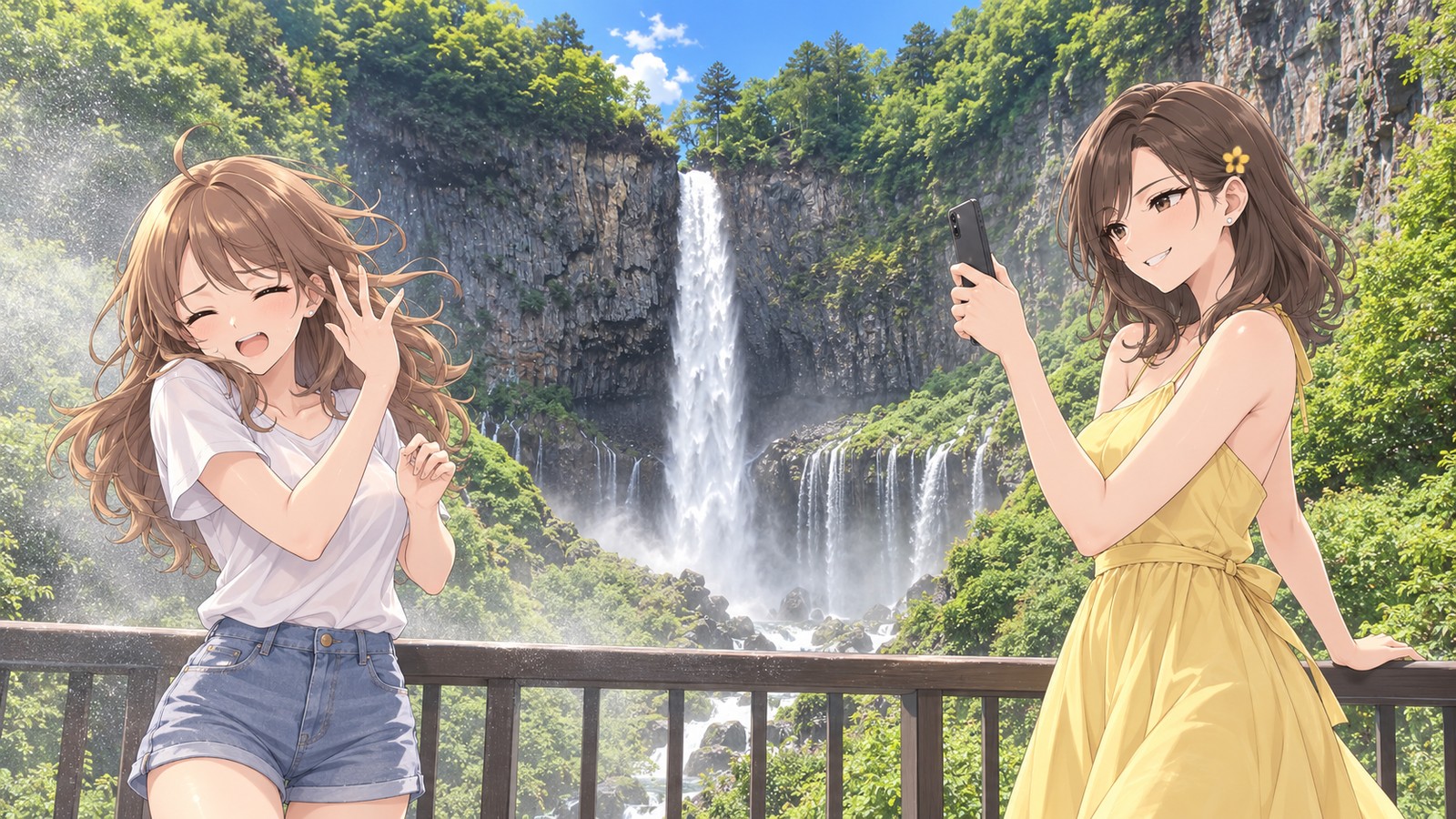
In front of Kegon Falls in summer, the narrator is startled by mist carried on the wind, while her friend records her on a phone from a little farther away
Summer

Kegon Falls

Standing in front of Kegon Falls, I watched the water plunge powerfully through its 97 m drop. As my eyes followed the flow from top to bottom, cold mist on the wind touched my face, and a little squeal escaped. Cool even in summer, it made me feel I’d really come close to the falls and lifted my spirits.

A little farther away, my driving friend had caught that moment on video. Watching it later, I found my surprised face funny enough to laugh at myself. It even brought back the feel of cold mist on my face, making me want to stand before those falls again.

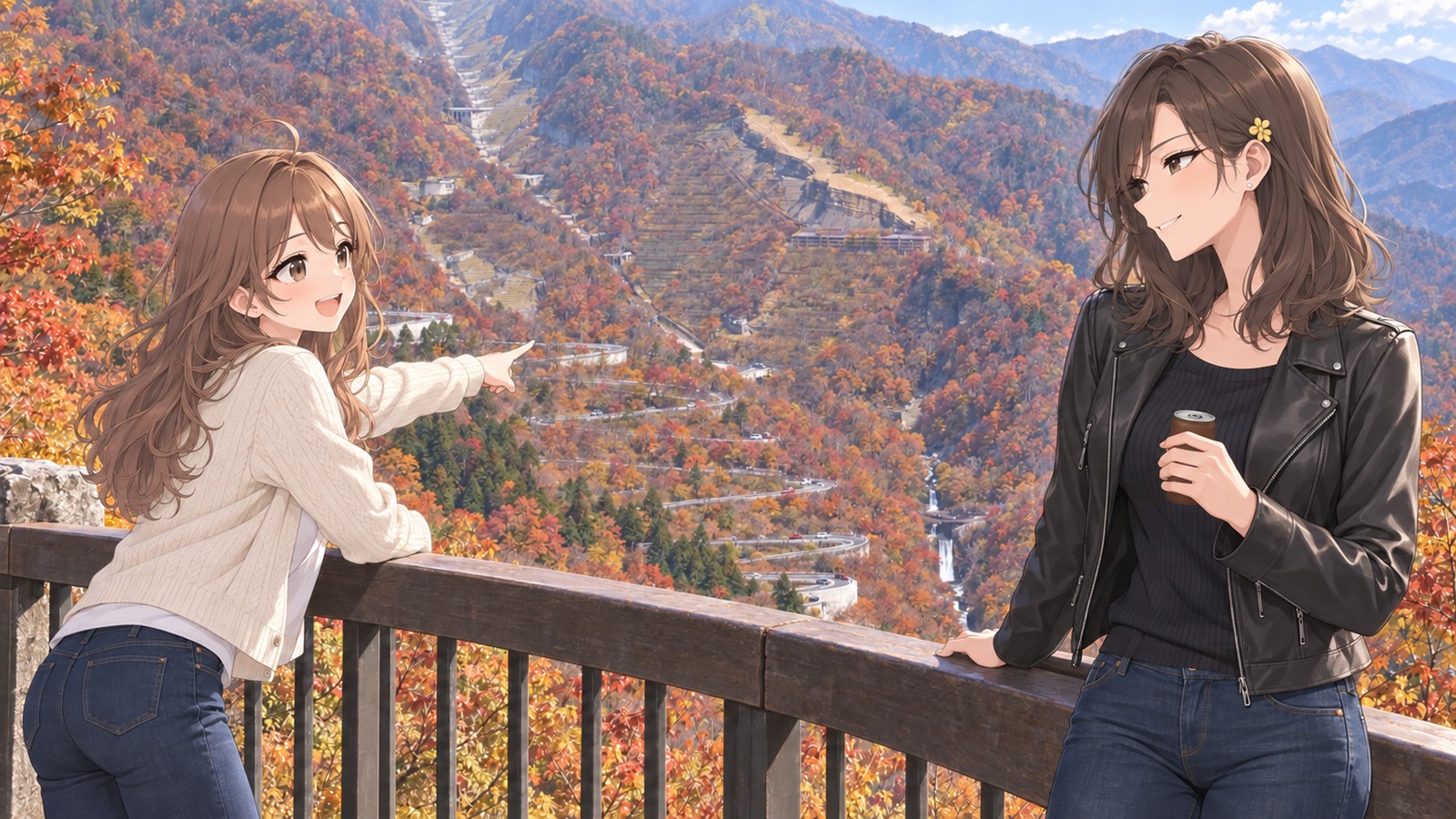
At Akechidaira lookout, the narrator proudly points at the many tiers of bends on the First Irohazaka amid autumn-coloured slopes. A little farther away, her friend listens with canned coffee in hand
Autumn

Autumn colours on Irohazaka

From Akechidaira lookout, I looked down over the downhill First Irohazaka. Bend after bend overlapped in tiers across the autumn slopes, giving a clear view of the road I’d drive back. Knowing I was about to drive there made even searching for the next corner fun as I traced the road weaving through the leaves.

On the way up, I’d looked forward to each “i”, “ro” and “ha” sign. At the lookout, I pointed out the road and said we’d be taking all those bends down next. My driving friend, drinking her canned coffee, brushed me off with, “Yes, yes,” but my mind was already on the return road. I was so excited about both scenery and corners that I couldn’t stop talking.

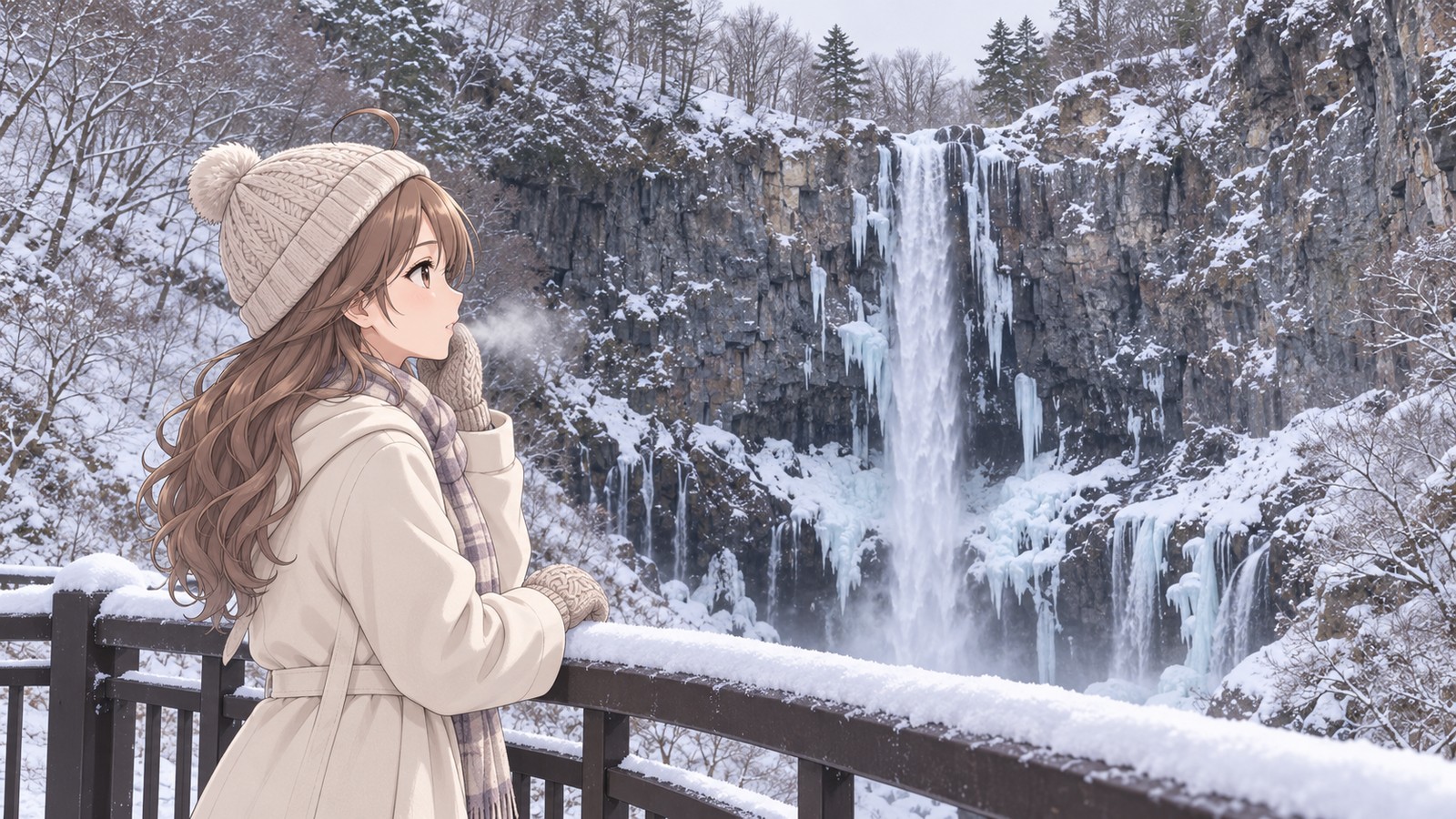
The narrator’s profile as she holds gloved hands against her cheeks and gazes at winter Kegon Falls surrounded by icicles and pale blue ice
Winter

Blue ice at Kegon Falls

At Kegon Falls in winter, the slender waterfalls around the main cascade were frozen. I hadn’t imagined the place where summer mist had chilled me could look like this. Speechless with surprise, I watched with my gloved hands against my cheeks. It was cold, but I couldn’t take my eyes off the ice-framed falls and was reluctant to go home.

History

Nikko Toshogu Shrine

I’d seen photos of Toshogu and thought it looked lavish. But facing it in person, I was wide-eyed at the sheer amount of decoration. However much I looked, there was still more to see, and even choosing where to begin was fun.

  • Nikko Toshogu is a shrine established in 1617, the third year of Genna, to enshrine Tokugawa Ieyasu. The Sleeping Cat carving, surrounded by peonies and basking in sunlight, is also said to have been carved in reference to Nikko’s name. Remembering that story while looking at the cat made me want to watch without waking it, and I even lowered my voice.
  • The lavish buildings seen today were established in the rebuilding of 1636, the thirteenth year of Kanei. Seeing the decorations in person, I got so caught up in looking at one detail after another. I wanted to stay much longer than I had when looking at photos.
  • It was inscribed as a UNESCO World Heritage Site in 1999. With the richly decorated buildings before me, I felt happy to have reached the place I’d seen in pictures. Wanting to see even the smallest details kept me looking up for longer.

Spiritual Sites

Nikko Futarasan Shrine

I’d heard Futarasan Shrine was popular for blessings of meaningful connections. Hoping I might find more roads to love, I wanted to join my hands in prayer too. Imagining the places I wanted to drive next made even the act of asking exciting, and I looked forward to opening a map at home.

  • This long-established shrine marks the beginnings of worship at Nikko, opened by the monk Shodo more than 1,200 years ago. It enshrines Mount Futarasan, also known as Mount Nantai, as its sacred body. Learning the long history of people venerating the mountain made me stand straighter even before praying.
  • Its principal deity is Onamuchi no Mikoto, associated with good fortune and relationships. The shrine is popular for these blessings of connection. Joining my hands and wishing for more roads I’d love made planning the next trip even more enjoyable.
  • It has long been revered as the foremost shrine of the former Shimotsuke Province. A legend about Futarasan Shrine’s Shinkyo Bridge says that when Shodo could not cross the river, 深沙王 sent 2 snakes. The grass called yamasuge grew from their backs to form a bridge. I couldn’t help imagining snakes becoming a bridge, and spent longer looking at Shinkyo.

Local Specialties

Nikko yuba

In Nikko, “yuba” is written 湯波. It’s thicker than Kyoto’s yuba, written 湯葉. When I tried fresh yuba served as sashimi, it had far more substance than I’d expected and my eyes widened. It was delicious, and though I savoured each bite slowly, by the end I was already wishing for a little more.

  • Kyoto writes yuba as 湯葉, while Nikko writes it as 湯波. Kyoto’s is lifted as a single layer, making it thin; Nikko’s is lifted double, giving it thickness. Trying fresh yuba sashimi, I was surprised by how satisfying the texture was and could hardly wait for the next bite.
  • You can enjoy yuba in many dishes, including gently simmered preparations, fresh yuba sashimi and fried yuba rolls. When I tried the sashimi, I was amazed by how much more satisfying it was to eat than I'd expected. Even after finishing, I wanted to come back for more.
  • Nutritious and easy to digest and absorb, yuba was an essential food for mountain ascetics practising at Nikko. It is said to have originally been brought from China to Kyoto by Zen monks, then spread by mountain ascetics and travelling monks. Eating it on my own journey left me feeling satisfyingly full and made me want to walk a little farther around Nikko.