Tochigi, Nikko
Nikko Look up at the cherry blossoms, then head for the falls and winding roads
The Kongo Cherry at Rinnoji Temple, Kegon Falls in summer and winter, and Irohazaka from Akechidaira. Come read about the detours I made to different corners of Nikko in each season.
Spring brings cherry blossoms, summer the mist from the falls, autumn winding roads through the leaves, and winter a waterfall wrapped in ice. Open whichever of my four seasonal trips to Nikko catches your eye.
SpringLate April to early May
I stayed longer beneath the Kongo Cherry, looking up
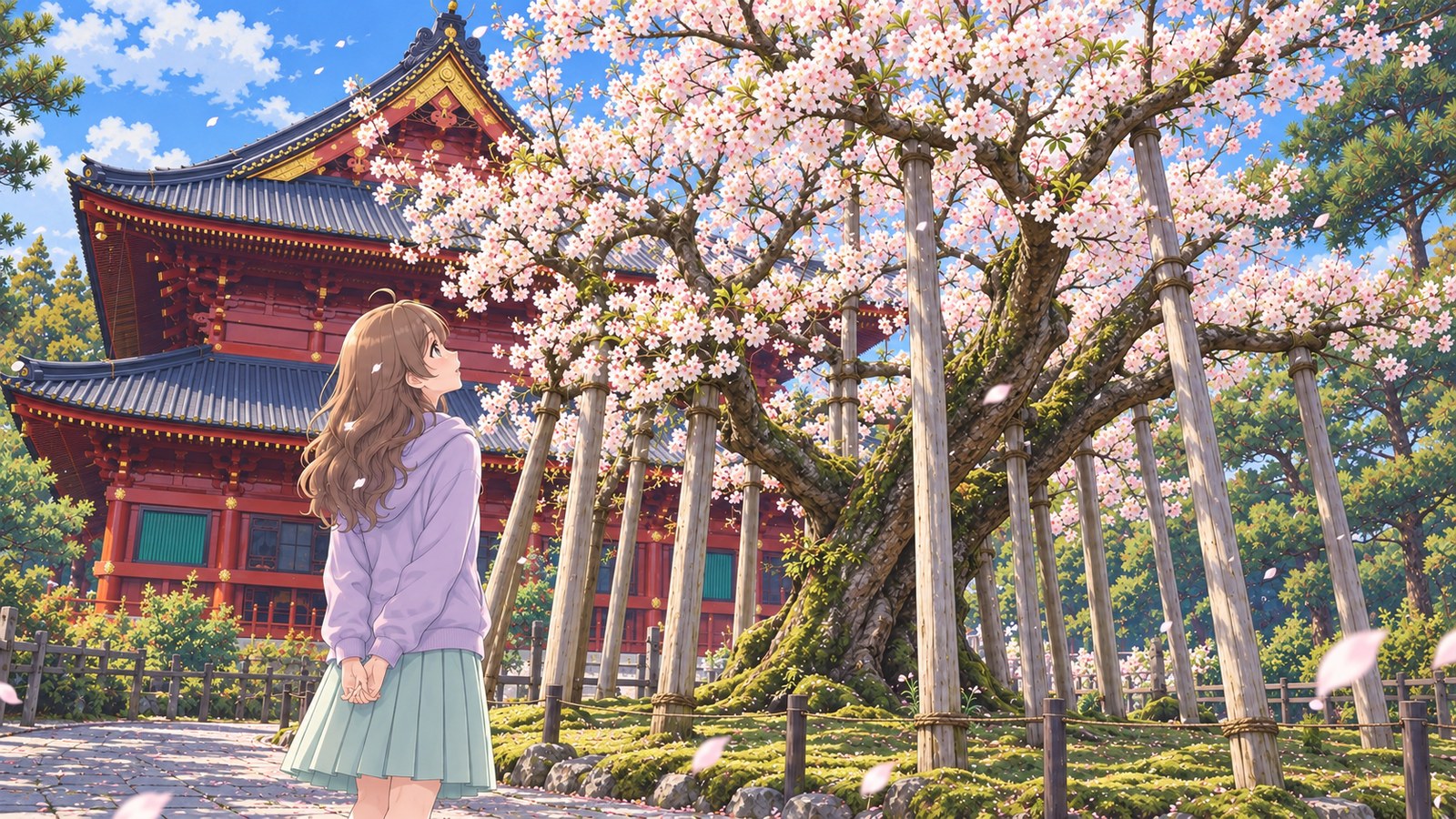
In late April, I parked at Rinnoji Temple's First Car Park and went to see the Kongo Cherry. When I looked up at it, the huge trunk caught my eye before the blossoms did. Several support posts surrounded the branches, with white flowers spreading above them. I came expecting to admire the blossoms from a distance, but the closer I got, the more I wanted to take in the whole tree.
I clasped my hands behind my back and followed the branches all the way to their tips. I wanted the temple building in a photo too, but for now I'd rather keep looking up than take out my phone. I could see patches of sky between the blossoms, and even a small turn of my head changed the view.
As I compared the lower and higher branches, I wanted to give them all a proper look before I left. I meant to take another look at the blossoms I'd just seen, but my eyes wandered to a different branch again. I had places to walk around, and yet I could already tell I was going to spend a long time right here.
Up close, the unopened buds were pink and the open blossoms white. The colour shifted little by little along the same branch. Seeing them open one by one made me so happy I nearly crouched down in front of a low branch for a while.
The Kongo Cherry is a natural mutation of a mountain cherry, I heard. It was apparently transplanted here in the 14th year of the Meiji era. The tree is about 10m tall, and its trunk is about 5.7m in circumference. Once I knew the measurements, I could see how all those support posts help hold up this enormous tree. People are still looking after a tree that's lived for nearly 500 years.
I heard the name Kongo comes from a monzeki's posthumous name—the name given to him after his death. There's also a story that after the tree was transplanted, a new trunk sprouted from its roots when the monzeki chanted sutras. I found myself leaning down to peer at the base, trying to work out which trunk it was.
I finally took out my phone when I remembered the photos I wanted to show my driving friend. First I took a close-up of the blossoms, then another with the supports and trunk in frame. I wanted to show her both, so I figured I could choose once I got home.
After taking the photos, I remembered the story from earlier and counted the trunks growing from the base once more. Thick ones, slender ones, and ones leaning against a support. Before I could finish counting, I had another thing to tell my friend.
Before choosing my photos, I stopped to pray at the temple hall. When I turned around after putting my hands together, the cherry tree I'd been looking up at stood beside the temple roof in my view. I'd come just to see the blossoms, but I wanted to take the whole temple scene home in my memory.
When I turned back after walking a little way from the Kongo Cherry, I could see the blossoms and temple together. I'd headed straight for the tree when I arrived, but I liked this parting view, too. I'll tell my friend how I couldn't choose a photo and how I spent the whole time looking up.
SummerSummer, a waterfall surrounded by green
The mist gave my friend one more photo of me
I parked at Kegon's First Car Park and went with my driving friend to the elevator. It's about a 2- or 3-minute walk from the car park. I was told the elevator takes about a minute to descend 100m through solid rock to the underground passage. When I heard it had been running since 1930, I got a little nervous as soon as the doors closed.
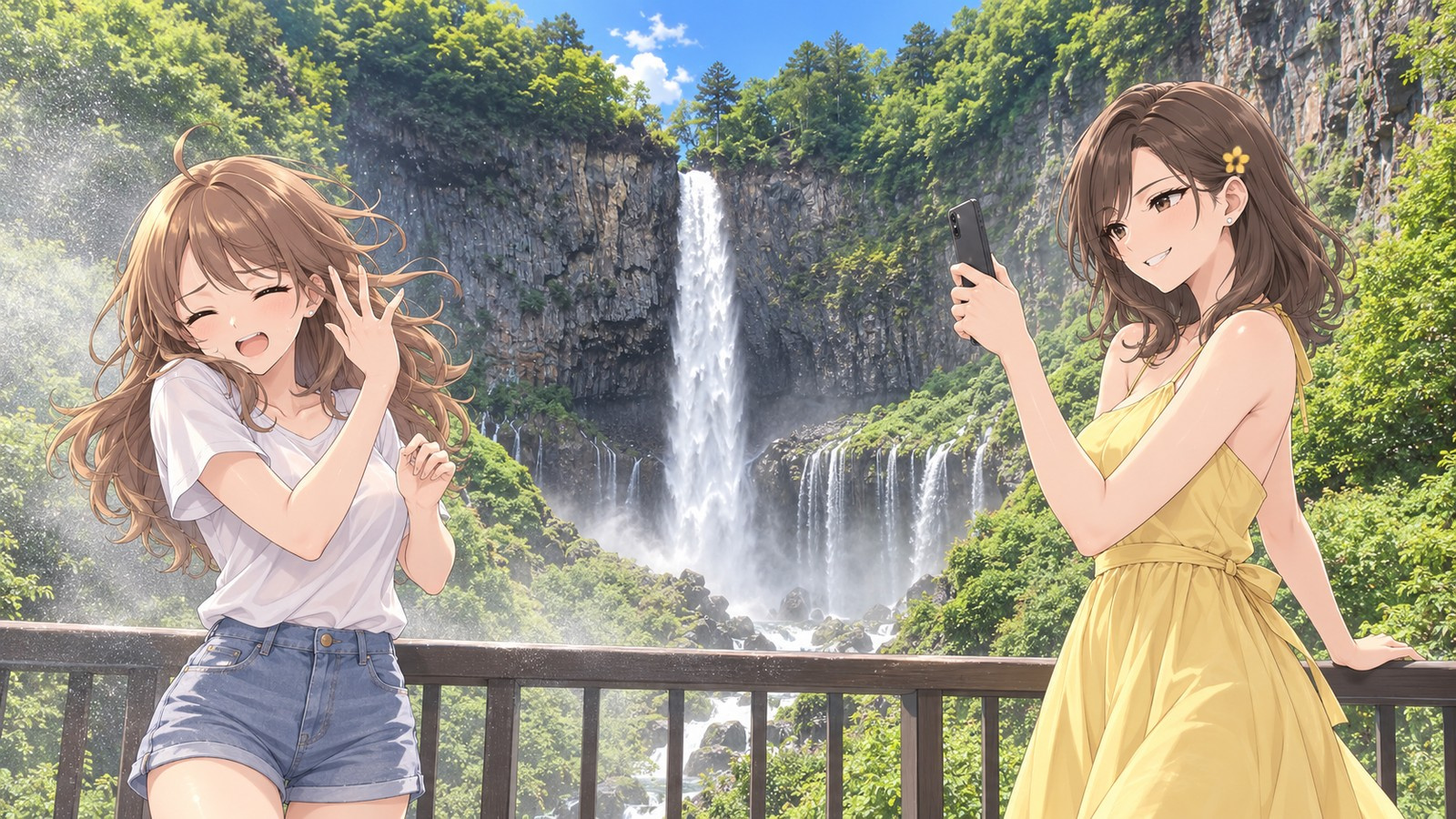
Once we came through the passage and stepped onto the viewing platform, I stopped to listen to the roar of the water. My friend was a little farther away, phone raised. I went up to the railing and followed the waterfall from top to bottom with my eyes.
I was standing there gazing up when a burst of mist flew my way, and I shut my eyes without thinking. The mist was cold; I was so startled my hand flew to my cheek. I'd come dressed for summer, but I hadn't expected the water on my face to feel so cool.
When I opened my eyes, my friend was smiling, still holding her phone. “Did you get that?” I asked. “I did,” she replied right away. I’d come to see the falls, but now my startled face was part of today’s photos too.
I looked at the screen and saw my own expression, which made me want to laugh. “Make sure you get the falls in, too,” I said. “They're right there behind you,” she replied. She'd already thought of that before I even asked.
The viewing platform was much closer to the falls than I'd expected. I felt the roar of the falling water deep in my chest; I had to raise my voice a little just to talk to my friend beside me. It felt completely different from seeing the falls from above.
From the viewing platform, I could see Kegon Falls, its plunge pool, Twelve Falls, and the rock wall up close. On the cliff to my right, columnar joints formed rows of polygonal pillars, sharply visible even against the summer greenery. I'd been watching the waterfall so closely that I hadn't noticed the rock formations were another sight to see.
I heard that Kegon Falls is where the water leaves Lake Chuzenji for the Daiya River, right at the river's source. The water falling in front of me would continue toward the town of Nikko. Looking down at the plunge pool with that in mind, even the mist on my face felt like the beginning of a much longer journey.
I turned back to the falls and followed the water all the way down. Looking back and forth between the water close at hand and the trees spreading beyond it, I didn't want to leave. I wanted to remember how powerful this place felt, even more than the surprised look on my face in my friend's photo.
In the elevator on the way back up, I noticed the ends of my hair were a little damp. I’d only been caught in the mist for a moment. My friend grinned. “That’ll be a good memory,” she teased. I wasn’t to be outdone: “Please send me the photos,” I asked, perfectly seriously.
On the way back, I looked through my friend's photos and remembered the feel of the mist on my face. I thought I'd looked perfectly composed while watching the falls, but I clearly hadn't. Still, when I think of summer in Nikko, I bet this is the first photo I'll remember.
AutumnAutumn on Irohazaka
Pointing out the next bend to my friend
Irohazaka connects the town of Nikko with Lake Chuzenji and Oku-Nikko. On the uphill Second Irohazaka, signs mark each bend with the next syllable in the “i, ro, ha” sequence: every time you round one turn, the next sign appears. I love collecting photos of national highway signs, so even with my eyes on the road and my hands on the wheel, I couldn't help following the sequence in the corner of my eye. The autumn leaves are usually at their best from mid-October to early November, and today the mountains were just turning.
After driving up Irohazaka, I got out at Akechidaira. While driving, I kept my eyes on the road and tightened my grip on the wheel at every bend. Even after stepping out, I felt my heart leap at the thought of seeing the road from outside the car.
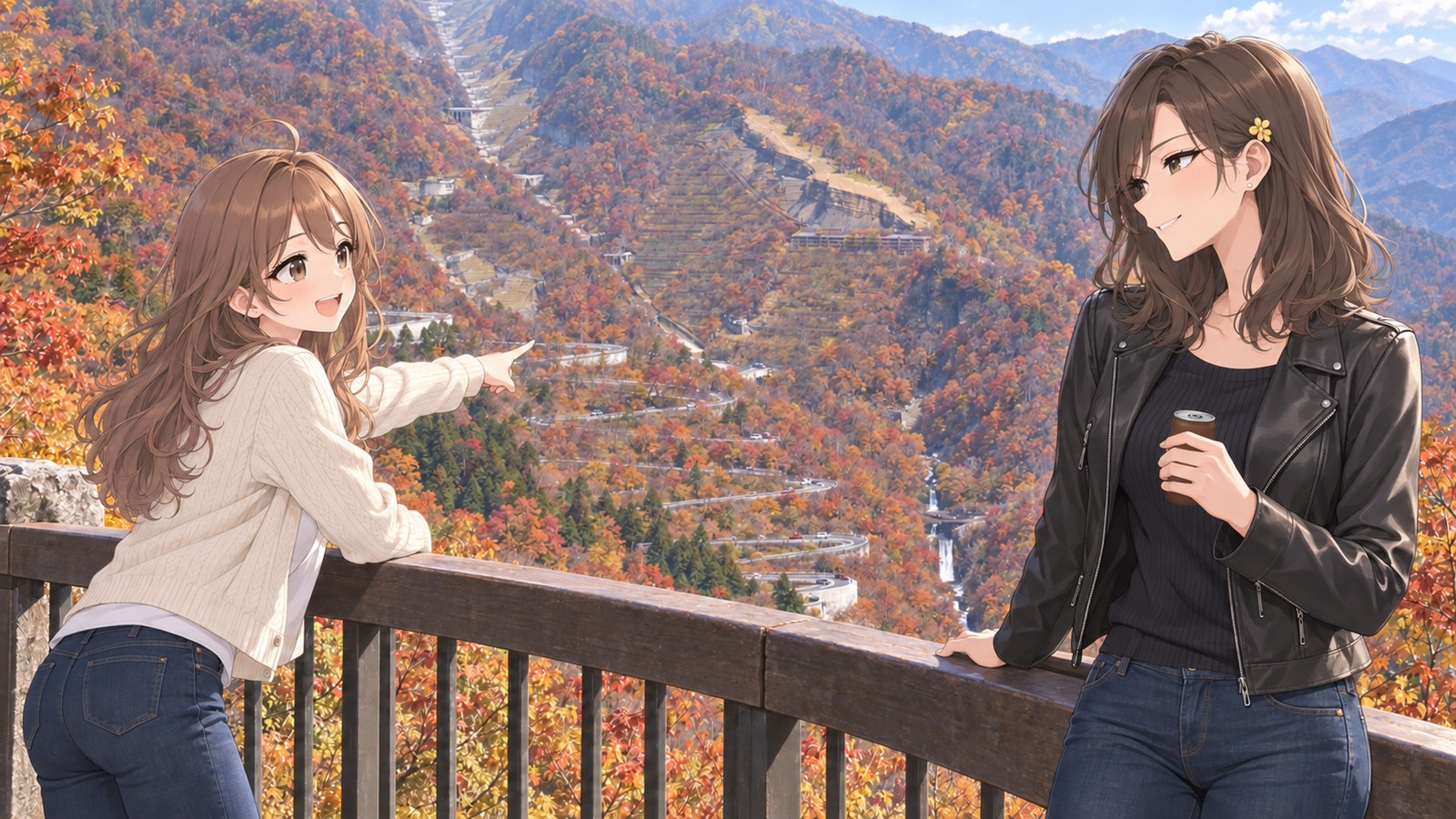
Across the slope in front of me, I could see the road winding through the autumn foliage in several tiers. I’d just been looking at the mountain from inside the car; now I could take in the whole view. My driving friend stood a little way off with a can of coffee, listening as I talked.
I pointed toward a stretch of road and started talking about whether we'd drive there next. There was another bend, and more road beyond it. I'd come to admire the view, but before long I was talking about the drive back.
My friend laughed, asking if I was already imagining myself driving. I felt a little embarrassed. I was still standing right there, but apparently my mind had already gone around the next bend. After that, I took my time looking at the trees along the road, too.
When I took a photo, I made sure to include the road I’d just been pointing at. When I looked at it later, it would remind me, “That’s the stretch I drove next.” I hoped the picture would capture how much I’d looked forward to the road ahead, not just the autumn leaves.
Back in the car, my friend set off ahead again, and I followed in my red car. When I turned my eyes back to the road and put my hands on the wheel, the time I’d spent admiring it became part of the fun of driving. I stayed excited all the way back, wondering what view waited around the next bend.
As I started down the slope, the light filtering through the trees shifted with every bend. Keeping my eyes on the road and my hands on the wheel, I loved passing through patches of light and shadow one after another. My friend's car ahead would appear around one bend and disappear around the next.
On the way down First Irohazaka, I pulled into the car park at Tsurugamine Viewpoint. From here, you can see Hoto Falls and Hannya Falls. Until then, I'd been focused on the road, but now two waterfalls tumbling through the autumn-covered mountains held my gaze. My friend watched in silence, a can of coffee in hand.
When I set off again from Tsurugamine, I could feel the sequence of letters on the signs nearing its end. I felt a little sad when I rounded the last bend and the town of Nikko came into view. On the way up, I enjoyed the road; on the way down, I came across waterfalls. Irohazaka packs so many different pleasures into a single road.
WinterWinter, blue ice at Kegon Falls
I watched the winter falls with my gloved hand against my cheek
On a clear day in January, I drove my red four-wheel-drive sedan to Kegon Falls, since it was snow season. I kept my eyes on the road, hands on the wheel, and parked in the First Car Park. From there, it was a 2- or 3-minute walk to the elevator, which took me 100m down through the bedrock. I’d ridden it in summer too, but in winter the minute before the doors opened somehow felt longer. I came through the underground passage and stepped onto the viewing platform, where cold air hit my cheeks all at once.
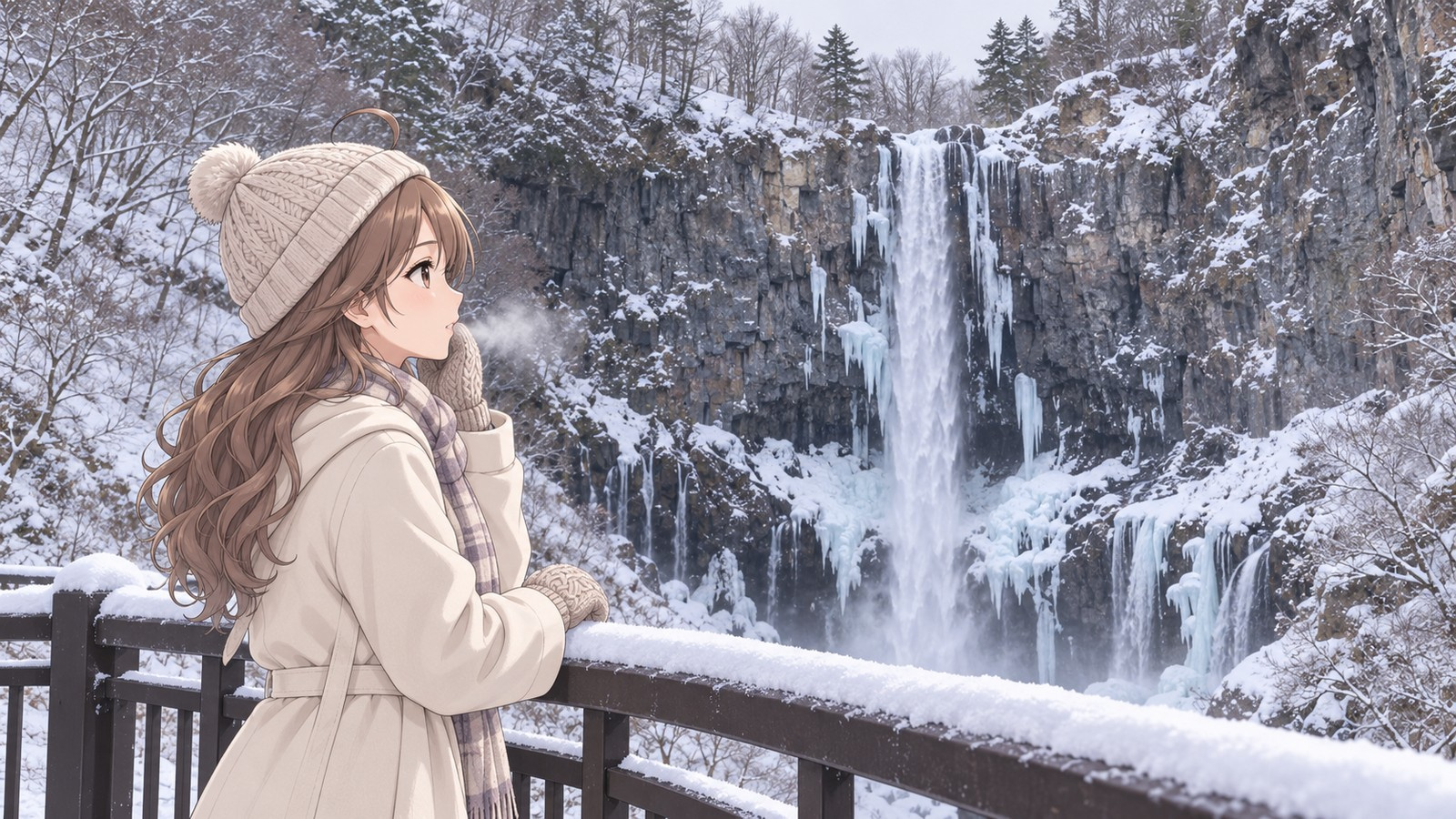
I stopped in my tracks the moment I saw Kegon Falls in winter. Ice ran all around the waterfall; it looked nothing like it had in summer. I’d put on a hat and wrapped a scarf around my neck, but my surprise at the view came before I even felt the cold.
I rested my gloved hand against my cheek and looked from the top of the falls to the bottom. The flowing water and still ice were right beside each other. As I listened to the water fall and watched the ice, the feeling that I was back in the same place slowly sank in.
Snow had gathered on the viewing-platform railing, and my breath appeared in white clouds before fading away. The sound carried just as it had in summer, yet the view was so different. For a moment, it felt as if my ears and eyes belonged to different seasons.
I heard that the slender cascades called Twelve Falls are what freeze around the main waterfall. They freeze around January and February, and that ice is called blue ice. The main flow keeps moving, while everything around it seems frozen in time. I thought I could just make out a faint blue tint in the ice, and I narrowed my eyes without meaning to.
In summer, the mist startled me and my driving friend took a photo. Back then, I hadn't even wondered how this place would look in winter. Now I'm looking forward to seeing what my friend says when I send her today's view.
On the rock wall to my right, the columnar joints I’d seen in summer were now covered in snow and ice. Ice hung along the polygonal columns, forming a pattern unlike summer’s. It’s the same rock, yet it looks so different from one season to the next.
I moved around the viewing platform a little at a time. Even shifting half a step changed the way the water overlapped beyond the ice. When I found a spot where I could see the main flow through a gap in the ice, I caught myself murmuring, “This is incredible,” as if I were talking to my friend even though she wasn’t there.
I took a photo with the falls filling the frame, just as they had in my summer shot. It made me want to compare the two. My friend was with me then; this time, I get to show her the view later. Before I think of what to write, I want her to see the photo first.
By the time I got back up in the elevator, my fingertips were freezing. I was in the mood for something warm. I saw Nihon Ryori Nantai listed as an Oku-Nikko restaurant serving yuba made with local soybeans and Nikko water. I’d love to warm up with yuba’s gentle flavour while comparing my summer and winter photos.
The story sections are fiction inspired by this location. For accurate information, please consult official tourism and information websites.
Photos of this place4 images
-
Tochigi, Nikko · Spring
-
Tochigi, Nikko · Summer
-
Tochigi, Nikko · Autumn
-
Tochigi, Nikko · Winter
Local specialty
Nikko Yuba
In Nikko, yuba is written with the kanji for “wave.” It's lifted in two layers, giving it extra thickness, and you can enjoy it simmered or fresh as sashimi. After taking in the cherry tree and waterfalls, I'd like to make time for yuba, too.
Highlights
Look up at the Kongo Cherry at Rinnoji Temple in spring
The Kongo Cherry is a natural monument designated at the national level. Its pink buds open into large white blossoms. The tree is estimated to be 500 years old; standing before it made me want to take in its enormous trunk as well as the flowers.
Summer Falls and Winter Blue Ice
Kegon Falls is about 7m wide, with a 97m drop. In summer, take in its powerful flow against deep greenery; in winter, the slender falls around it freeze into blue ice. When I came back in winter to the place where the mist had startled me in summer, I stopped in my tracks all over again.
Follow the road through autumn leaves from Akechidaira
From Akechidaira Observatory, partway up Second Irohazaka, you can also see First Irohazaka. I pointed out the road and kept talking about the bends I'd drive on the way back. Even the time I spent admiring the autumn leaves got me excited about driving.
Road Details
First and Second Irohazaka
- Road and Stops
- Second Irohazaka climbs; First Irohazaka descends
- Scenic Stats
- Elevation difference from bottom to top: about 440m
There are 48 sharp bends across the two roads. After taking in First Irohazaka from Akechidaira, I couldn't wait to drive it on the way back.
The Kongo Cherry at Rinnoji Temple and Kegon Falls
- Road and Stops
- Rinnoji Temple in spring; Kegon Falls in summer and winter
- Scenic Stats
- Drop of Kegon Falls: 97m
The Kongo Cherry blooms from late April to early May. I want to come back to the falls for the deep summer greenery and winter blue ice.
Irohazaka takes its name from the 48 bends, likened to the 48 characters of the iroha sequence. After driving it, I find myself wanting to talk about the next bend, too.
More Spot Guides
If you enjoyed this story, you might like these places too. I've gone back to each of them in different seasons, again and again.
Maps & Sources
Official Sources
- Why Does Nikko Yuba Have Two Spellings? What Makes It Famous? 27 Places for Yuba Souvenirs and Lunch | Feature | Nikko Tabi Navi, Nikko City’s Official Tourism Site (opens in a new tab)
- Irohazaka | Things to Do and See | Nikko Tabi Navi, Nikko City's Official Tourism Site (opens in a new tab)
- The Kongo Cherry at Rinnoji Temple | Things to Do and See | Nikko Tabi Navi, Nikko City's Official Tourism Site (opens in a new tab)
- About Kegon Falls | Kegon Falls Elevator (opens in a new tab)