Tohoku, Nikaho City, Akita Prefecture
Kujukushima (Kisakata) The groves in the rice fields began to look like islands from long ago
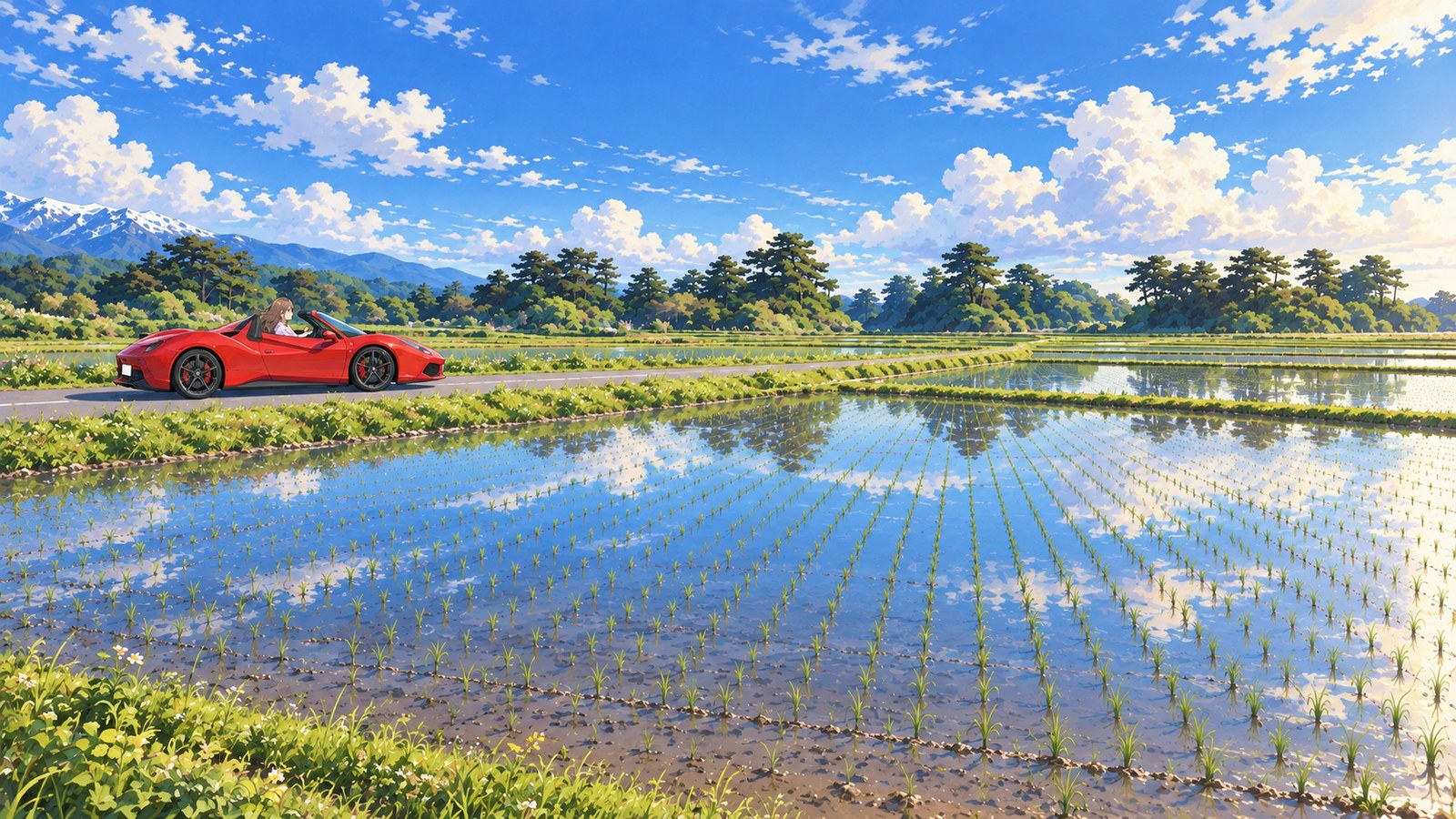
On an early-June morning, I drive my red car along the rice fields, water shining in the paddies. I’ll take in the view after I get out and imagine what this landscape looked like when it was still part of the sea.
In early summer, when the paddies are full of water, the scattered groves seem to rise like islands. I’d love to take my time and let Kisakata’s landscape sink in on a clear morning, with snow still on Mount Chōkai.
SummerA clear morning in early June
Following the rice-field roads, imagining the sea that once lay here
I set out early to see Kujukushima in Kisakata. In a pale purple hoodie, I slid into the driver’s seat; the cool morning air still felt lovely. I turned onto a road beside the rice fields in my red car, and little groves soon came into view. I kept my hands on the wheel and my eyes on the road as I headed toward them.
I didn’t really take in the view until I’d parked. Tiny rice seedlings were lined up in the flooded paddies. Beyond them stood clusters of trees, each separate; they weren’t one continuous forest. They looked like islands afloat on the water, and I felt I was beginning to understand the name.
I learned that an earthquake in 1804 raised the seabed here, turning it into dry land. Looking across today’s rice fields, I imagined that this used to be the sea. I pictured the groves before me as islands floating offshore. The name alone had never conjured up a view like this, but now the pieces were starting to fall into place.
Under the clear sky, I could see Mount Chōkai on my left, its slopes still holding patches of snow. The seedlings were just beginning to grow in the paddies, while snow still lingered on the mountain. I love that both belong in the same morning view. After looking at the sky reflected in the water, I took one last look at the outline of the groves. I’ve found myself lingering before taking a photo.
I was also hoping to try Nikaho’s rock oysters today. The local tourism guide lists them as a seasonal treat from early June, so they’d become one of the things I was looking forward to on this trip. Pairing time among the rice fields with a taste of the coast’s specialty should make my day in Kisakata all the more memorable.
Before getting back in the car, I had the odd feeling I was looking at an old island, not a rice field. Of course, rice paddies stretched all around me, but every time I looked at the groves, the sea came back to mind. Next time, I’d like to stop somewhere with a view from above. I got back into the driver’s seat, checked the road ahead, and set off for my next stop around Kisakata.
The story sections are fiction inspired by this location. For accurate information, please consult official tourism and information websites.
Photos of this place1 images
-
Tohoku, Nikaho City, Akita Prefecture · Early-summer rice fields and islands
Local specialty
Nikaho rock oysters
Nikaho’s tourism association lists rock oysters as a seasonal specialty from early June through late August. I’d love to pair their rich flavor with an early-summer drive through Kisakata.
Highlights
The old islands, still marked by groves
An earthquake in 1804 raised the seabed at Kisakata above the water. As I take in the outlines of the groves, I can imagine the islands that once floated in the sea.
Flooded paddies and a mountain still holding snow
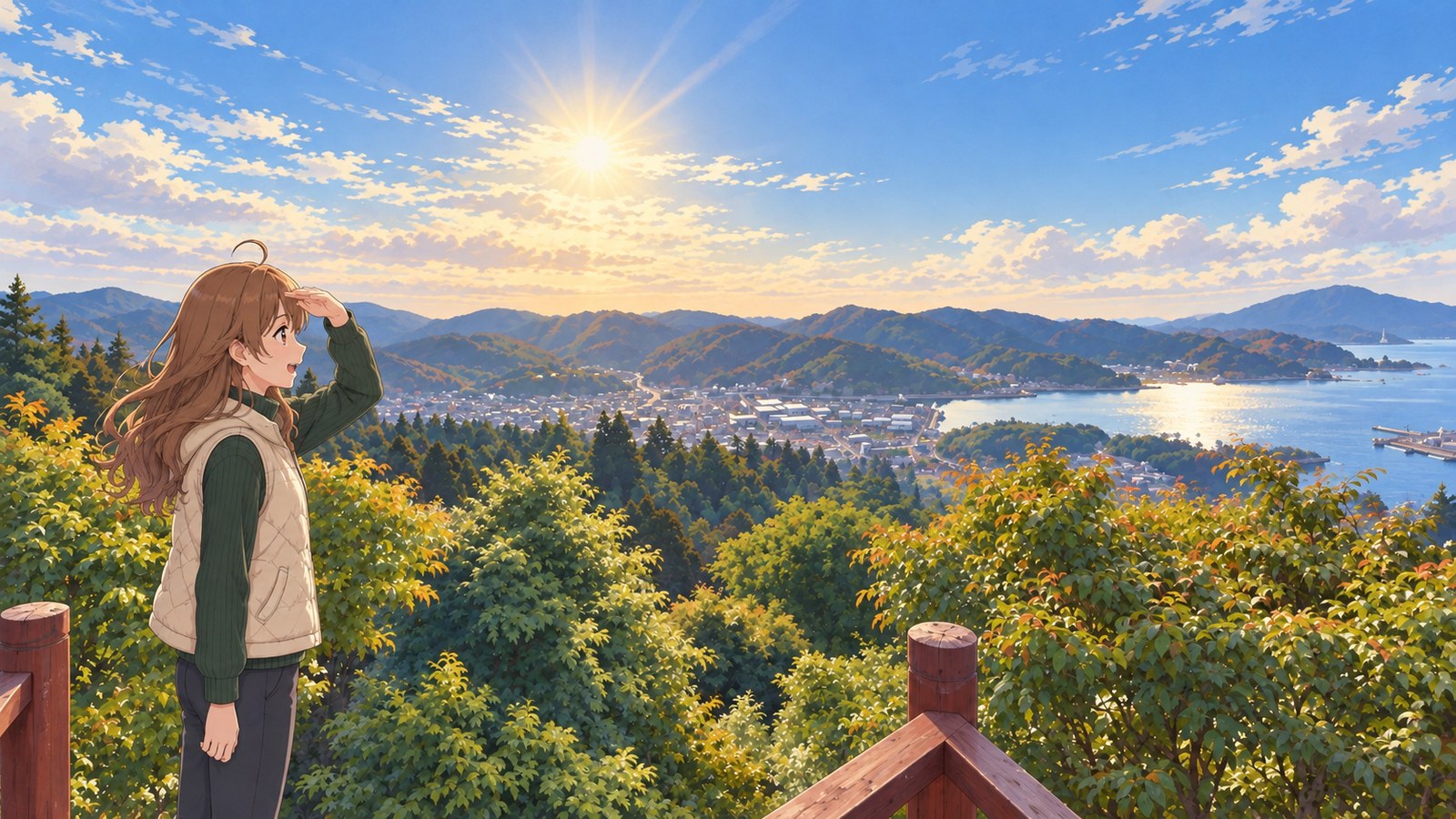
Early summer brings both flooded rice paddies and lingering snow on the mountain. After taking in the view from ground level, it might be lovely to see the whole scene from the observation room at Nemu no Oka.
A suggested drive through Kisakata’s rice fields
Kisakata Station → Kujukushima area
- Drive from Kisakata Station
- About 5 minutes
- Terrain along the route
- Small hills of former islands scattered through the rice fields
Head into Kisakata’s countryside, where groves dot the rice fields. Once you know how this landscape came to be, you may find yourself imagining the inlet that once filled it, too.
The time from the station is the official driving estimate. The surrounding terrain is described as rice paddies and small hills that were once islands.
More Spot Guides
If you enjoyed this story, you might like these places too. I've gone back to each of them in different seasons, again and again.