Tokamachi, Niigata Prefecture
At the Hoshitoge Rice Terraces A bite of rice in the morning light
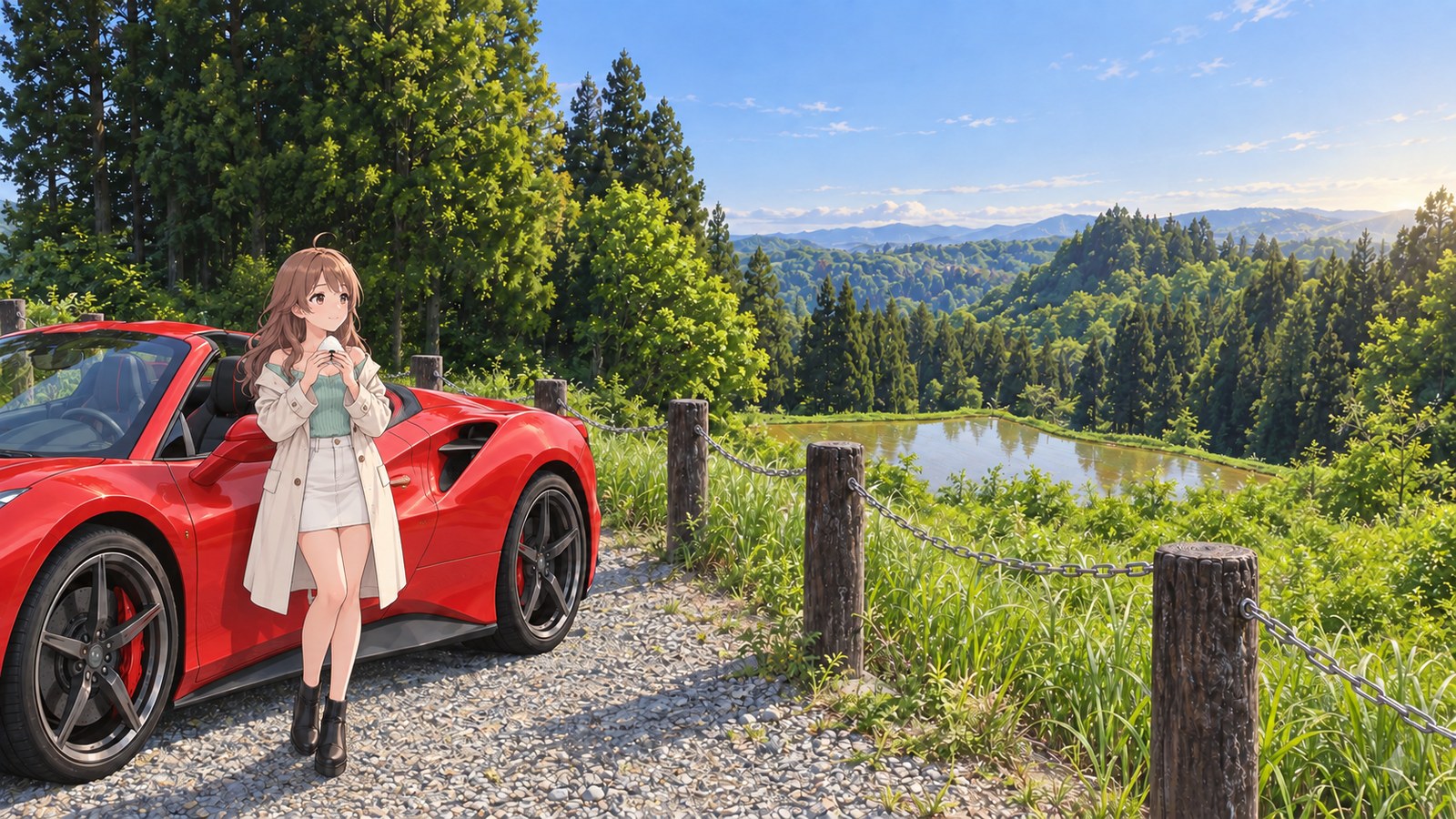
On a May morning, I stood by the car with an onigiri held near my mouth, looking out over the paddies. I’d meant to tuck in straight away, but the sky and trees reflected on the water caught my attention, so breakfast had to wait a moment.
Read about the flooded paddies’ spring reflections and the breakfast I brought to enjoy with the view.
SpringA mid-May morning after the snowmelt
A bite of rice in the morning light
I had an onigiri near my mouth as I looked out over the paddy. It was mid-May, after the snow had melted at Hoshitoge. I’d planned to eat breakfast beside the car, but the sky reflected in the water caught my eye, and I paused before my first bite.
I layered a light cream coat over my mint top and stood in the gravel car park. Ahead was a flooded paddy, with trees and mountains beyond it. I couldn’t see all the terraces, but just taking in that one paddy slowed the whole morning down.
The sky and the trees were reflected in the flooded paddy. I’d heard that between the spring thaw and rice planting, the paddies fill with water and become mirrors. It looked different from a field full of rice: I was looking down at water on the ground, yet somehow my gaze kept drifting up to the sky.
I bit into the onigiri I’d brought, made with Uonuma Koshihikari rice. I’d left it plain so I could savour the rice on its own. As I chewed, I kept looking out at the paddy. The flooded field in front of me and the rice in my hand suddenly felt connected, and it made me want to eat more slowly than usual.
I knew Hoshitoge had about 200 rice paddies, but today I was more interested in a single tree reflected in the water than in counting them. I like photographing a sweeping view, too, but there was something lovely about spending time with one small detail. It was a little pleasure I’d have missed if I’d stayed in the car.
I finished breakfast and tucked the wrapper away. Before setting off, I took one last look at the water. The sky looked brighter now than it had earlier. I think I’ll remember not just how today’s onigiri tasted, but this morning’s view too.
The story sections are fiction inspired by this location. For accurate information, please consult official tourism and information websites.
Local specialty
Onigiri made with Uonuma Koshihikari rice
Uonuma Koshihikari rice is grown in Tokamachi. I brought an onigiri made with that rice for breakfast. Eating it with the paddy in view made every bite more memorable.
Highlights
Paddies that mirror the sky
The flooded rice terraces reflect the blue sky and the surrounding scenery. Before my first bite of onigiri, I found myself gazing at the shape of a tree in the water.
A living heritage of terraced rice farming
Hoshitoge was designated a “Tsunagu Tanada Heritage” site in 2022. After enjoying the rice I’d brought for breakfast, I found myself wanting to learn more about the rice farming behind the scenery.
Road details
Route to the Hoshitoge Rice Terraces
At the Hoshitoge viewpoint in Tokamachi, I parked and looked out over the paddies.
When you come to see the paddies’ spring reflections, make time to stop and enjoy the morning view too. I took in the paddy before me while eating the onigiri I’d brought for breakfast.
More Spot Guides
If you enjoyed this story, you might like these places too. I've gone back to each of them in different seasons, again and again.