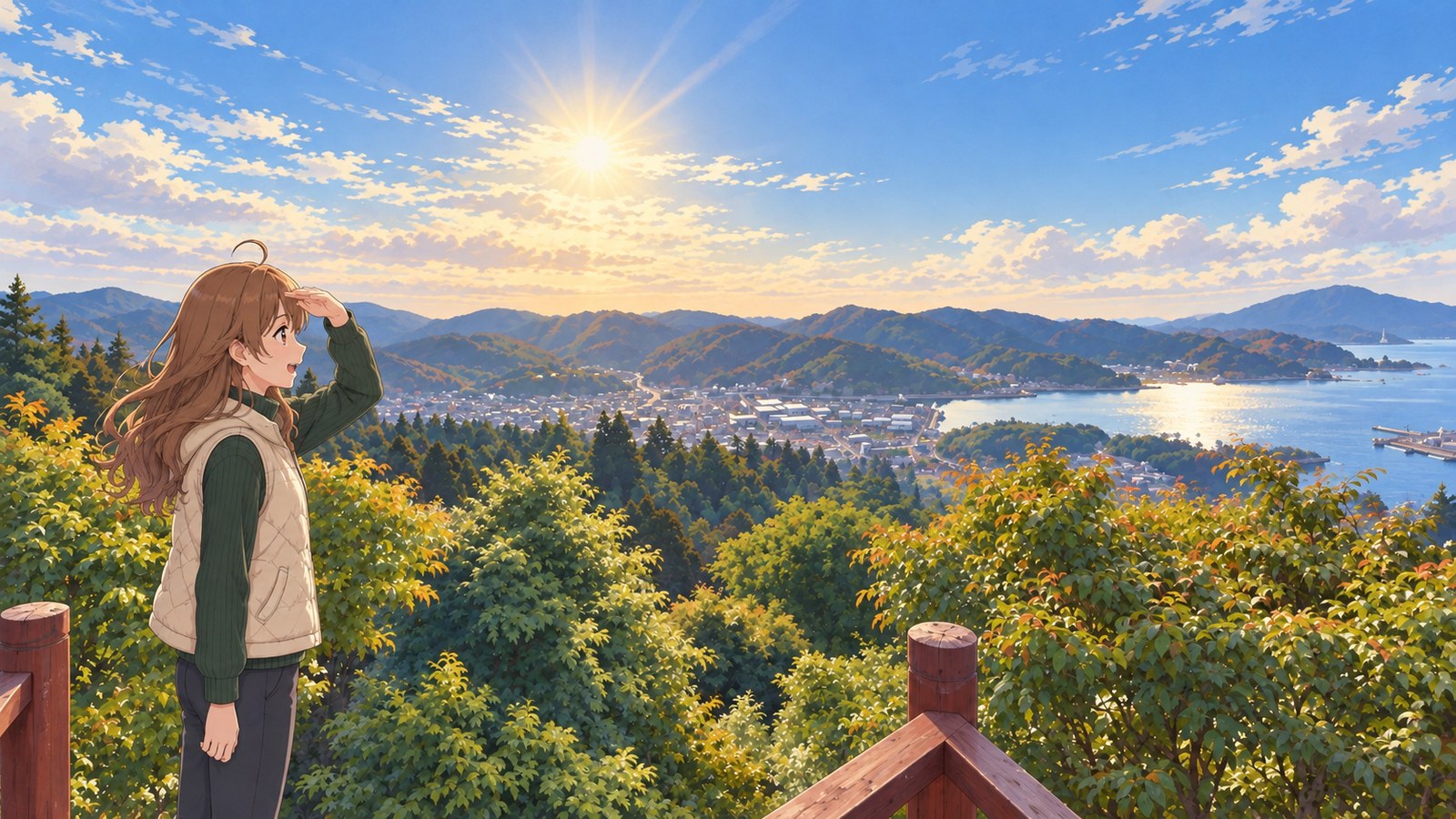
Hiraizumi, Iwate Prefecture
An Autumn Walk at Chusonji The Cedar-Lined Approach and the Wish Behind Konjikido
Chusonji is the collective name for the mountain temple complex, including Konjikido, the Main Hall, and the other temples on the grounds. In early November, I slowly made my way down the stone path near Konjikido. This is the story of a trip where I took in both the intricate craftsmanship and the autumn scenery among the cedars.
Here's what I saw and experienced on a morning in early November at Chusonji.
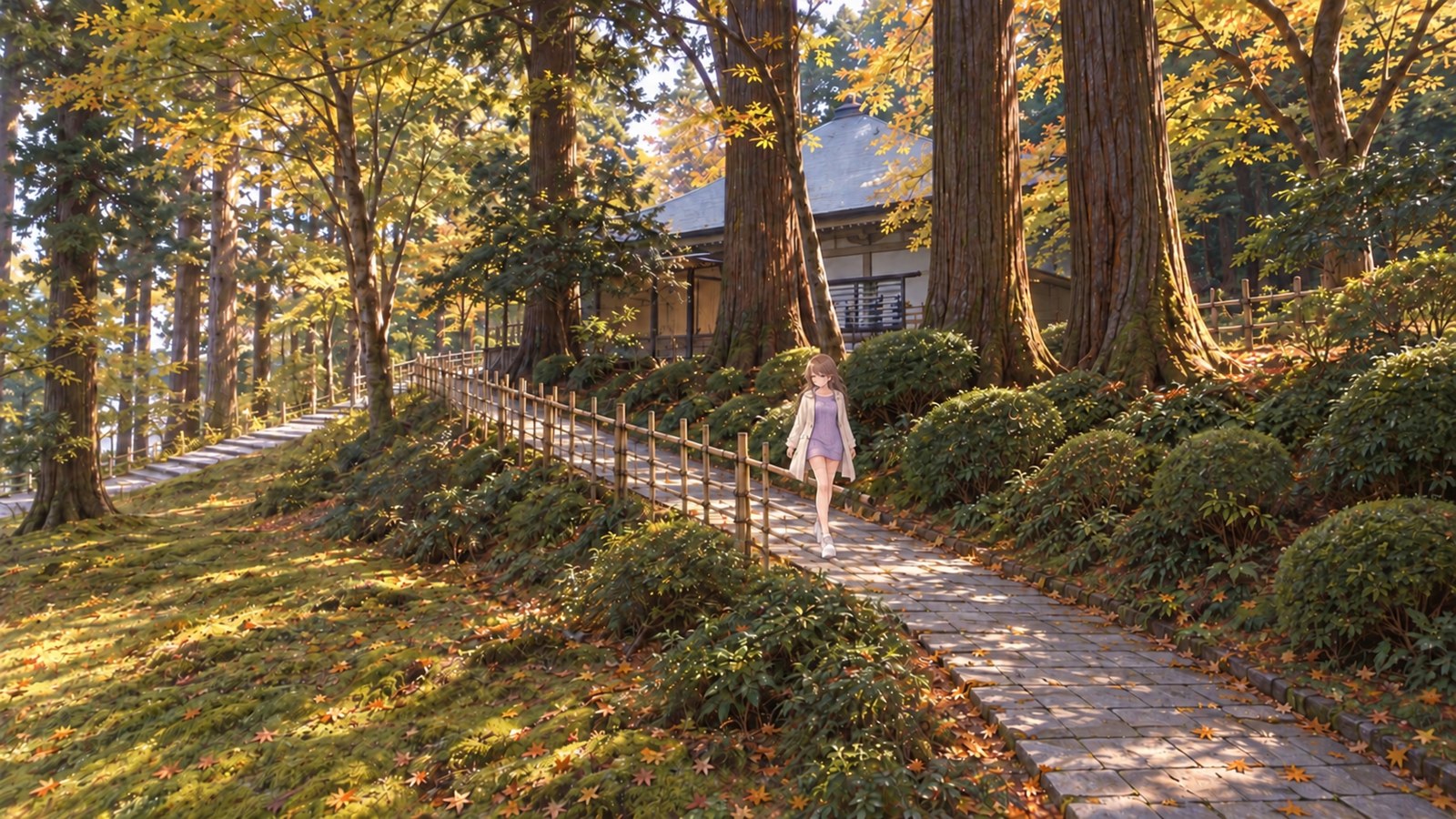
AutumnEarly November, morning
The Cedar-Lined Approach and the Wish Behind Konjikido
I was making my way slowly down the path near Konjikido. Morning light slipped between the cedar trunks, and fallen leaves dotted the stone paving. I watched where I put my feet, then looked up—and one enormous trunk stood right beside me. The hem of my light coat swayed as I walked. Thinking about Konjikido, which I'd just seen, I wanted to stay on that path a little longer.
Konjikido was topped out in 1124 by Kiyohira, the founder of the Oshu Fujiwara clan. I'd heard it still preserves the look of Chusonji as it was when the temple was first established, but when I saw it for myself, the first thing that caught my eye was the fine detail. There was more than the gleam of gold leaf: mother-of-pearl inlay and other ornaments were layered throughout. There was so much I wanted to take in that I couldn't settle for calling it simply “beautiful.”
I heard the mother-of-pearl inlay is made from green turban shell. They use the shell to make ornaments for a temple hall like this. Something from the sea decorating a hall here in the hills of Hiraizumi—that connection made me want to look at each little detail for longer. I was amazed, too, that it had been brought all this way and survived.
Kiyohira's wish for Konjikido was to give a tangible form to the Pure Land, the Buddhist paradise. He hoped to guide to the Pure Land the souls of people who died in battle and other living beings who had lost their lives, and to bring peace to this region. I'd assumed it was famous because of its brilliance, so that story stayed with me. I wanted to carry home both the beauty of the ornaments and the wish behind them.
Back outside, walking among the cedars, I felt a different kind of quiet from the stillness inside the hall. The old cedars along the approach are said to have been planted by the Date clan in the Edo period. Konjikido was built in one era, the cedars were planted in another, and this place has endured through all the years in between. I stopped beside the bamboo fence and looked down at the leaves. Even the time spent walking through the temple grounds in autumn felt connected to the history.
As I walked down the stone path, I remembered the Hiraizumi mochi feast served near the temple gate. I'd heard it comes with more than just sweet red bean and zunda—there are ginger and ozoni, too—and found myself wondering which to try first. First the hall, then a walk among the cedars, and finally mochi. For now, I'd rather linger in town than hurry off to the next stop. I looked up from the fallen leaves and continued on at an easy pace.
The story sections are fiction inspired by this location. For accurate information, please consult official tourism and information websites.
Local specialty
Hiraizumi Mochi Feast
Restaurant Gen, opposite Tsukimizaka at Chusonji, features this Hiraizumi mochi specialty. You can enjoy mochi in six varieties: sweet red bean, ginger, zunda, spicy seasoning, white sesame, and ozoni. After walking the approach, I wanted to try small portions of the different varieties, comparing the sweet flavors with the others.
Highlights
Konjikido, dating back to 1124
Konjikido was topped out in 1124 (the first year of the Tenji era) under Fujiwara no Kiyohira. It brings together Heian-period craftsmanship, including gold leaf and mother-of-pearl inlay made from green turban shell. I found myself wanting to take in each small ornament, not just the shine.
The Pure Land Kiyohira wanted to bring to life
Konjikido embodies Kiyohira's wish to give the Pure Land a tangible form. When I learned he wanted to honor people killed in battle and other living creatures that had lost their lives, and bring peace to the region, I couldn't walk away thinking of it as just a beautiful hall.
Route details
Chusonji Main Approach: Tsukimizaka
For generations, worshippers have taken this main approach on their way to the Main Hall and Konjikido. I like taking my time as I follow the shade of the old cedars toward the halls.
Whether I was walking Tsukimizaka toward the halls or heading back, I wanted to take in the cedar grove. Even after seeing Konjikido, I found myself walking slowly, and the time on the approach became part of the pleasure of the trip.
More Spot Guides
If you enjoyed this story, you might like these places too. I've gone back to each of them in different seasons, again and again.