Mima City, Tokushima Prefecture
A Spring Walk Through the Udatsu Townscape History overhead, indigo in my hands
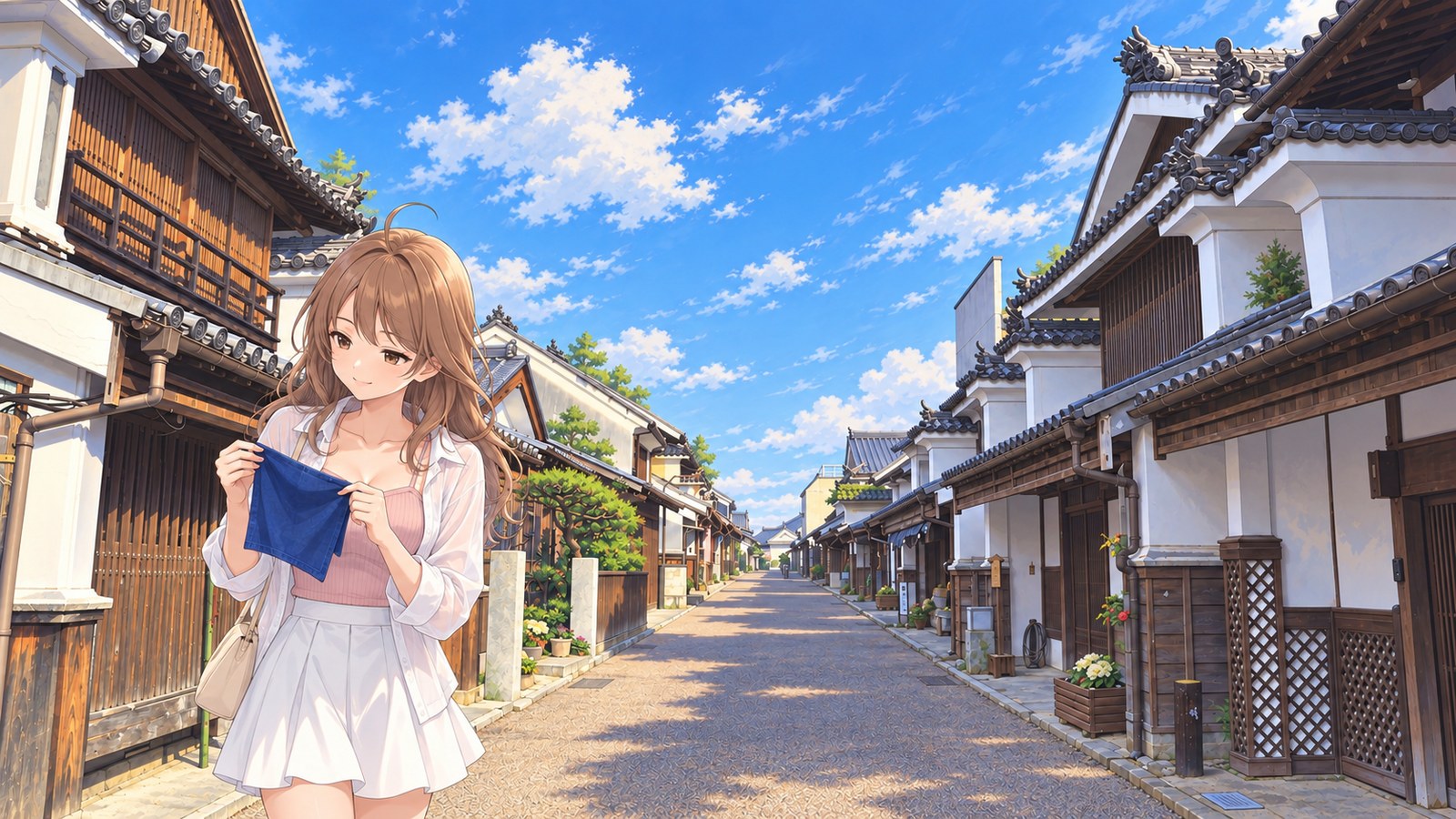
White walls and lattice doors line Wakimachi, and little roofed walls called udatsu project out between neighboring houses. One May afternoon, I walked along with an Awa indigo handkerchief spread out in my hands. Carrying that little piece of cloth made me feel the town’s indigo-trading past not just in its buildings, but right there in my hands.
This is the story of an afternoon in May, taking in the townscape and an indigo handkerchief. When I spread out the little cloth and then looked up at the roofs, the town’s past felt closer than before.
SpringA May afternoon
Spreading my handkerchief, looking up at the udatsu
On a May afternoon, as I walked along a street in Wakimachi, I spotted little roofed walls jutting out above the white walls and lattice doors. Those must be udatsu. Their shapes changed from house to house, and I wanted to see what the next one looked like, all the way down the street. I’d only just started walking, but I kept stopping every time I looked up.
Apparently, udatsu were walls built between neighboring houses, and they helped prevent fires. They were also a sign of the family’s status. I’d been admiring their decorative details, but once I learned they were built to protect the houses, even the overlapping roof tiles looked different. I wanted to go back and take another look at the house I’d just passed.
In my hands was a handkerchief dyed with Awa indigo. I pinched two corners and held it up in front of me; the light caught the folds in the cloth. The indigo looked lovely against the white sleeve of my shirt, and I couldn’t help smiling. It was a small piece of cloth, but it looked different folded and opened out, and I stood there holding it in both hands for a while, just looking.
I heard that this town flourished as a port where indigo was shipped out, thanks to water transport on the Yoshino River. The merchant houses in front of me and the handkerchief in my hands were connected by indigo. If I’d only heard the history explained, it might have felt distant, but walking with the cloth in my hands made me feel that history had become part of my own trip, too.
At the indigo-dyeing workshop at the Mima City Tourism and Exchange Center, you can try dyeing with natural indigo. You can dye hand towels and drawstring bags as well as handkerchiefs. Looking at the handkerchief I was holding made me want to try creating my own pattern next time. Even just thinking about what to dye makes exploring the town even more fun.
I carefully folded the handkerchief, then set off down the street again. The udatsu I’d first looked up at no longer seemed like mere roof decorations. I feel like I can take home the story of the indigo trade and the houses it left behind. If I get hungry, I’d love to try a lunch made with local ingredients and spend a little more time in this town.
The story sections are fiction inspired by this location. For accurate information, please consult official tourism and information websites.
Local food to try
A locally sourced lunch at Mima City Tourism and Exchange Center
At the Tourism and Exchange Center’s café, you can enjoy a locally sourced lunch featuring Awa-Odori chicken and seasonal ingredients. After walking around town, I’d love to enjoy some local flavors and think back on the udatsu I saw today.
Highlights
Udatsu: firebreaks and a sign of status
An udatsu is a gable wall that juts out from the second story at the boundary between neighboring houses. It helped prevent fires and was also a symbol of a family’s status. Knowing that, I found myself looking closely at even the shapes of the roof tiles.
A merchant town that thrived on indigo shipping
Thanks to water transport on the Yoshino River, Minamimachi-dori flourished as a port where indigo was shipped out. In 1988, it was designated an Important Preservation District for Groups of Traditional Buildings. When I walked with a piece of indigo-dyed cloth in my hands, I could feel that history right there, too.
The route
Minamimachi Street, Wakimachi
At Minamimachi Street in Wakimachi, Mima City, I got out of the car and walked toward the udatsu townscape, taking in the eaves of the merchant houses.
Look up at the udatsu, admire the indigo in your hands, then carry on down the street. There are details in this town you can only enjoy at walking pace.
More Spot Guides
If you enjoyed this story, you might like these places too. I've gone back to each of them in different seasons, again and again.