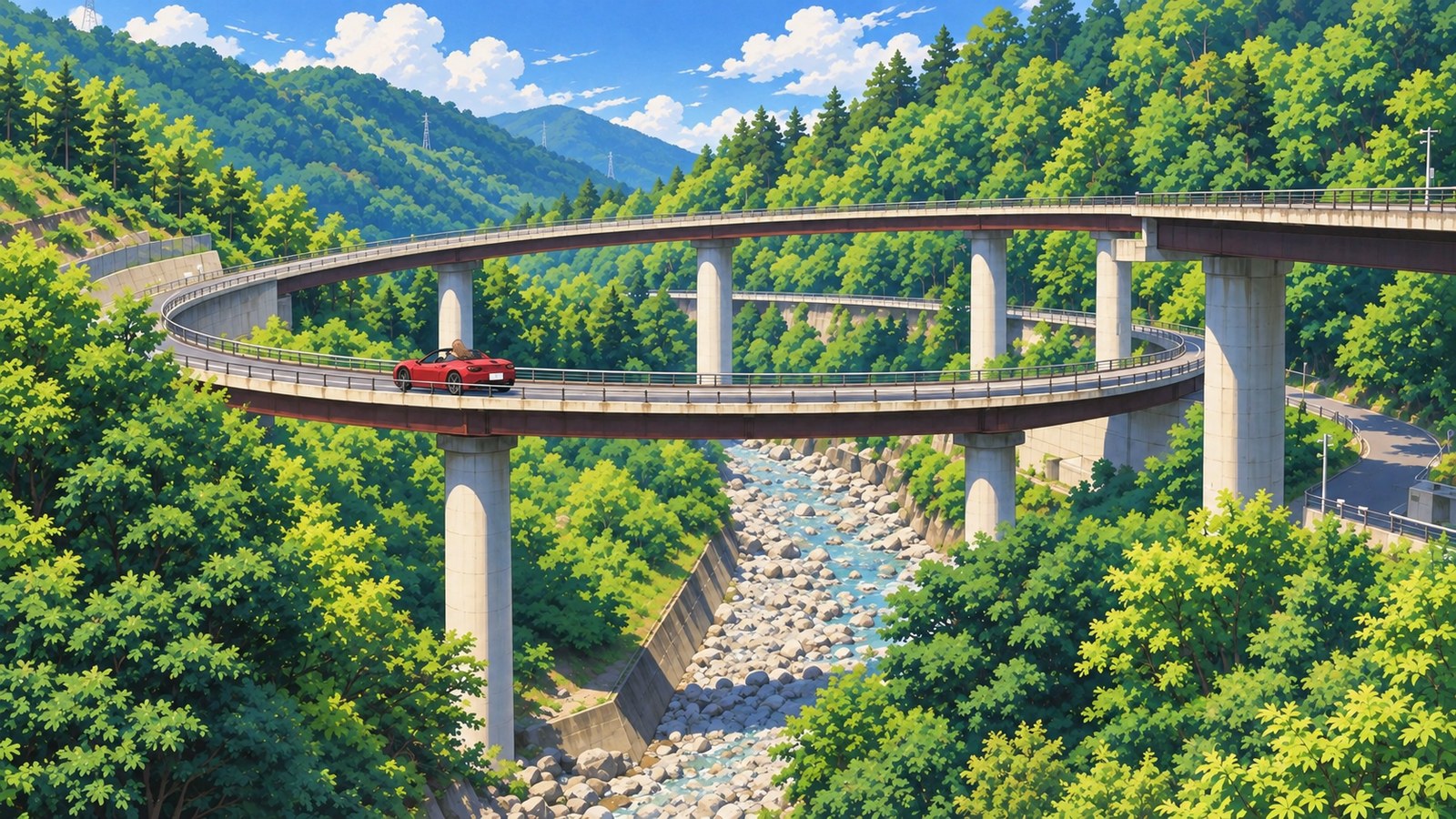
Uchiko, Ehime Prefecture
Yokaichi-Gokoku Historic District After driving through, come back on foot for a closer look at the eaves
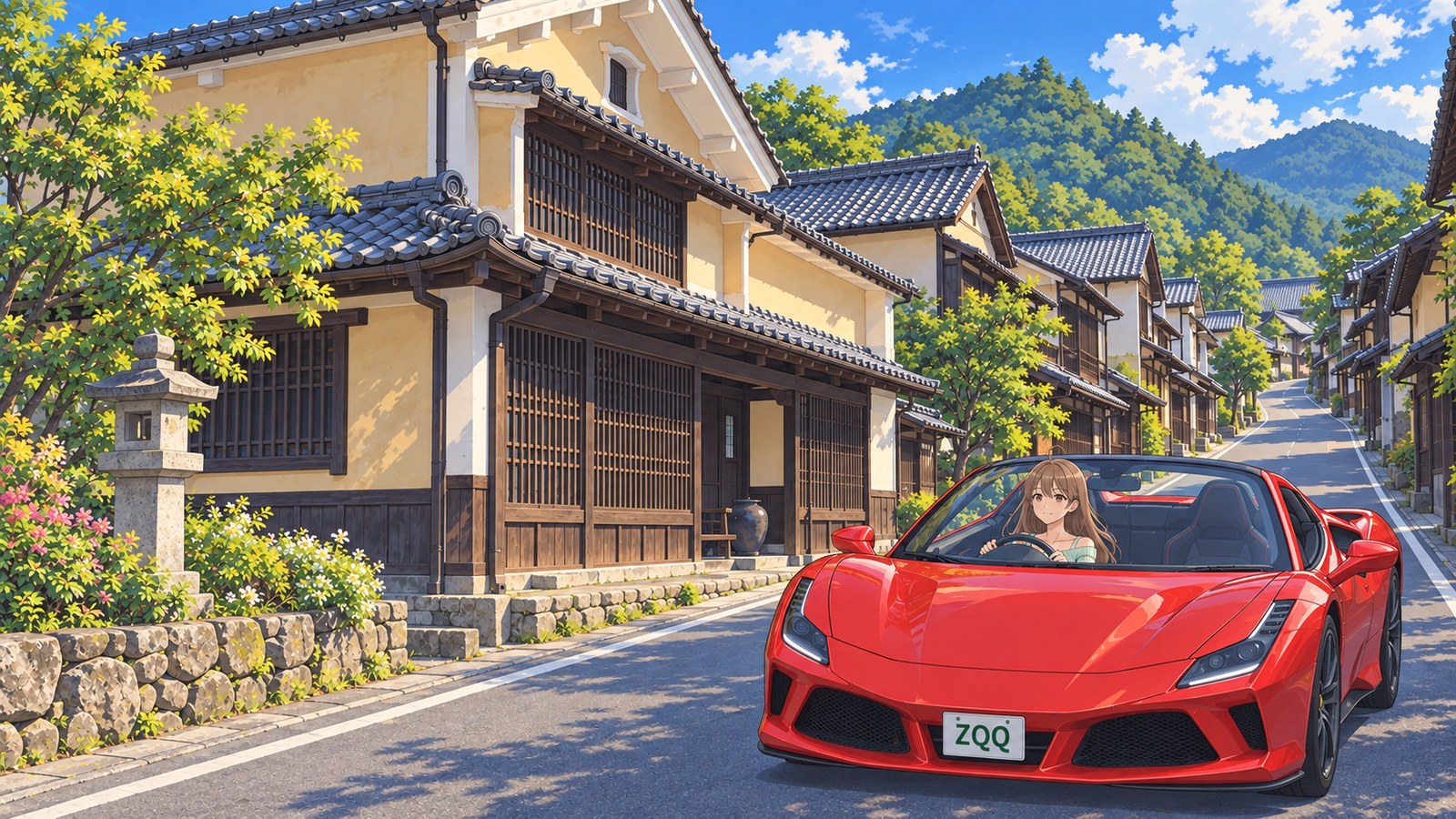
The Yokaichi-Gokoku Historic District is a roughly 600m stretch of street lined with traditional townhouses and wealthy merchants’ mansions. On a May morning, I drove through first, then came back to explore on foot. Looking closely at the rooftops and latticework made the street feel even more familiar.
It was a May morning: I drove quietly through town, then explored on foot. I kept my eyes on the road from the driver’s seat and saved the closer look at the buildings for after I’d parked.
SpringA May morning
Going back on foot to see that latticework up close
On a May morning, I entered the Yokaichi-Gokoku Historic District and saw tiled roofs running all the way down the street. I eased along in my red convertible, eyes on the narrow road ahead and both hands on the wheel. I didn’t want to just drive through and leave it at that; I was already looking forward to getting out and exploring on foot.
I parked at Machinami Car Park and walked back along the street I’d just driven through. A morning breeze brushed against my mint-coloured top, and it felt lovely to be on foot too. I’d kept my eyes on the road from the driver’s seat, so now I could take my time looking at the eaves. Up close, I could make out each slim slat in the latticework; every few steps, I found another detail that made me pause.
I’d heard that traditional merchant houses and the mansions of wealthy merchants still stand along about 600m of the street. Even among the tiled roofs, no two houses were quite alike: the tiles were laid differently, and the eaves extended out by different amounts. I looked at one house on the left, then another across the way, stopping each time. In the photos, the streetscape had looked like one continuous view; walking through it, I found myself wanting to remember each house on its own.
From the late Edo period through the Taishō era, Uchiko prospered as a centre of Japanese wax production. The words “Japanese wax” alone hadn’t helped me picture what life here was like. But standing in front of those grand houses, I could see the legacy of the town’s trade. Learning that some houses are still lived in made me realise this isn’t just a historic streetscape; people still call it home.
I heard that the pale yellow earthen walls were made with local soil. Knowing that, I wanted to look beyond their lovely finish and think about how they were made from the local earth. I kept shifting my gaze between the light falling across the latticework and the shadows cast by the tiles, until I realised I’d been standing in the same spot for ages. I was so glad I’d come in the morning; before I knew it, I was smiling.
By lunchtime, I was curious about the sea bream rice at Rinsuke in Uchiko. I’d heard it’s made with sea bream from the Uwa Sea and eggs from Uchiko. After walking through town and working up an appetite, I wanted to try something local too. I’d driven through these streets that morning, then got to know them on foot and lingered over lunch. I was glad I didn’t have to hurry off to the next town today.
The story sections are fiction inspired by this location. For accurate information, please consult official tourism and information websites.
What to try on your trip
Rinsuke’s sea bream rice
The local speciality is sea bream rice, made with bream from the Uwa Sea and EM herb eggs from Uchiko. Rinsuke is the dining room attached to the traditional Japanese restaurant “Uorin”. After a walk through the historic district, I’d love to try it for lunch.
Highlights
A town that thrived on Japanese wax production
From the late Edo period through the Taishō era, Uchiko thrived on Japanese wax production. As you walk among the mansions and traditional townhouses, you can feel the legacy of that trade in the buildings.
A district where people still live
Some of the homes along this roughly 600m street are still lived in today. The district was designated an Important Preservation District for Groups of Traditional Buildings in 1982. I was drawn to the way buildings from another era and everyday life share the same street.
The route
Road to the Yokaichi-Gokoku Historic District
Head into the historic streets of Uchiko. Park at Machinami Car Park, then explore the latticework and rooftops along the street on foot.
I loved driving through first, then walking back to the same buildings. This time, I could stop and take them in properly.
More Spot Guides
If you enjoyed this story, you might like these places too. I've gone back to each of them in different seasons, again and again.