Mito, Ibaraki Prefecture
A Visit to Kairakuen for the Plum Blossoms Looking up through the branches and wondering about Kōbuntei’s name
Kairakuen in Mito opened in 1842, when Tokugawa Nariaki created the garden as a place for local residents to rest. In early spring, around 100 varieties and 3,000 plum trees bring the garden to life. I’ll tell you about my early-March walk along the garden paths and the story behind Kōbuntei’s name.
One early-March walk turned into a morning of looking up at the plum blossoms. After learning the story behind Kōbuntei’s name, I found myself enjoying the garden in a new way.
SpringLate morning in early March
I looked up at the plums and started wondering about Kōbuntei
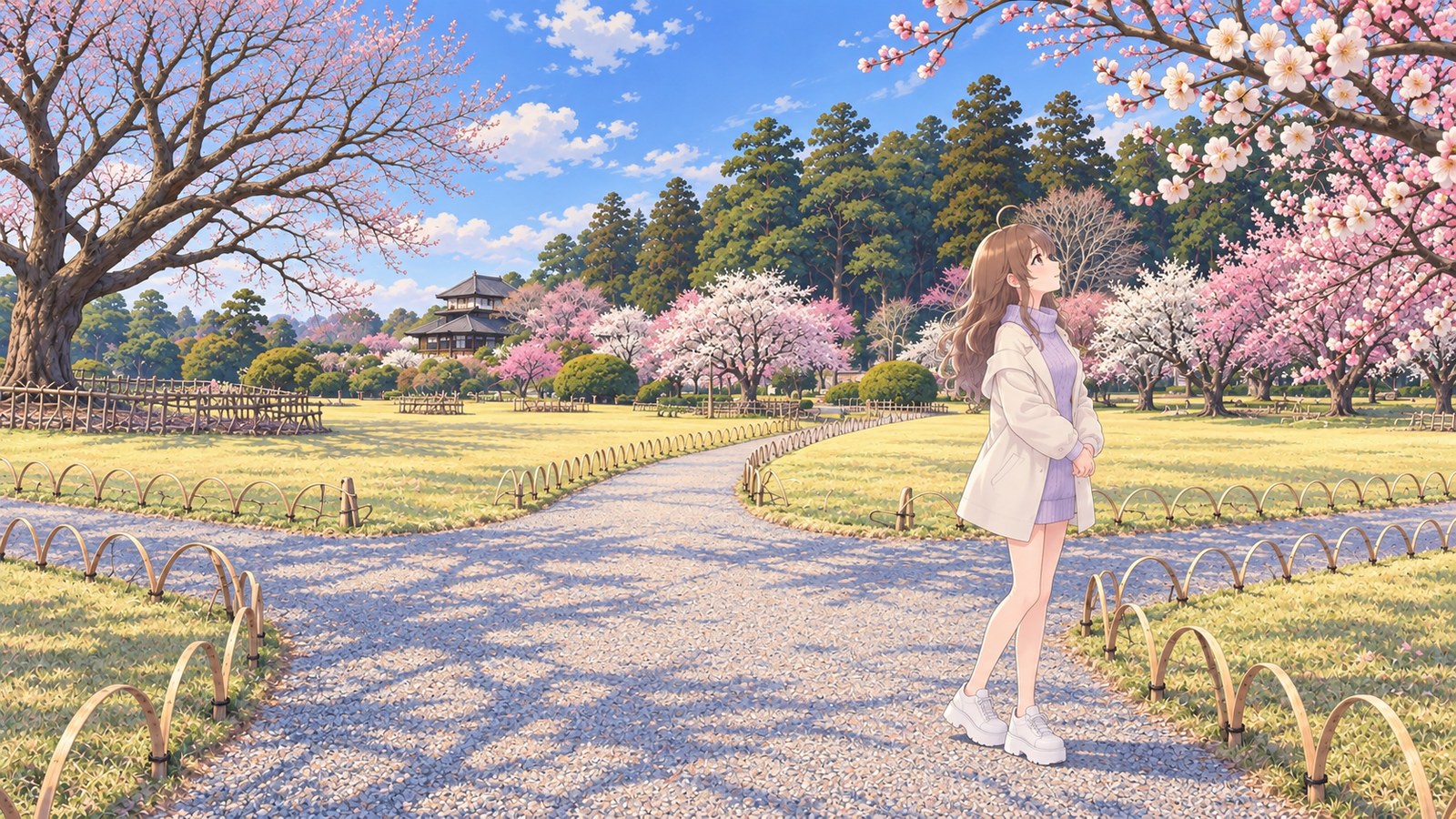
I was walking along the gravel path at Kairakuen when I noticed plum blossoms on a branch right beside me. I’d planned to look out into the distance, but that branch caught my attention and my head tipped up without thinking. I took a breath beneath the flowers and thought I caught a hint of that early-spring scent. I stopped again. Today, I wanted to linger near the blossoms instead of hurrying around the wide garden.
Under my short ivory coat, I wore a lavender knit dress. The morning had been cold, but as I walked in the sunshine, my shoulders slowly relaxed. I clasped my hands in front of me and looked up at the branches; beyond the thin petals, I could see the sky. Just finding a little flower like that at the end of winter made my heart lift.
I’d heard that Kairakuen has around 100 varieties and 3,000 plum trees. That made me curious about one of the neighbouring trees, which I’d thought looked just like the others. I moved a little farther along the path, then stopped again to look at the differences in the flowers and the branches they grew on. I used to think I needed to know all the names to appreciate the blossoms, but now I’m happy just looking at whichever branch catches my eye.
The “Kōbun” in Kōbuntei is another name for plum blossoms. The name comes from an old Chinese story: “When you devote yourself to learning, the plum blossoms bloom.” Tokugawa Nariaki named the pavilion after that tale. When I remembered the name after looking up at the flowers, the garden and the building seemed to come together. A name that had sounded so unfamiliar suddenly felt much easier to remember.
After admiring the flowers, I could look forward to matcha and sweets served in masu cups at Cafe Raku in Kōbuntei. As I took a sip of matcha, the excitement of following the blossoms all morning slowly settled. While I enjoyed something sweet, I thought again about how Kōbuntei got its name. The plum blossoms I’d looked up at a little earlier came back to mind, and even snack time felt like part of my garden walk.
By the time I was leaving, the plum branch that had first made me stop was the one I remembered most. More than all the places I’d seen in that huge garden, I could clearly picture the moment I looked up beneath those blossoms. I was glad I’d bundled up and come, even on such a cold morning. The feeling that I’d come to see the spring flowers lingered even after I got home.
The story sections are fiction inspired by this location. For accurate information, please consult official tourism and information websites.
Local treats to try
Matcha and masu sweets at Cafe Raku
Cafe Raku at Kōbuntei offers matcha and sweets served in masu cups. Just thinking of a sweet treat after the plum blossoms gave me something to look forward to until the end of the walk. I had a sip of matcha and thought back to the flowers in the garden.
Highlights
A garden opened for local residents to rest
Tokugawa Nariaki, the 9th lord of the Mito Domain, opened Kairakuen in 1842 as a place for local residents to rest. It’s counted among Japan’s Three Great Gardens, and I loved taking my time beneath the plum branches.
Kōbun, another name for plum blossoms
Kōbun is another name for plum blossoms, and Nariaki named Kōbuntei after an old Chinese story. The pavilion you see today was rebuilt over the course of 3 years from 1955, after the original burned down during the Mito air raids. After seeing the blossoms, it’s a name I’ll remember on the way home.
Road details
Paths through Kairakuen
As you walk through the plum grove, you can see Kōbuntei. I kept stopping on the gravel path whenever a nearby branch caught my eye.
At Kairakuen, I want to get out of the car and spend time walking the garden paths. Even on my way to the building in the distance, I kept looking up at the plum blossoms.
More Spot Guides
If you enjoyed this story, you might like these places too. I've gone back to each of them in different seasons, again and again.