Fukuyama, Hiroshima
Tomonoura A harbor view, then one more bite of sea bream chikuwa
From streets lined with traditional townhouses to the harbor and its stone lantern, follow my late-April afternoon of walking, taking in the view, and sampling sea bream chikuwa.
On a spring afternoon, I wandered through the old streets and stopped for a break by the harbor. With sea bream chikuwa in hand, I alternated between taking in the view and savoring my snack.
SpringLate April
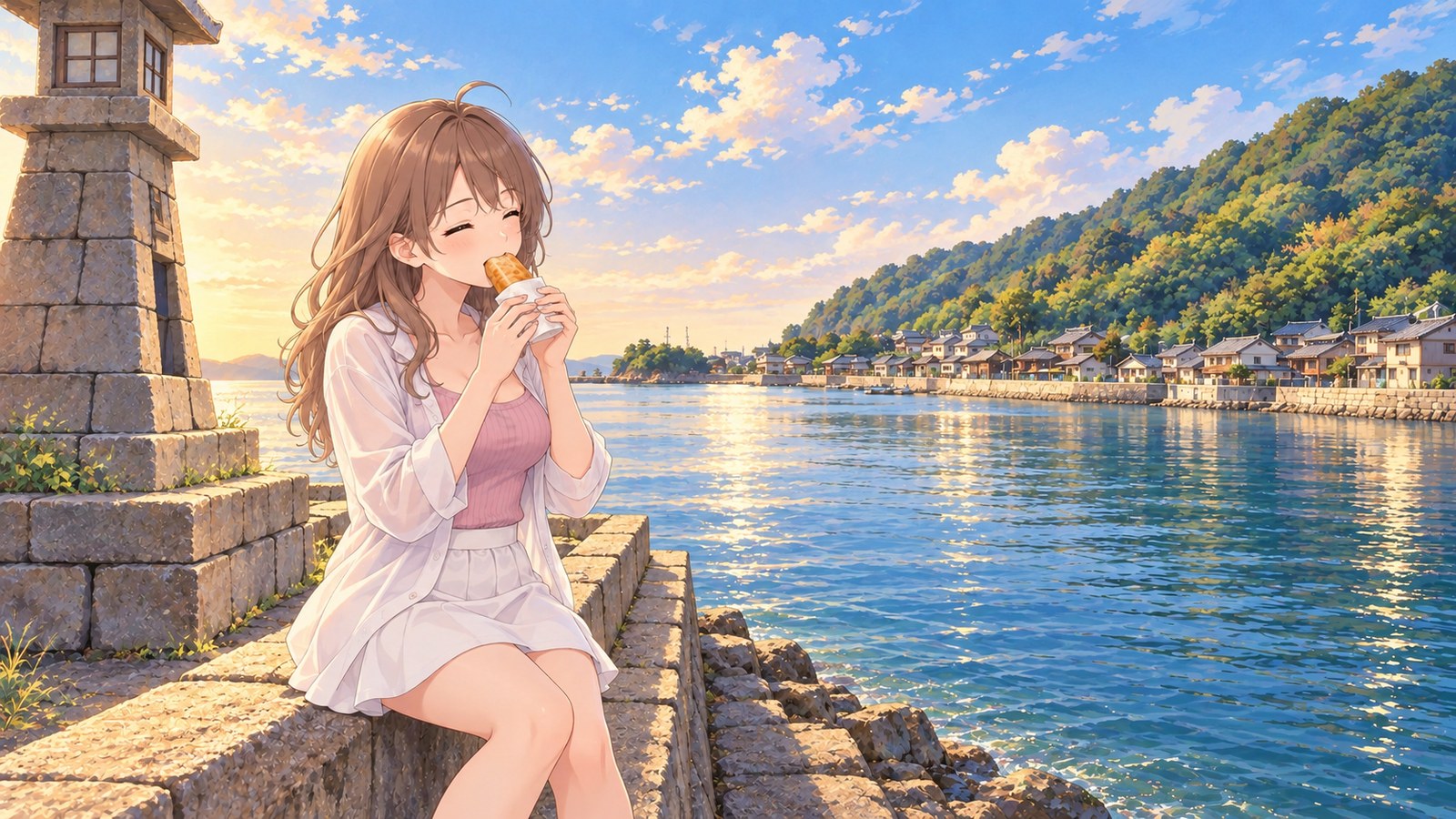
I closed my eyes because the sea bream chikuwa was so good
I walked down a street lined with old townhouses and came out at Tomonoura harbor. It was a spring afternoon in late April, and as soon as I reached the water, even my walking pace slowed. I stopped by the stone lantern and looked across the harbor at the houses on the other side. I never expected a moment like this after rounding that bend.
The hills stretched behind the houses, and the harbor opened out in front of them. Watching the waves, I found myself wanting to wander those narrow streets again. But first, a short break. I sat on the stone edge by the water and opened the wrapper around the sea bream chikuwa in my hand. Maybe I’d head back into town after I’d eaten.
I took a pretty big first bite. Wait, this is so much thicker than I expected! With every chew, I wanted to take in more of the flavor, and before I knew it my eyes were closed. I’d stopped to admire the harbor, and now I was completely absorbed in the flavor. I’d have to look at the view again once I’d finished eating.
When I opened my eyes, there was still plenty left in my hand. I wanted another big bite, but then I’d finish it sooner. Should I take smaller bites and make it last, or go for one more generous bite? I don’t think I’ve ever stared so seriously at a piece of chikuwa.
I hesitated for a moment, then took another big bite anyway. Yep, I really do love how thick it is. This time, I chewed slowly while looking out at the harbor, enjoying the snack and the view together. If I told my friend about it, she’d probably laugh and say I must have spent a long time deciding, too. It was the kind of afternoon I wanted to remember, so I could tell her about it later.
I folded up the wrapper and stayed by the harbor a little longer. Even now, the thought of how good that chikuwa was makes me want another bite. I glanced back toward the stone lantern as I walked into town. I knew I’d remember that spring day in Tomonoura for the time by the water and the taste of sea bream chikuwa.
The story sections are fiction inspired by this location. For accurate information, please consult official tourism and information websites.
Local specialty
Sea bream chikuwa
Sea bream chikuwa, a popular souvenir from Tomonoura, is thicker than regular chikuwa. The Fukuyama Tourism and Convention Association also describes its delicate, toasty aroma, thanks to the generous amount of small sea bream used. I took a big bite and closed my eyes to savor it. I spent a good while seriously debating whether my next bite should be smaller.
Highlights
A port where ships waited for the tides and Edo-period townhouses
Tomonoura thrived for centuries as a port where ships waited for the tides; Kitamaebune trading ships also called here during the Edo period. As I wandered streets lined with the mansions of wealthy merchants and smaller townhouses, I kept coming across places that made me want to stop before I even reached the harbor. It would have felt like a waste to see only the sea and leave.
Taichoro’s history of hosting distinguished guests
Taichoro, next to the main hall of Fukuzenji Temple, is said to have been built around 1690 as a guest hall and later used to accommodate distinguished visitors. Reading that after spending time by the harbor made me picture people crossing the sea to get here, and I wanted to walk the old streets once more.
Getting there
Getting to Tomonoura
- Distance from Fukuyama Station
- 14 km south of Fukuyama Station
- Bus access
- About 30 minutes by bus from JR Fukuyama Station
The address is Tomo, Tomo-cho, Fukuyama City. From JR Fukuyama Station, take a bus bound for “Tomo Port” and get off at either “Tomonoura” or “Tomo Port.” I wanted to take my time exploring the streets leading to the harbor, not just the waterfront.
You can find the town’s historic streets on the map below. Hiroshima’s official tourism site has bus details from Fukuyama Station. Try making time in your trip for both the harbor view and a walk through town.
More Spot Guides
If you enjoyed this story, you might like these places too. I've gone back to each of them in different seasons, again and again.