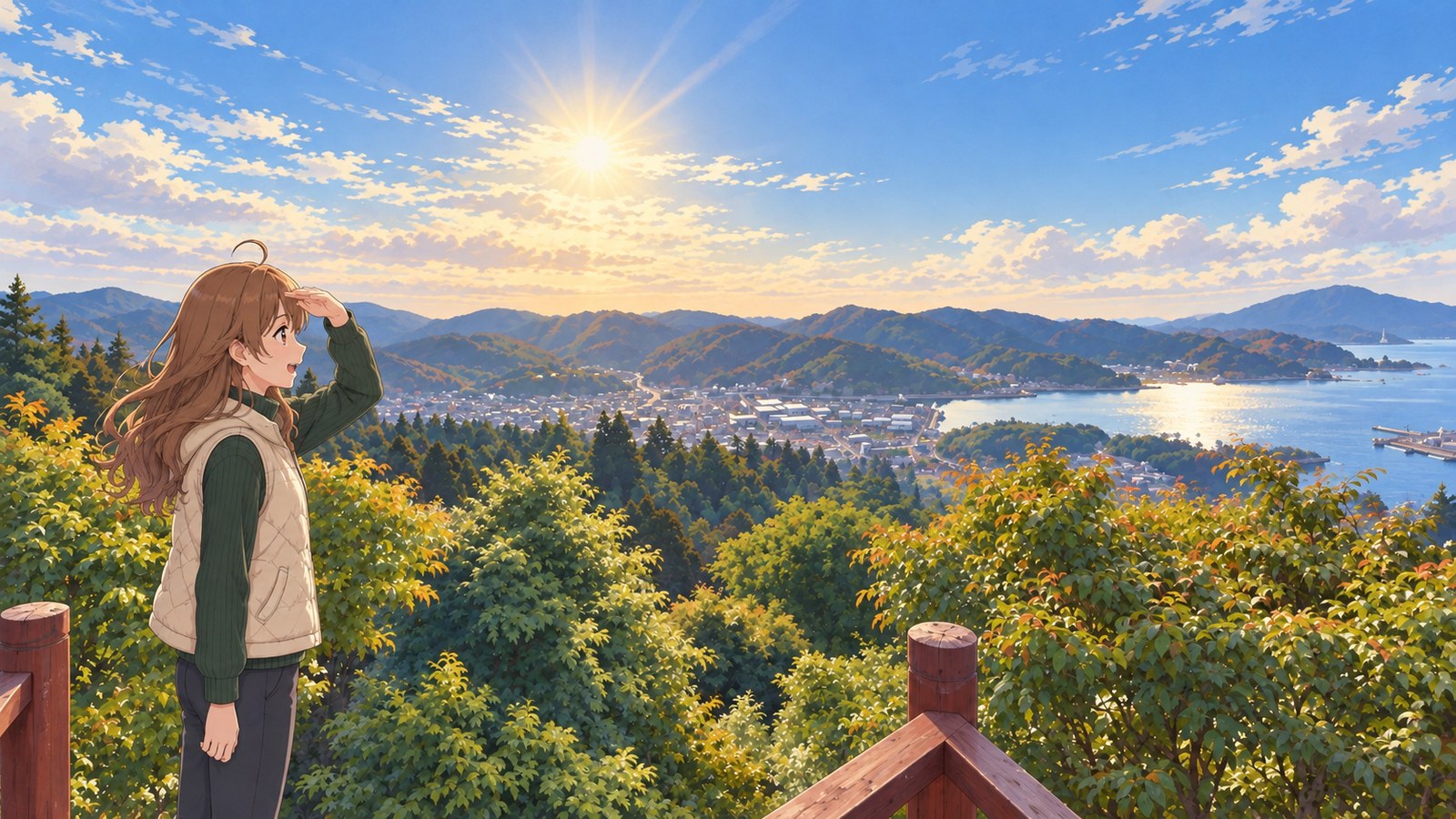
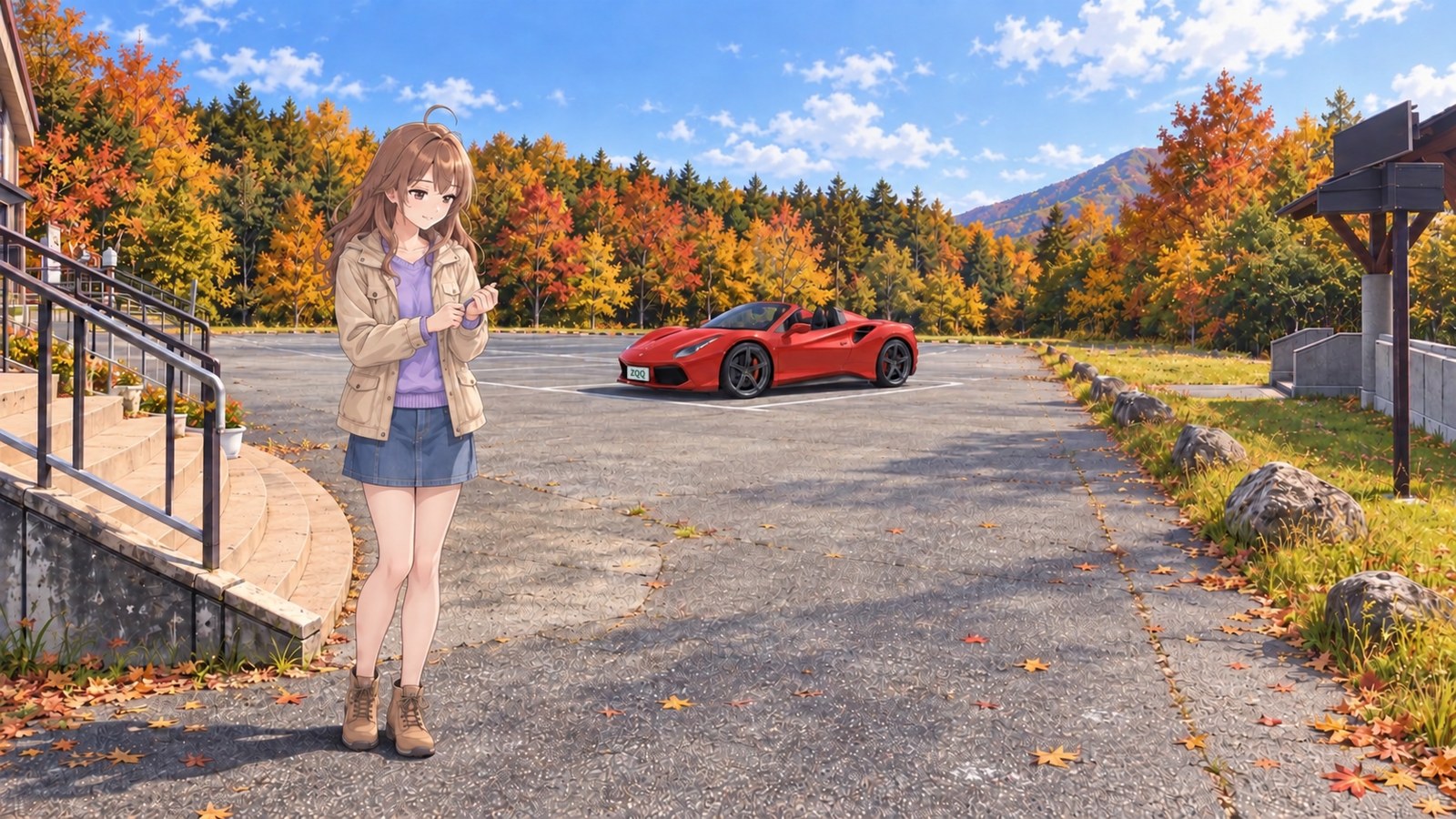
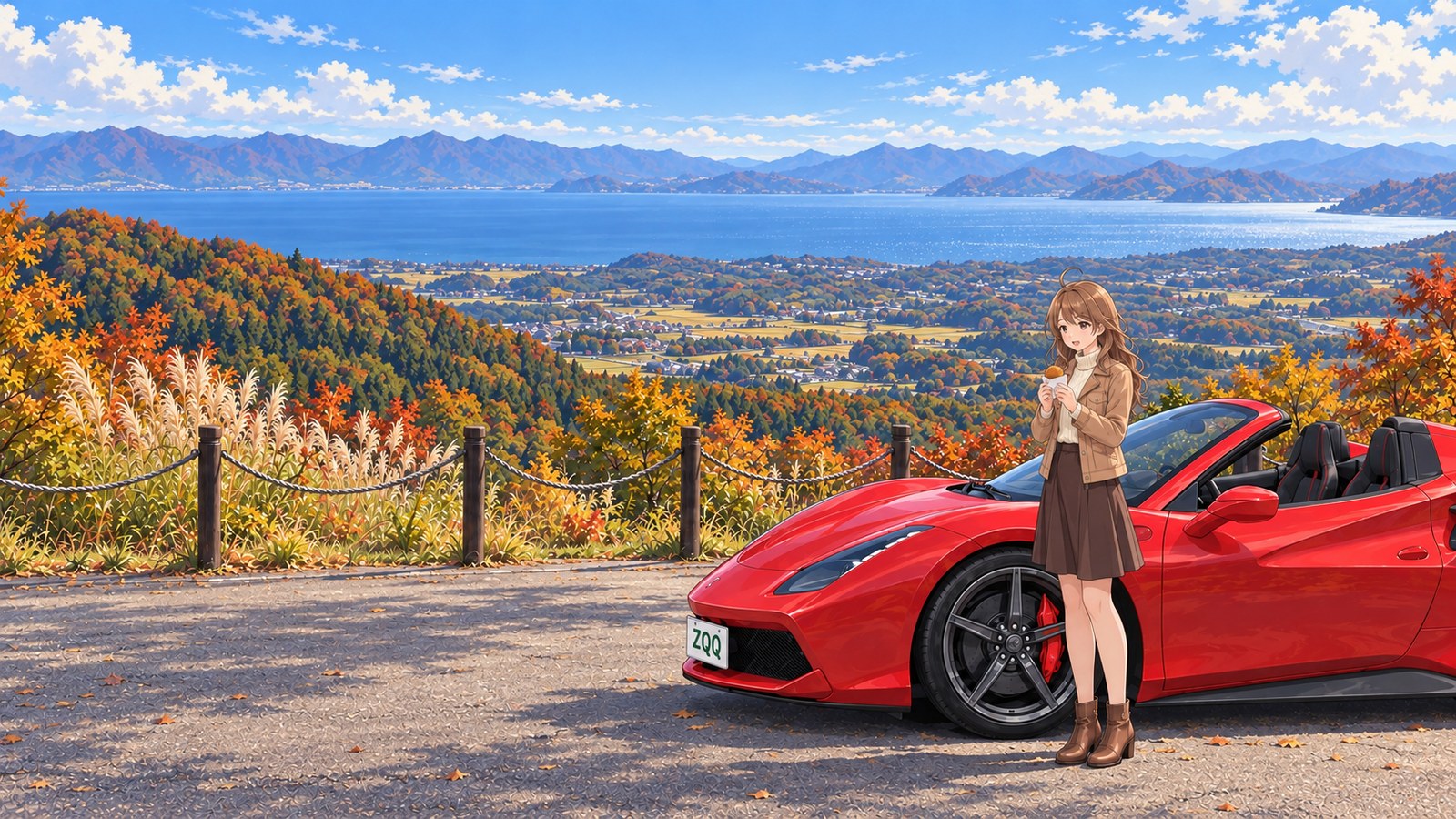
Naruko Onsenkyo, Osaki, Miyagi Prefecture
Naruko Gorge Take in Ōfukazawa Bridge and the deep gorge from the lookout
It’s about an hour from Furukawa IC along Route 47, and about 10 minutes by car from Naruko Onsen town. From the lookout at Naruko Gorge Rest House, I looked out over Ōfukazawa Bridge and the gorge, about 100 m deep. In spring, I walked beneath the fresh leaves to Kaikō Bridge; in summer, I followed the trail alongside a clear stream; in autumn, I took in the autumn leaves with chestnut dango. I stopped by on each trip that included an overnight stay in Naruko Onsen.
Fresh spring foliage around May, green gorge views in July, and autumn leaves from late October to early November. Pick the spring, summer, or autumn tab to read about that day’s trip. I found a different way to take in the bridge each season: with a camera in spring, on the trail in summer, and with chestnut dango in autumn.
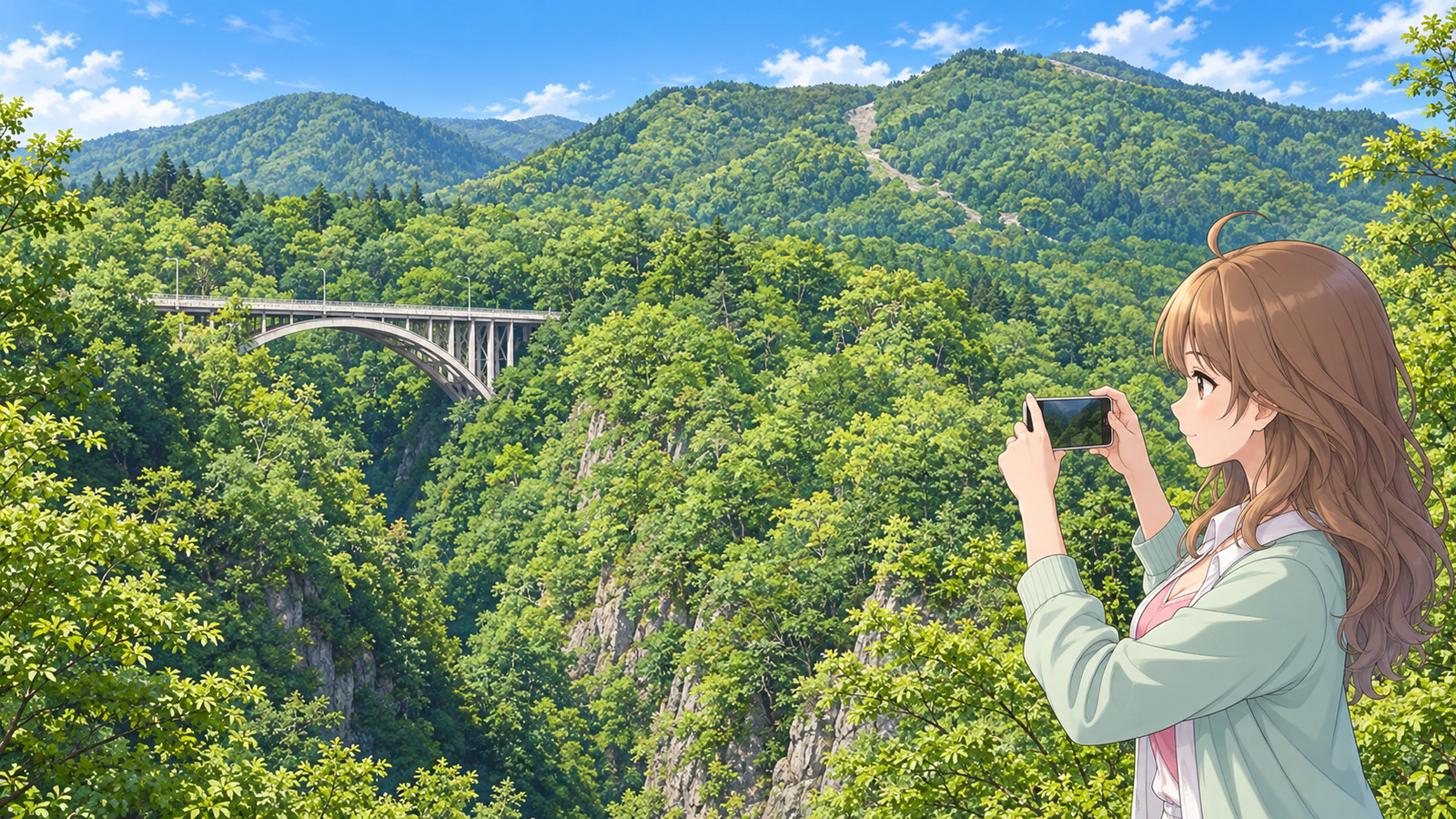
SpringFresh spring foliage around May, on a clear morning
The bridge and gorge in one landscape shot
In May, I headed to Naruko Onsen for an overnight trip to see Naruko Gorge in its fresh spring green. The day before, I drove north from Ariake on the expressway, then, from Furukawa IC, continued toward Yamagata on Route 47. Soaking in the inn’s hot spring that night, I kept wondering where I should photograph the bridge from the next day. The following morning, I drove about 10 minutes from the inn and parked on the Nakayamadaira side. The car park was huge, with room for 253 passenger cars. As soon as I stepped out, I caught the scent of fresh leaves.
On a clear morning, I headed to the lookout at Naruko Gorge Rest House. I’d come for the fresh leaves and Ōfukazawa Bridge. The moment I spotted the arch above the trees, my phone was already out. I wanted to capture the bridge against a backdrop quite different from the autumn leaves. First I took in the bridge, then let my eyes drop to the gorge. Rock faces peeked through the leaves, and the trees carried on into the depths of the valley. The whole scene felt so much bigger than it had when I was looking only at the bridge.
When I rested my hands on the lookout railing, it was still cool from the morning. The breeze rising from the gorge felt a little cooler than it had in the car park, and the scent of the leaves was stronger. I watched one car cross the arch and suddenly realized, all over again, that there’s a road on top of that bridge.
I turned my phone sideways and took a shot wide enough to include the rock face below the bridge. The sleeves of my mint cardigan, layered over a white shirt and pink top, bunched a little at my wrists. I think that arch with a car crossing it will stay in my mind longer than the photo I took.
After I’d taken my photos, I walked from the Nakayamadaira-side entrance to Kaikō Bridge. The walk is about 350 m each way, and I came back the same way. Looking up as I walked, I could see layers of young leaves stretching overhead, with sunlight flickering through. I was now inside the gorge I’d just looked down into from the lookout. Further along, I heard the river before I could see the water flowing at the bottom of the gorge. I stopped on Kaikō Bridge to listen to the water slipping between the rocks, then turned and retraced my steps.
On the way back from Kaikō Bridge, I compared the leaves one by one: round ones, jagged ones, and others spread out like palms. From the lookout, they’d all blurred together as “fresh green,” but up close they were completely different. Now I can’t help wondering how these trees will change when autumn comes.
Before heading back to the car park, I opened the photo I’d taken and zoomed in to see whether the different leaf shapes showed up. In the shot from the lookout, every leaf was just part of one mass of green. I decided that noticing the differences was part of the pleasure of walking closer, then set off for Ariake. Before getting in, I sketched the three shapes—round, jagged, and palm-like—in my travel notes.
SummerA sunny afternoon in July
Down to the stream on the Ōfukazawa Trail, with cicadas singing
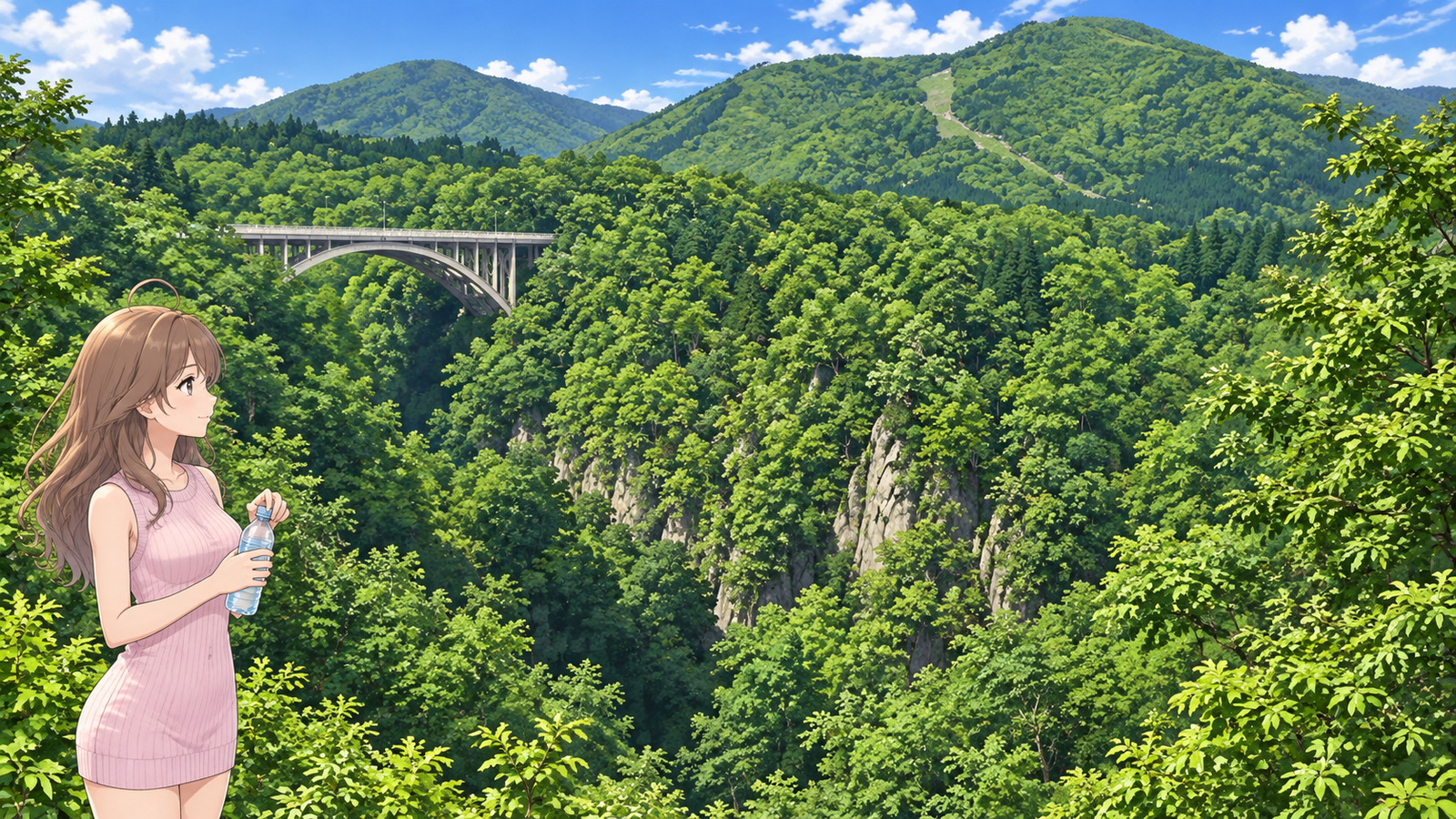
In July, I went on a summer overnight trip to Naruko Onsen. I drove north from Ariake and took Route 47 from Furukawa IC. I thought I’d have time to walk around the trail before checking in, so I stopped at Naruko Gorge on a sunny afternoon and parked on the Nakayamadaira side. I was wearing a pale pink sleeveless rib-knit mini dress. From the lookout, I could see the arch of Ōfukazawa Bridge between the trees.
When I rested my hands on the lookout railing, the wood felt faintly warm from the sun. I paused and heard cicadas. Green stretched from the leaves in front of me to the mountains beyond, with a deep gorge in between. In spring, I’d been so caught up taking photos of the bridge. Today I’d come not just to look, but to walk among the trees.
The Ōfukazawa Trail starts at the rest house and makes a 2.2 km loop. I’d heard you can walk it in summer alongside the clear stream. As I went down the shaded path, the greenery I’d looked at from the viewpoint now formed a canopy overhead. The sound of water grew closer, and the moment I saw the stream, it felt as if the heat simply ebbed away.
Tree roots cropped up here and there along the trail’s dirt path, so I watched my step as I made my way down. Cicadas and running water blended together; the sounds around me felt much closer than they had from the lookout above. I turned my shoulders in as I walked so the hem of my dress wouldn’t brush the branches. Partway down, I stepped aside for a couple coming uphill. “It’s cooler down there,” they told me.
At one point on the trail, sunlight flashed on the rocks beside the stream. When I got closer to the water, I could see pebbles on the bottom in the shallows. From the lookout, I hadn’t imagined such a clear stream running beneath the trees. The cool air brushed over my sweaty arms. The view from beside the stream was so different from the lookout that I kept stopping to take it in.
The way back was uphill, and I could feel sweat gathering on my back. I took breaks in the shade and climbed slowly. When I got back to the lookout and turned around, the trail I’d walked was already hidden beneath the trees. I felt a little proud knowing I’d walked all the way down there.
At the top, I took a sip of water. Holding the bottle in one hand and screwing the cap back on with the other, I looked toward the gorge. The greenery swayed in the breeze, and I thought of the sound of water I’d heard down below.
I put the bottle in my bag and headed back to the car park. I was staying in Naruko Onsen that night. After sweating on the trail, I was more than ready for a soak. Once I got in the car, I checked the map for the route to the inn. Then I traced the trail I’d walked, searching with my finger for where the couple’s cool spot might have been.
AutumnLate October to early November
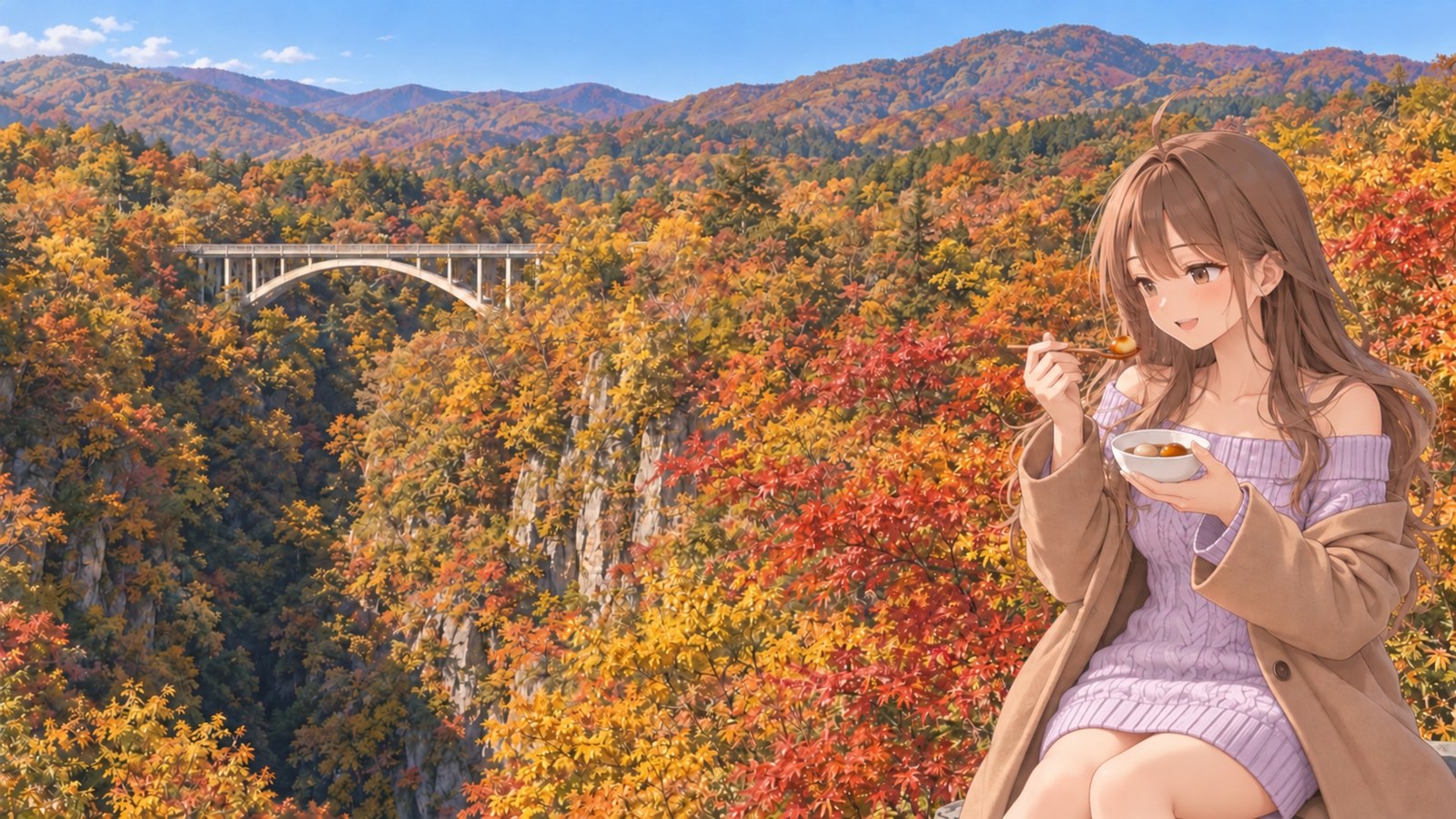
Chestnut dango in hand, looking past the autumn leaves to the bridge
I went to see the autumn leaves at Naruko Gorge on an overnight trip to Naruko Onsen with my friend. I drove north from Ariake behind my friend’s yellow coupé, and went to the hot springs together that evening. The next morning, after buying chestnut dango in town, we drove about 10 minutes to the gorge. There were several shops in town that sold it—Mochidokoro Fukase, Saijō Kashihō, Narumi Kankō Store, Bashōan, and others—so I had a hard time choosing where to buy some. Chestnut dango is meant to be eaten the same day, so I brought it straight to the gorge.
On a clear morning in late October, the arch of Ōfukazawa Bridge appeared between the trees as I looked out over the gorge from the lookout. Still wearing my camel-colored coat, I sat down and readjusted the bowl in my hands. I slipped my hand out from the cuff of my pale purple sweater and put a dumpling on the wooden spoon. Its thick soy-sauce glaze clung to it, almost dripping off the spoon; I quickly lowered it over the bowl again. I took a bite. Inside the soft mochi was a chestnut. “This glaze and the chestnut go so well together!” I told my friend, and she laughed.
Before my next bite, I looked up and saw a pale bridge floating beyond the autumn leaves. My gaze moved down from the bridge into the gorge, where rock faces peeked between the trees. Unlike at a flower-viewing picnic, here I could let my gaze travel across the scenery from far away all the way down into the gorge. I loved that.
I’d read that Naruko Gorge is about 100 m deep, carved by the Ōyagawa River. When I’d been looking only at the trees in front of me, I hadn’t thought about the depth of the gorge. I lowered the hand holding my spoon to my knee and traced the view from the bridge to the rock walls, then up to the ridge line.
It’s said that chestnut dango was created by a mochi shop established around the end of the Meiji era, as a tea-time treat for people staying at the hot springs to recuperate. Knowing it began as a snack for people resting at the springs, it felt just right for us after our soak the night before.
I’d heard Naruko Gorge has all kinds of trees—cherry, lacquer trees, beeches, oaks, and maples among them. Each tree turns a slightly different shade, so the autumn foliage comes in layers of color. I remembered how varied the leaf shapes had been when I visited in spring, set down my spoon, and tried to spot what colors those round and jagged leaves had turned.
While my friend photographed the view, I had another bite of chestnut dango. She kept pointing her phone at the bridge, then the gorge, and retaking shot after shot. With the hem of my coat draped over my white over-the-knee socks, sitting there felt just right.
When my friend showed me the photo she’d taken of me holding the bowl, the bridge and autumn leaves were in the frame behind me. I put away the empty bowl, let my friend’s coupé pull out first, then followed her back toward the hot-spring town. Before setting out, we’d decided to compare chestnut dango from another shop before heading home.
The story sections are fiction inspired by this location. For accurate information, please consult official tourism and information websites.
Photos of this place3 images
-
Naruko Onsenkyo, Osaki, Miyagi Prefecture · Spring
-
Naruko Onsenkyo, Osaki, Miyagi Prefecture · Summer
-
Naruko Onsenkyo, Osaki, Miyagi Prefecture · Autumn
Local specialties for this trip
Naruko Onsen chestnut dango
A large chestnut tucked inside soft mochi, topped with a thick soy-sauce glaze: this is a local specialty of Naruko. I’d choose this sweet combination as a snack on a trip to see the autumn leaves.
Highlights
Ōfukazawa Bridge beyond the autumn leaves
From the rest house lookout, you can see the arch bridge spanning the gorge. In spring, I framed only the bridge in my first photo, leaving out the gorge, so I widened the shot to bring in the rock face too.
A gorge of rock walls and trees
The Ōyagawa River carved this gorge, about 100 m deep. I enjoyed tracing the view from the leaves nearby to the rock walls and ridge on the far side.
Road and location details
Naruko Gorge viewpoint at the rest house
- Distance from Nakayamadaira Onsen Station
- About 2.0 km
- Gorge depth
- About 100 m
Distance is measured from Nakayamadaira Onsen Station; the depth figure refers to Naruko Gorge. I’d love to pair a trip to the hot-spring area with a view down into the gorge.
The station is about 2.0 km from Naruko Gorge, and the gorge is about 100 m deep. Try pairing a stop to see the autumn leaves with chestnut dango from the hot-spring town.
More Spot Guides
If you enjoyed this story, you might like these places too. I've gone back to each of them in different seasons, again and again.