Roadside stationShimonoseki, Yamaguchi Prefecture
Kitaura Kaido Houhoku roadside station
This is the closest roadside station to Tsunoshima Bridge, about 10 minutes away by car. It sits on a hill along the Kitaura Kaido (National Route 191), overlooking Waku Fishing Port, with Tsunoshima Bridge on the horizon. Take in the view from here before you cross, and you'll have even more to look forward to on your drive over the sea.
Each season has a story from one of my visits.
SpringCanola season
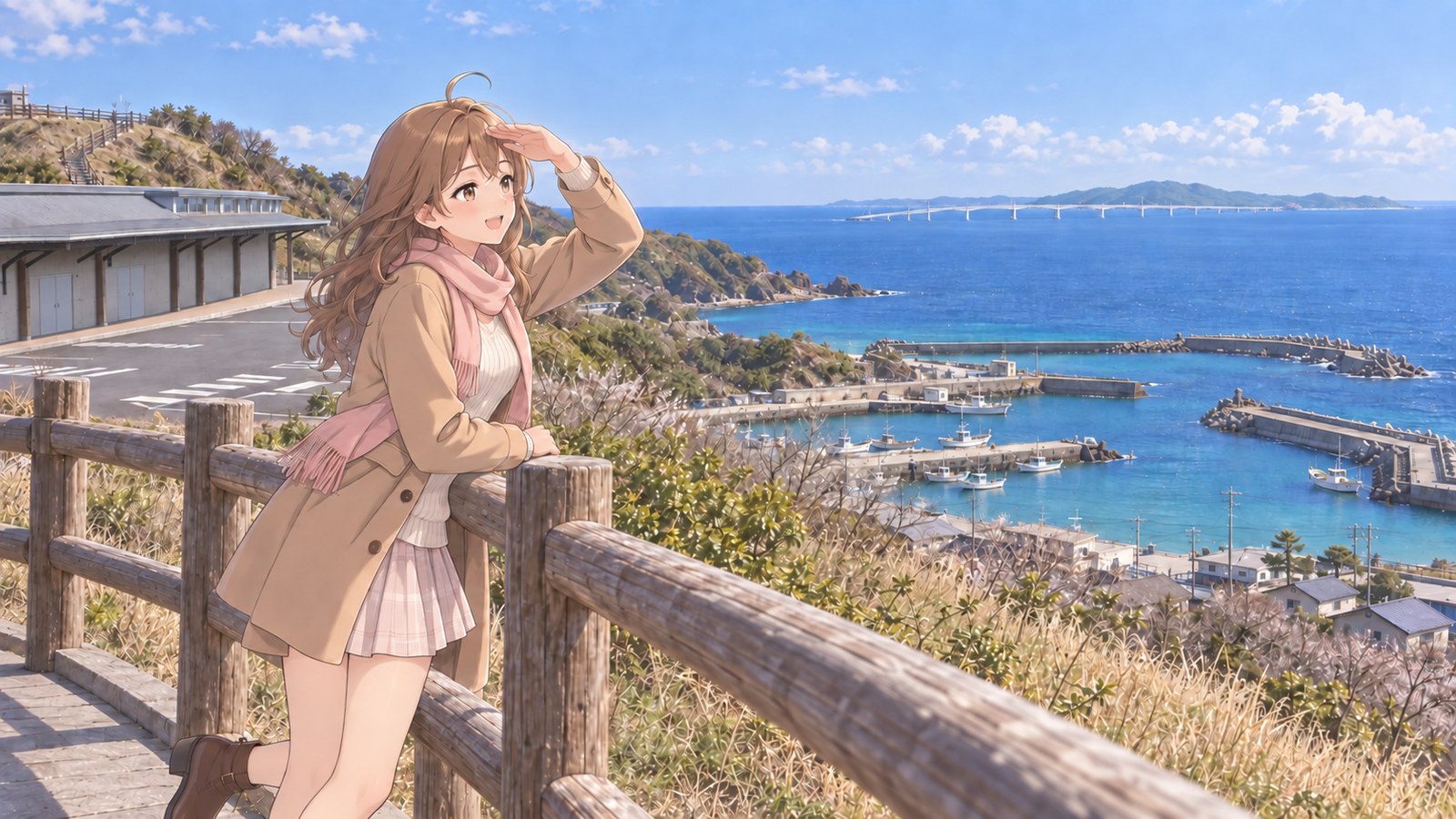
Find the bridge I'll be crossing from up on the hill
My second trip to Tsunoshima, this time in canola season. On my last trip, I drove straight to the island, so I couldn't stop at this hill. Today I rode my motorbike, winding through one coastal curve after another along the Kitaura Kaido. Before crossing, I wanted to see the bridge from here.
A small fishing port lay below the observation terrace. White fishing boats were moored in a row, with nothing but sea beyond the breakwater. I leaned on the railing and shaded my eyes, searching the horizon. There it was: a single thin line stretching toward the island. Tsunoshima Bridge. It looked so much thinner than I'd imagined. I could hardly believe I'd driven across it on my last trip.
Once I could make out the island at the far end of that thin line, I couldn't wait to ride across it again. The toe of my boot started tapping all by itself. I want to take in the bridge from far away before crossing it. I've decided that's how I'll start every trip to Tsunoshima.
SummerAugust
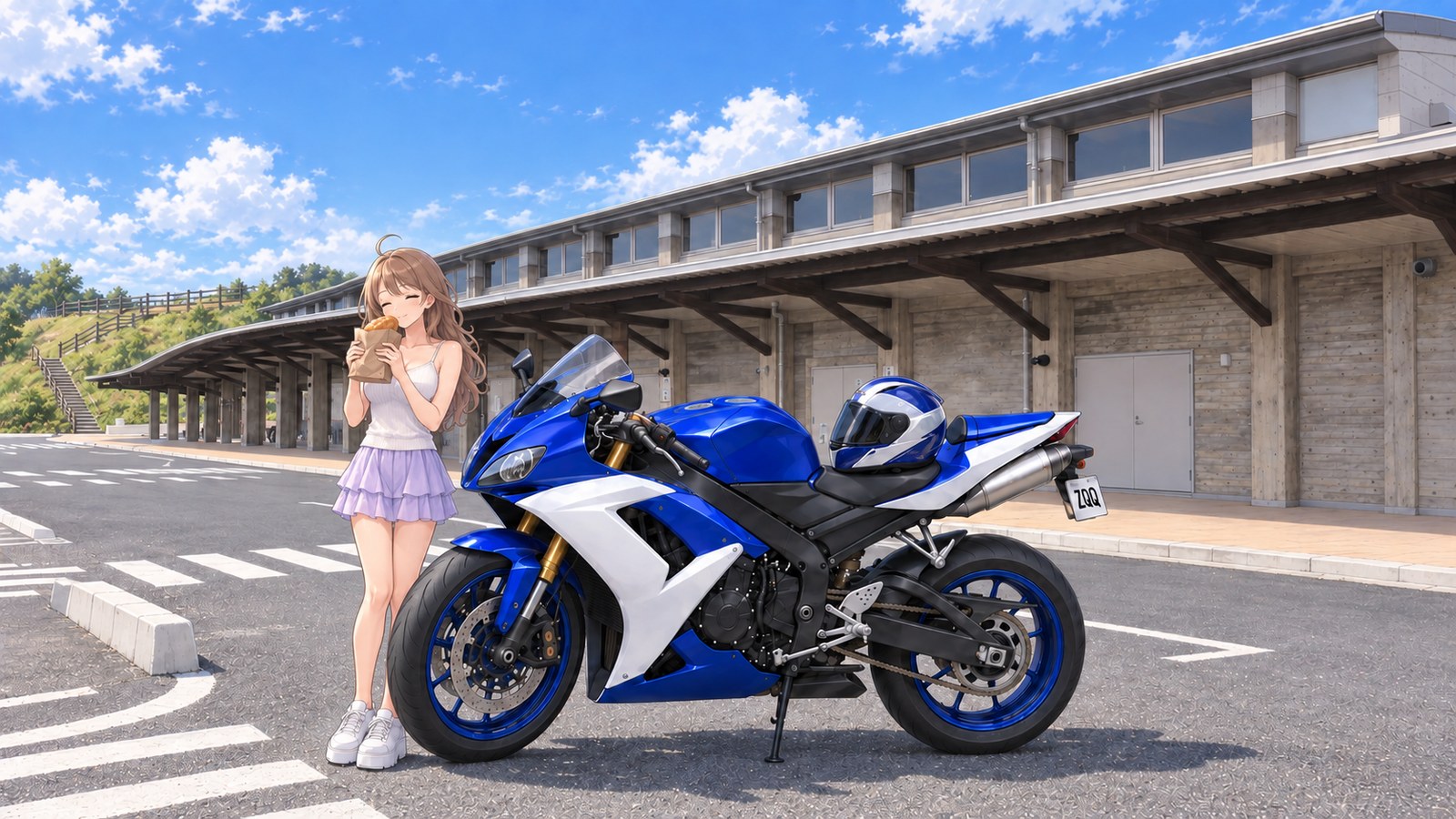
One sniff of the bag, and I couldn't wait until I reached Tsunoshima to take a bite
I rode the Kitaura Kaido in August. Every time I rounded a bend on coastal Route 191, the Sea of Japan suddenly opened up beside me, and I kept letting out little sounds inside my helmet. A salty scent mingled with the breeze, and just riding along already felt like summer vacation.
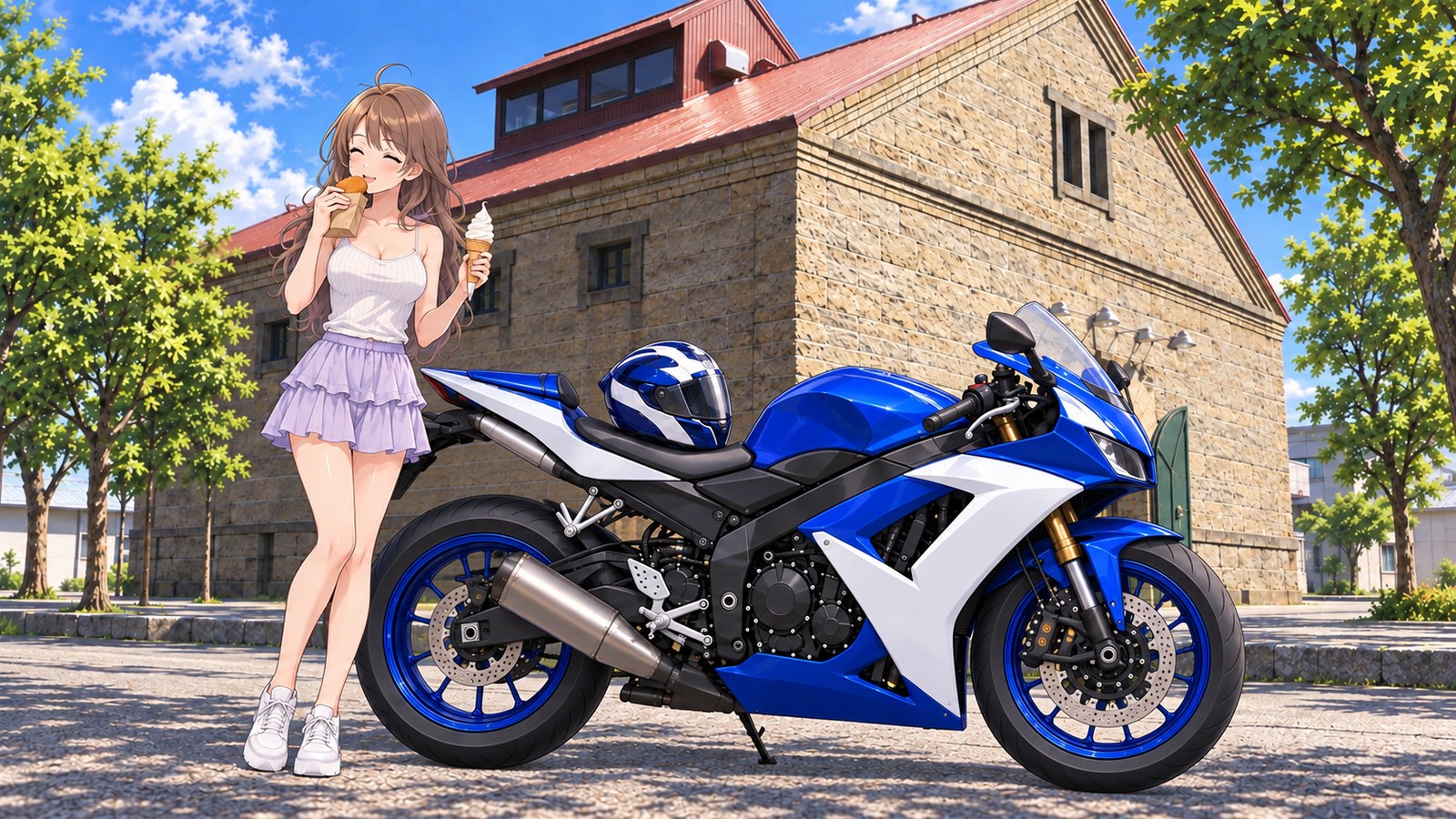
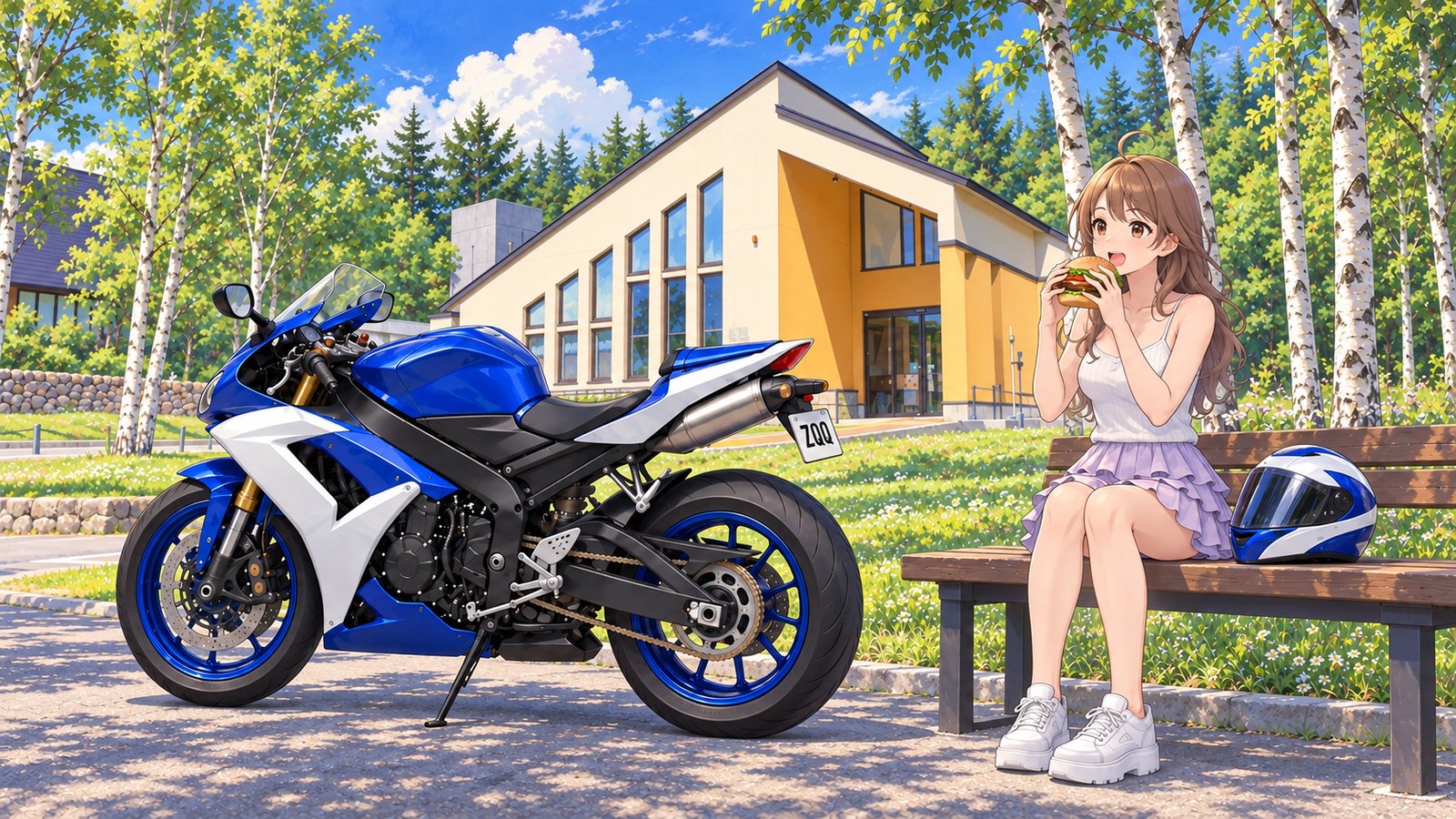
I parked my motorbike in front of the roadside station, whose roof curves up like a pair of wings. I heard the Maison de la Mer bakery makes bread with fruit and vegetables from Hohoku-cho, too. It took me ages to decide what to get.
I took the paper bag and headed back to my motorbike. I'd planned to eat while looking down at Tsunoshima's beach, but the smell of freshly baked bread began wafting out of the bag. Before I knew it, I was leaning toward the opening with my eyes closed, breathing it in. Nope, I couldn't wait. I tore off just a little piece from the edge. It was still warm and soft. I left my helmet on the seat and took another bite. By the time I reached Tsunoshima, the bag was already half empty.
AutumnLate October
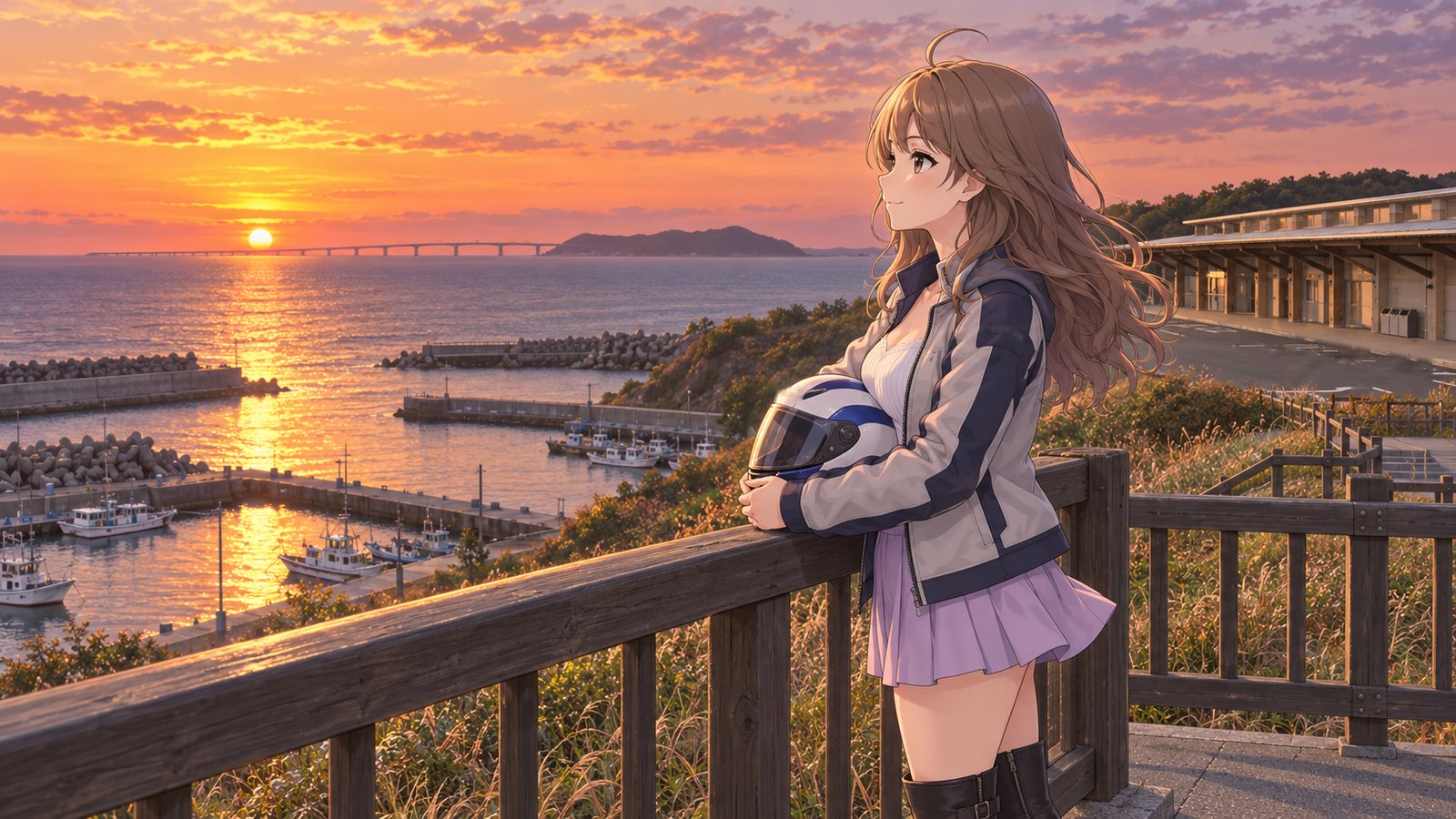
The bridge I'd crossed was fading into silhouette in the sunset
I spent a long stretch in Yamaguchi on my motorbike one autumn. On the way back from Tsunoshima, I stopped by this hill once more before sunset. I'd heard it's called "the hill where you meet the sea and the sunset." Holding my helmet, I stood by the railing on the observation terrace.
As the sun edged closer to the sea, the fishing port below took on an orange glow. Tsunoshima Bridge on the horizon grew thinner and thinner, until its shadow joined the island's. I'd ridden across it earlier that day. I could still feel the force of the wind and hear the engine in my bones, though the bridge already seemed far away.
Why does the end of a good day arrive so suddenly? My chest tightened, and I felt a little reluctant to think about the ride home. But once I'd watched the sun sink out of sight, I felt myself settle again. I can always come back for another ride. That bridge will still be right there next year.
WinterLate January
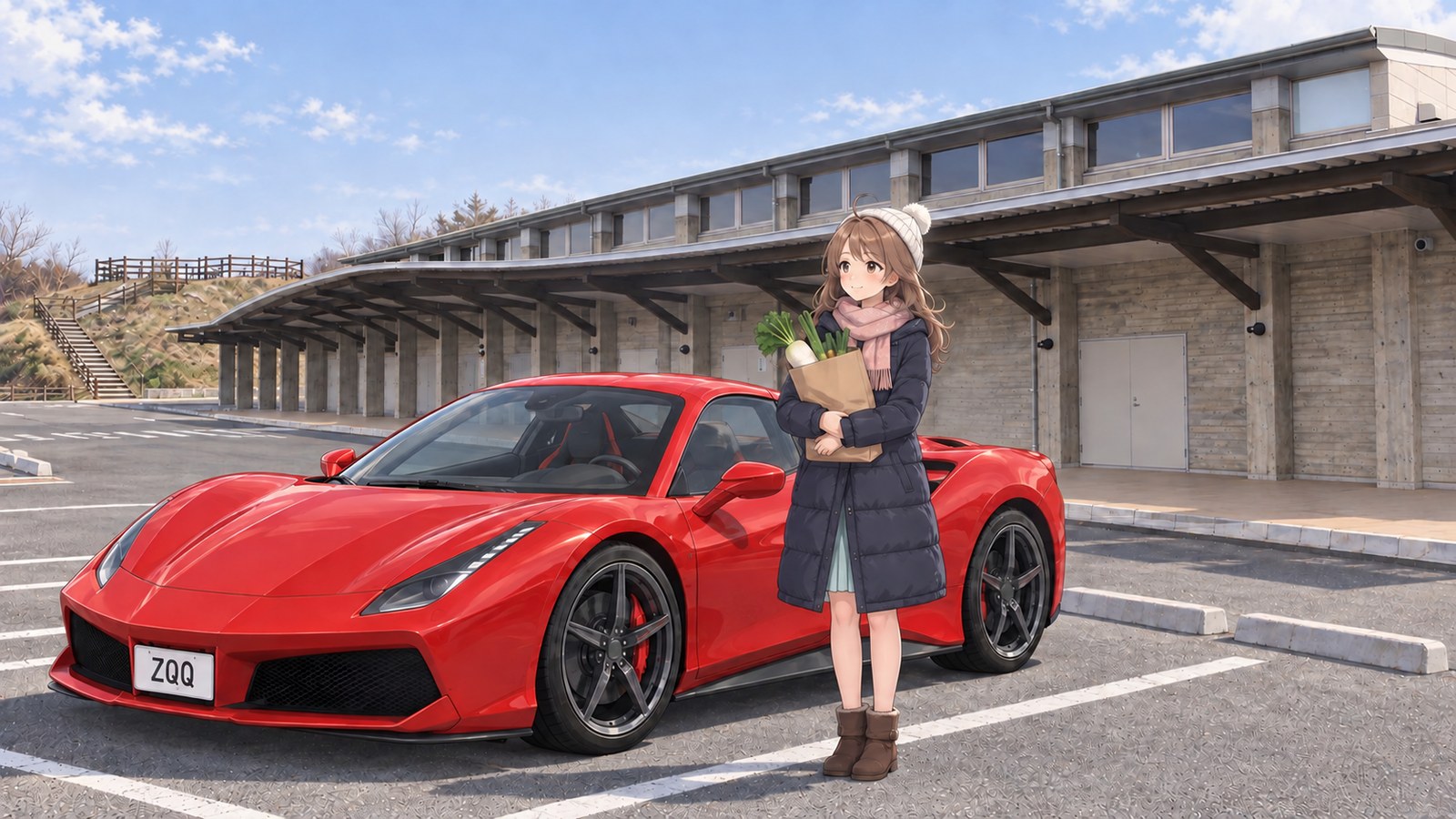
Taking a paper bag full of winter vegetables all the way back to Tokyo
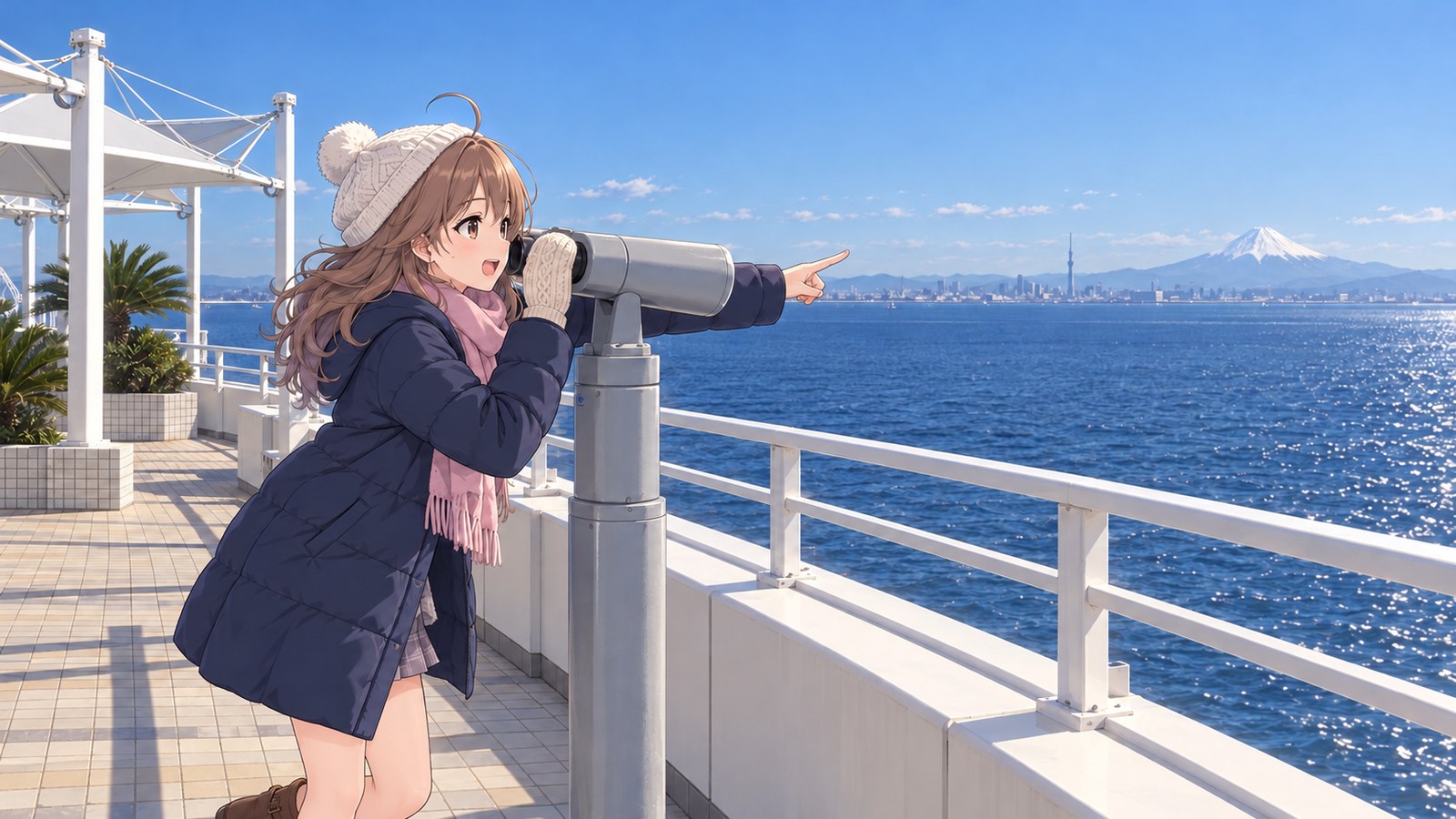
At the end of January, on the last day of a three-day trip around Yamaguchi in winter, I stopped by this roadside station again in my convertible, with the top up. The wind off the Sea of Japan was cold, and the moment I stepped out of the car, my cheeks stung. I pulled my white knit cap down over my ears again.
Houhoku Yume Market had fresh fish and shellfish landed locally, along with locally grown vegetables. After much deliberation, I picked out a thick daikon and some long green onions. Once they were in the paper bag, the onion tops and daikon leaves poked out of the opening. Just seeing that made me happy.
I was heading back to Tokyo by ship the next day. I was already planning to make hot pot with this daikon that night, once I got back. I love bringing home vegetables from a trip. When they go into my kitchen, it feels as if the trip has stretched on for one more day. As I carried the bag back to the car, I caught a faint earthy smell from inside.
The story sections are fiction inspired by this location. For accurate information, please consult official tourism and information websites.
About this roadside station
This is Honshu's westernmost roadside station, on Route 191 in Hohoku-cho, Shimonoseki, Yamaguchi Prefecture. You'll find seasonal seafood and produce here. The area is part of Kita-Nagato Coast Quasi-National Park.
From the hilltop observation terrace, you can see all of Tsunoshima, with Waku Fishing Port below and Tsunoshima Bridge on the horizon. The grounds are also home to Waku Kofun, a burial mound built in the latter half of the 6th century. Its stone chamber resembles a cooking hearth, which is why people say it used to be called "Oni no Kamado" ("the ogre's hearth").
Fresh vegetables from local farmers and seafood from local fishermen fill the shelves. At the restaurant, you can enjoy Kitaura seafood while taking in views of the Sea of Japan and Tsunoshima.
Things to enjoy here
Houhoku Yume Market
Two tanks display fresh fish and shellfish landed in the Hohoku area. You'll also find locally grown vegetables and fruit, local specialties, and dishes made with Kitaura seafood that you can only buy here.
Wakuwaku-tei
This restaurant serves fresh fish from the Kitaura coast, particularly the Hohoku-cho area. When Kottoi squid is in season, you can try it as ikizukuri—sashimi cut from live squid.
Maison de la Mer
This bakery offers all kinds of freshly baked bread, from loaves made with fruit and vegetables grown in Hohoku-cho to classic favorites.
Location
The address is 314-1 Kanda-kami, Hohoku-cho, Shimonoseki, Yamaguchi Prefecture. From the Shimonoseki IC on the Chugoku Expressway, it's about 70 minutes via Route 191; from the Mine IC, it's about 60 minutes via Route 435. Tsunoshima Bridge is about 10 minutes away by car. There's a bus stop in front of the roadside station, and the car park and outdoor toilets are open 24 hours.
More Roadside Stations & Rest Areas
How about one more stop along the way?