Senboku City, Akita Prefecture
Walking Dakigaeri Gorge in autumn Blue water over the rocks and autumn foliage along the river
Dakigaeri Gorge lies along the middle reaches of the Tamagawa River in Senboku City. In late October, I walked beside the river with a friend I often go driving with, and we ended up lingering by the stone steps. Here’s how I spent an autumn afternoon taking in the river and the changing leaves.
Here’s what I saw and felt on an afternoon in late October at Dakigaeri Gorge.
AutumnLate October, afternoon
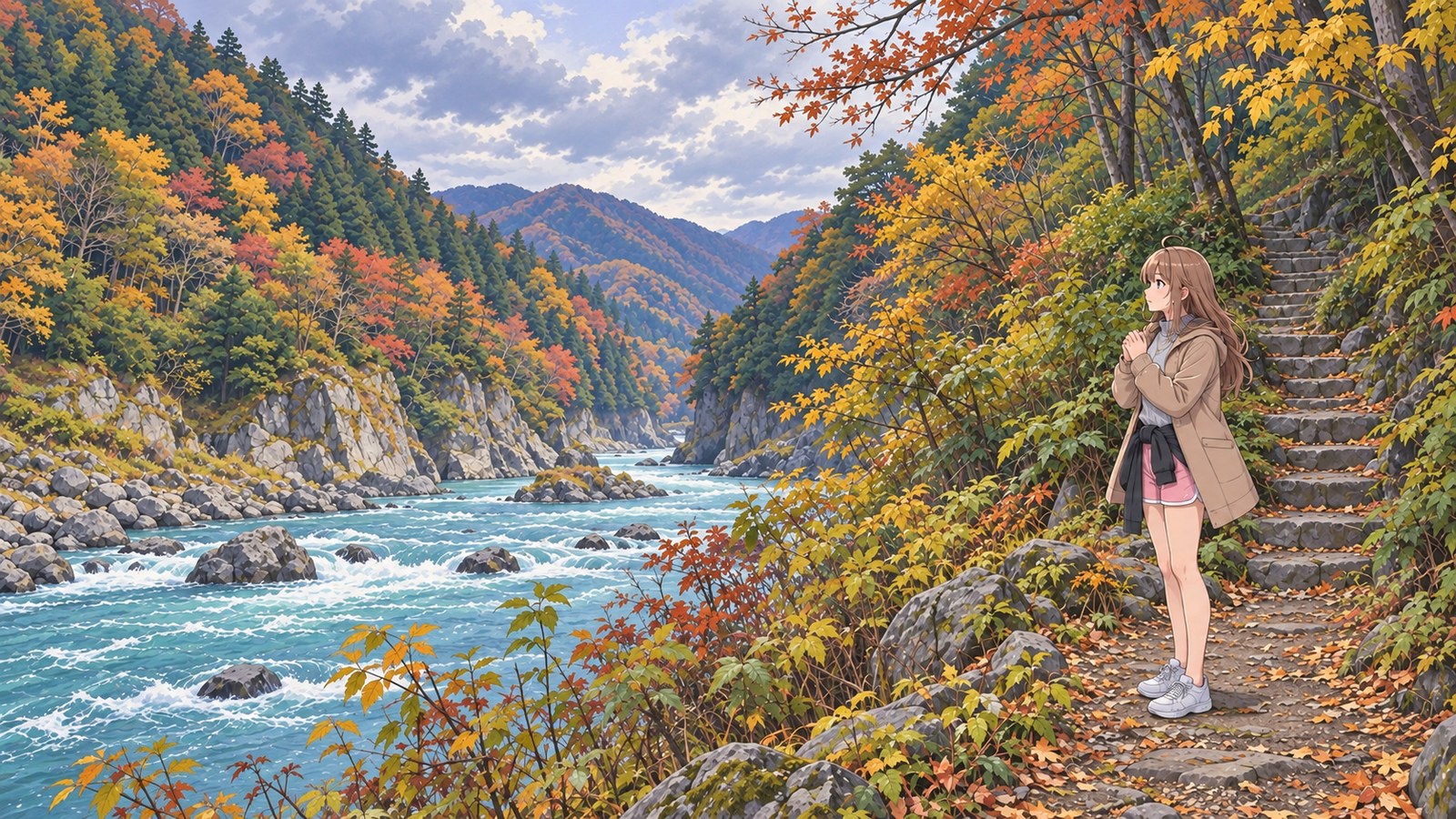
Blue water over the rocks and autumn foliage along the river
As I walked along the riverside path, I caught sight of water through the trees. My friend and I had come to see the autumn leaves, but I stopped in my tracks and turned toward the river. The water hit the rocks and broke into white foam, then gathered into a single current again farther on. Just shifting my view a little revealed a different movement in the water. For a moment, I even forgot I’d come to look at the trees.
Just before the stone steps, I cupped my cold fingers in both hands. Even with a coat on, my hands get cold if I stand still. A blue-tinged river flowed in front of me, and the leaves on the slope above had begun to turn. When I looked up from the water to the mountainside, autumn colors filled my whole view. With so much to see above and below, I loved how I could stop anywhere and still have more to take in.
My friend stopped a little way ahead and laughed. “Still watching the river?” I said the water was moving differently from before, and then I started laughing at myself. Of course it couldn’t keep the same shape when it was flowing. I wanted to keep watching the water spill over the rocks so badly that even the obvious fact that it never held the same shape caught my attention.
They say Dakigaeri takes its name from an old mountain path so narrow that when two people met, they had to hold on to each other as they turned sideways to get past. When I think about the river and steep slopes we’re looking at now, the name suddenly feels real. I used to think it was a sweet-sounding name, but now I can picture the people who once had to make their way along that trail.
The gorge is also home to the suspension bridge Kami no Iwahashi and Mikaeri Falls. Mikaeri means “looking back,” and the falls are said to be so beautiful you’ll find yourself turning back for another look. I kept stopping just to watch the river today, so I think I understand the name. My friend and I said we’d take a good, long look at the falls next time.
When I let my hands fall and started walking again, I felt the autumn air touch my fingertips. I’m already thinking about trying the Tazawako area specialty, yama-no-imo nabe, after the walk. I’d heard that sticky Japanese mountain yam is grated, shaped into dumplings, and added to the hot pot, and I could already imagine a warm bite. Listening to the river, I set off for the next stone steps. I’d come planning to see the autumn leaves and head home, but the walk left me remembering the current, the name, and even something I wanted to eat.
The story sections are fiction inspired by this location. For accurate information, please consult official tourism and information websites.
Local specialty
Yama-no-imo Hot Pot
A local specialty in the Tazawako area, this hot pot is made by grating sticky Japanese mountain yam, shaping it into dumplings, and adding them to the pot. The seasoning and other ingredients vary from one inn or cook to another. Thinking back to my cold hands as I stood by the river, this sounds like just the thing I’d want after a walk.
Highlights
The Tamagawa River and its autumn woodland
Dakigaeri Gorge stretches for 10km along the middle reaches of the Tamagawa River. Its highlights include a blue stream and natural woodland of Japanese red pine, Japanese zelkova, Japanese wingnut, and Japanese oak. I was caught up in the water’s movement before I even took in the trees.
A name born on a mountain path
The gorge got its name from an old mountain path that was so narrow and steep that people had to hold on to each other and turn sideways to get past one another. Hearing that story after seeing the river and steep slopes, I find myself imagining the trail people once walked, not just thinking about its name.
Road information
Access route to Dakigaeri Gorge
After parking, you can walk along the Tamagawa and take in the scenery. Hearing the river, I was eager to see the current for myself.
Once we’d parked, my friend and I continued on foot beside the river. I kept stopping at the stone steps as we walked, drawn to the current. I loved the closeness I felt beside the river, something I couldn’t get from the car window.
More Spot Guides
If you enjoyed this story, you might like these places too. I've gone back to each of them in different seasons, again and again.