Nihondaira summit area, Shizuoka City, Shizuoka Prefecture
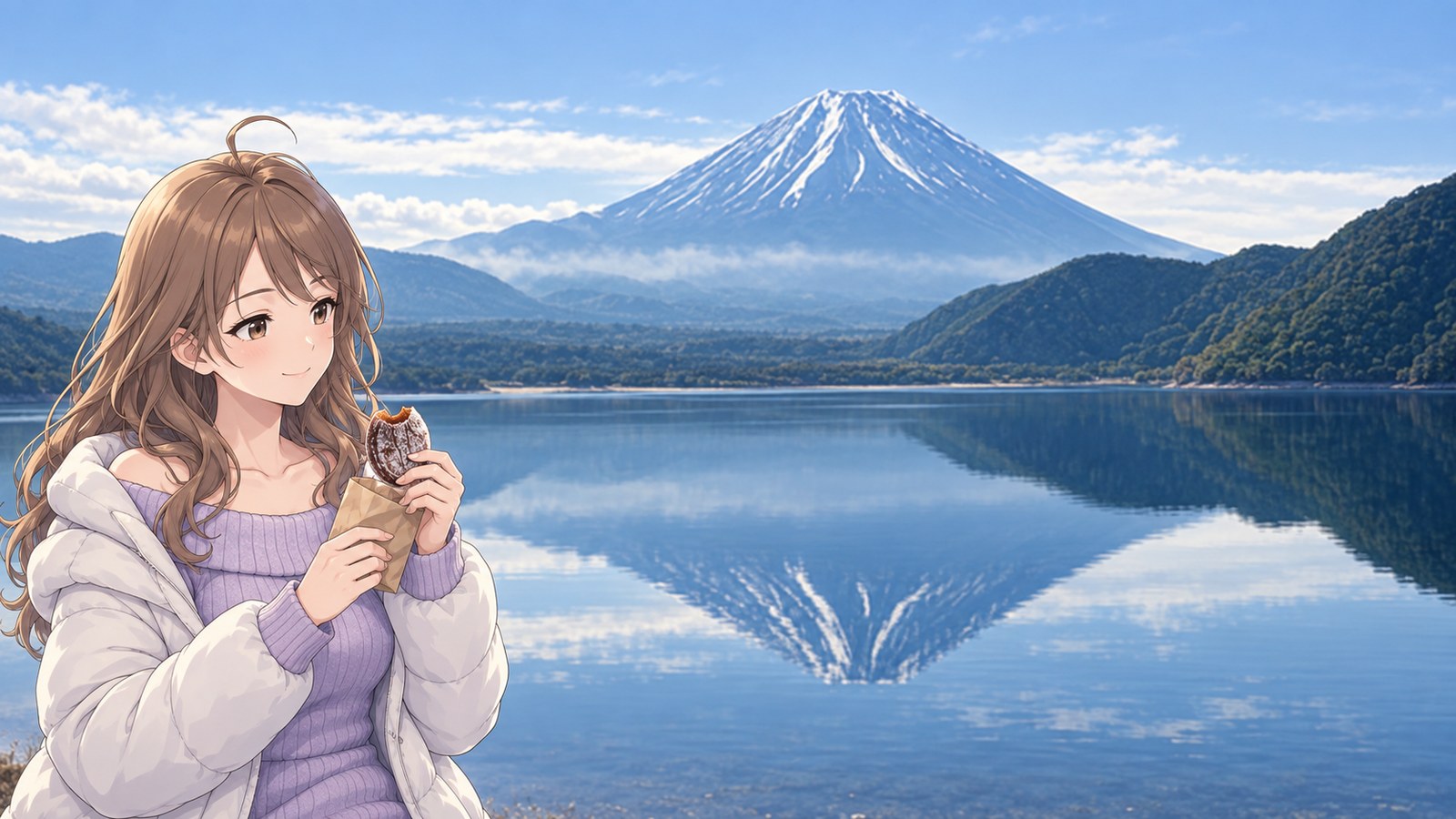
Nihondaira A summit break with both hands wrapped around a travel mug
The day Mount Fuji appeared beyond the cherry branches, I just stood there staring, phone still in hand. As the seasons change, I might wander along the viewing walkway or take my time choosing a photo. Even before I set off, I’m excited to plan how I’ll spend my time at the summit.
Cherry blossoms in spring, a summer stroll, autumn photos and tea in winter. Pick a season that catches your eye and read about how I spend time at the summit.
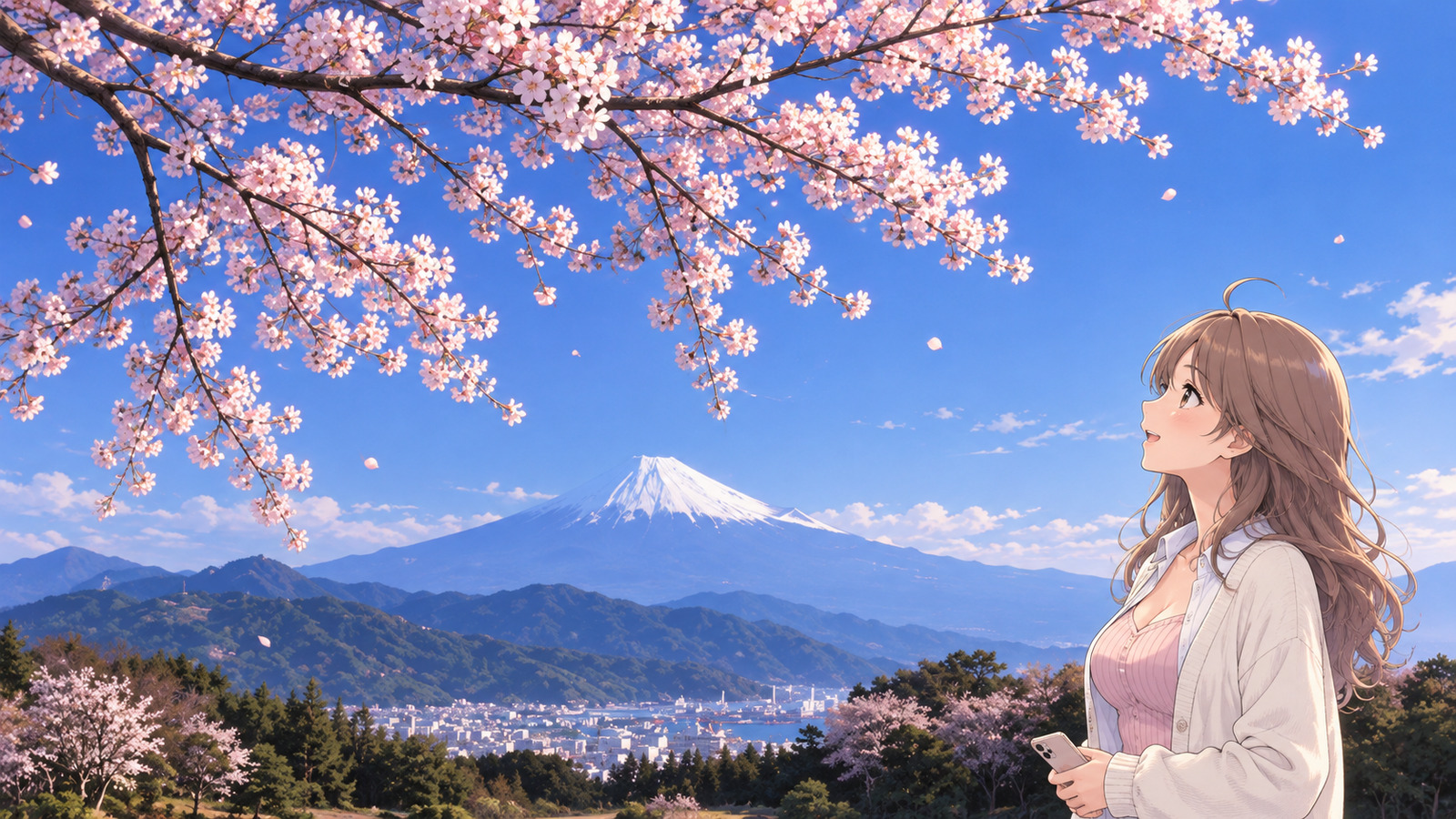
SpringLate March to early April, on a clear morning during cherry blossom season
I meant to take a photo, but ended up gazing up at the blossoms
I drove my red convertible from Ariake to Nihondaira for a day trip to see the cherry blossoms. I’d heard there were good spots to see them along the Nihondaira Parkway, so I kept noticing the flowers beside the road as I climbed. But while I was at the wheel, I kept my eyes on the road and took each bend carefully. I parked in the summit car park, which has spaces for 200 standard-size cars, and stepped outside into the soft spring breeze. As soon as I shut the door, I could already see cherry branches near the plaza, and I found myself hurrying toward them.
The cherry branches arched overhead as I walked toward the summit plaza, and I looked up. Mount Fuji was visible beyond them, too. I thought I’d come for the blossoms, but then the mountain appeared as well. I stopped short, thinking, Wait—you can see both from here?
I took out my phone to save the view, but just held it there. Before framing anything on the screen, I was following the branches all the way to their tips with my own eyes. I was still holding my phone, my hand half tucked into my cardigan sleeve, and I kept looking up a little longer.
Through the branches, I could see mountains layered in front of Mount Fuji, with the city and port below. I’d come for the flowers, but there was so much more to see beyond them. As I traced the distant port with my eyes, I found myself looking back at the blossoms.
I hear there are about 400 Somei Yoshino cherry trees at Nihondaira. They bloom from late March to early April, and the summit plaza and Kunozan Byobudani are both good places to see them. Wherever I turned in the plaza, there were blossoms at the tips of the branches. Before I knew it, I’d looked up so much my neck was aching. A few petals had fallen at my feet, and as I picked my way around them, I somehow ended up taking tiny steps.
The name Nihondaira is said to come from a legend that Yamato Takeru looked out in every direction from here. Remembering that story, I slowly turned in a full circle where I stood. I started with Mount Fuji beyond the cherry blossoms, then slowly turned to take in the city and port below and the distant mountain ranges, one after another. There was something I wanted to see in every direction, and I found myself nodding along to the legend all by myself.
After spending plenty of time looking up at the blossoms, I went into Yume Terrace to see the exhibits on the first floor. They introduce Nihondaira’s history, culture and geography. I found myself lingering over the geography section, picturing again and again the layers of mountains I’d just seen while turning around on the spot outside. I heard they used timber from Shizuoka Prefecture in the building. Once I stepped outside, I looked back and tried to spot where the wood showed on the exterior.
Back at the plaza, I finally raised my phone to take a photo. I framed the cherry branches along the top, Mount Fuji beyond them, and the city and port below. After turning around on the spot and looking in every direction, I knew exactly what I wanted in the shot. I took one photo and looked at the screen: it had captured the same view that first stopped me in my tracks. I gave a little nod to myself.
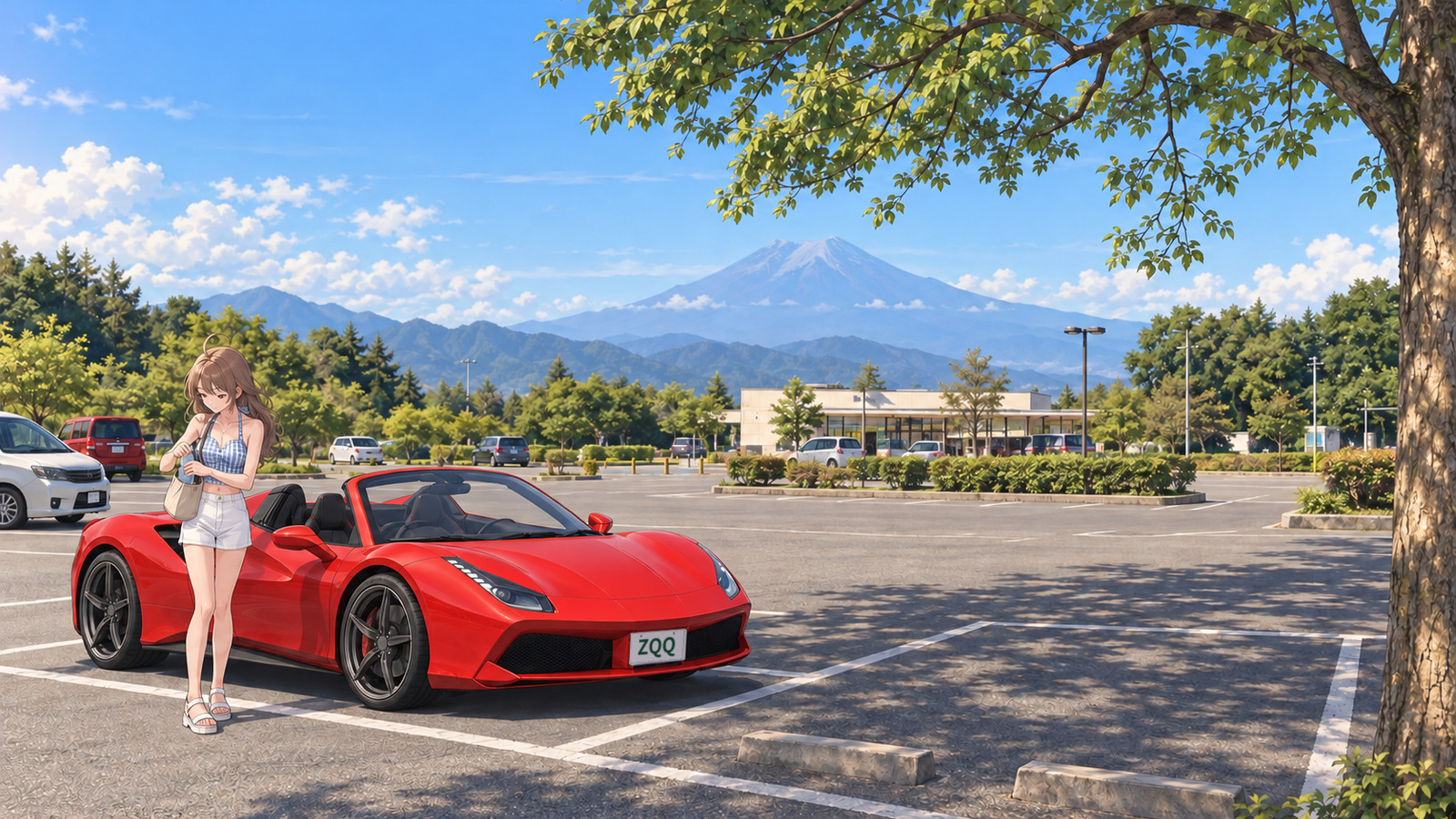
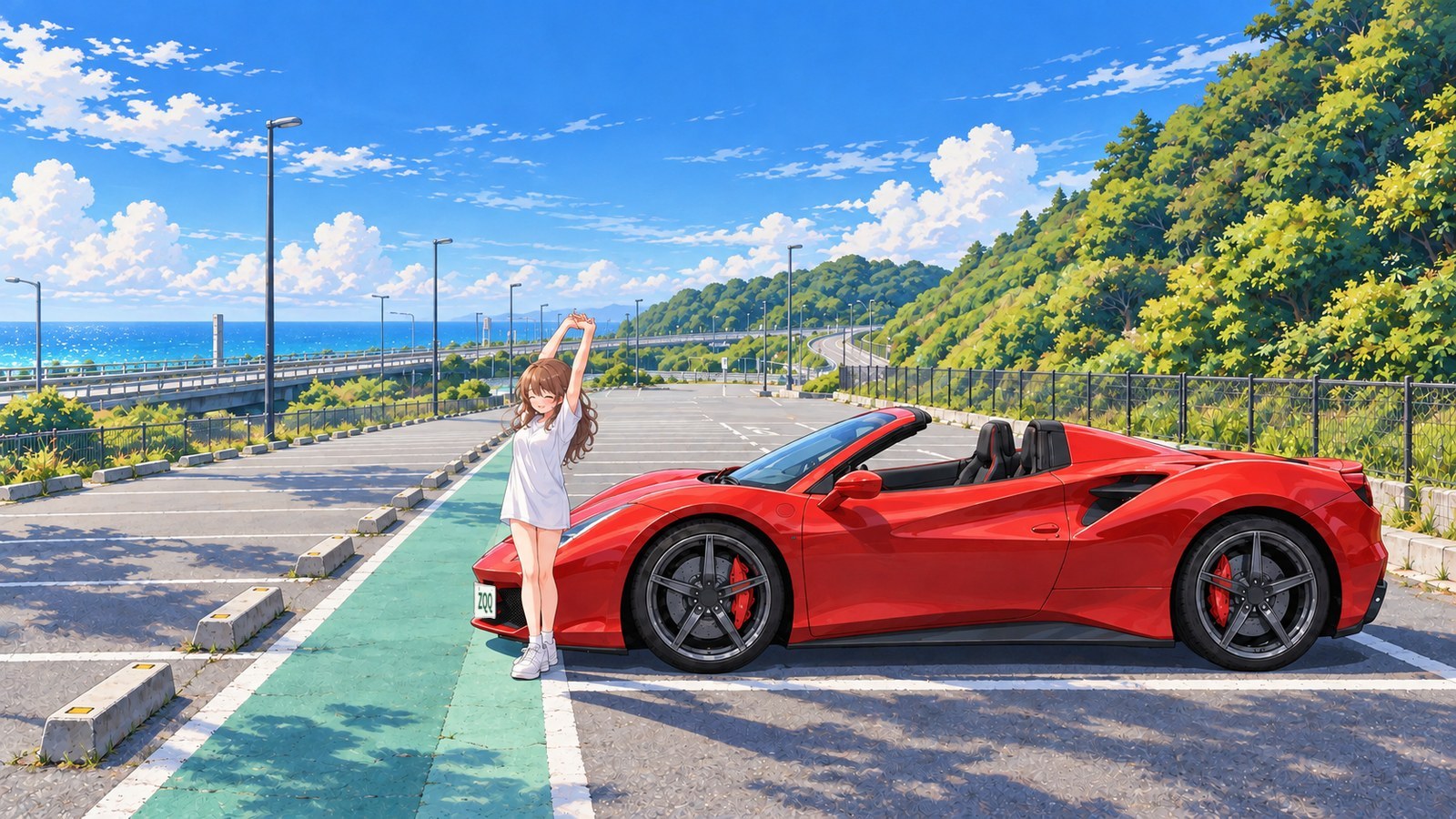
SummerJuly to August, in the morning after a walk around the viewpoint
Mount Fuji had less snow than I expected in summer
For a summer day trip to Nihondaira, I drove from Ariake. After leaving the Tomei Expressway at the Nihondaira-Kunozan Smart IC, it was about a 20-minute drive to the summit. With the top down, I followed the bends through the trees. Every time I turned the wheel, the car’s nose swung neatly where I wanted it to go, and that alone was fun. It was a summer morning, but the higher we climbed, the fresher the breeze felt as it slipped past my neck. I fed in a little more accelerator as I came out of each bend and climbed all the way to the summit car park.
I parked beneath the shade cast by the leaves, then took my water bottle from my shoulder bag beside the red convertible. One sip eased my thirst, and I was ready to start walking again. I put the bottle back in my bag and headed for Yume Terrace.
From the third-floor observation level, you can see Mount Fuji, Suruga Bay, Shizuoka City and the Izu Peninsula, among other places. I looked at Mount Fuji and thought, Huh? I’d been picturing the snowy summit you often see in photos. In summer, there’s much less snow, so you can see the mountain’s bare slopes. It looked like a completely different mountain from the one I saw in spring, so I kept changing where I stood and comparing the line of its ridges with the mountains layered in front.
I was struck again by how high we’d climbed. Shizuoka City stretched far below, and the roads running through it looked like thin lines. I wondered which one I’d driven along that morning. When I shifted my gaze toward Suruga Bay, the Izu Peninsula stretched across the sea. Its far end seemed to dissolve into the line where sea met sky, and I squinted to make out where the land stopped. I was so glad to see both the mountains and the sea at once that I couldn’t bring myself to leave.
After seeing the third floor, I stepped out onto the outdoor viewing walkway, too. The sun was strong, but there was a breeze up high, and as I walked, the sweat on my forehead began to dry. A chorus of cicadas rose from the trees below, and I stopped, thinking, Ah, this really feels like summer in the mountains. It should have been the same view as before, but with the wind on my face, the sea felt closer. I shaded my eyes with my hand and walked just a little farther.
After one lap of the walkway, I walked as far as the Nihondaira Ropeway station, a 3-minute walk from Yume Terrace. By the time I turned back, the sun was stronger than before. I picked my way along the shaded side of the path back to the car park, and each time I moved from one patch of shade to the next, I could feel the heat of the sun on the back of my neck change.
I got back in the car and set off with the top down. On the way back down, I took each bend one at a time, working the brake and accelerator carefully. Each time I came out of a bend, the mountain breeze brushed my cheek, and the heat from the sun I’d soaked up on the walkway gradually faded. All that was left was to join the Tomei and drive back to Ariake.
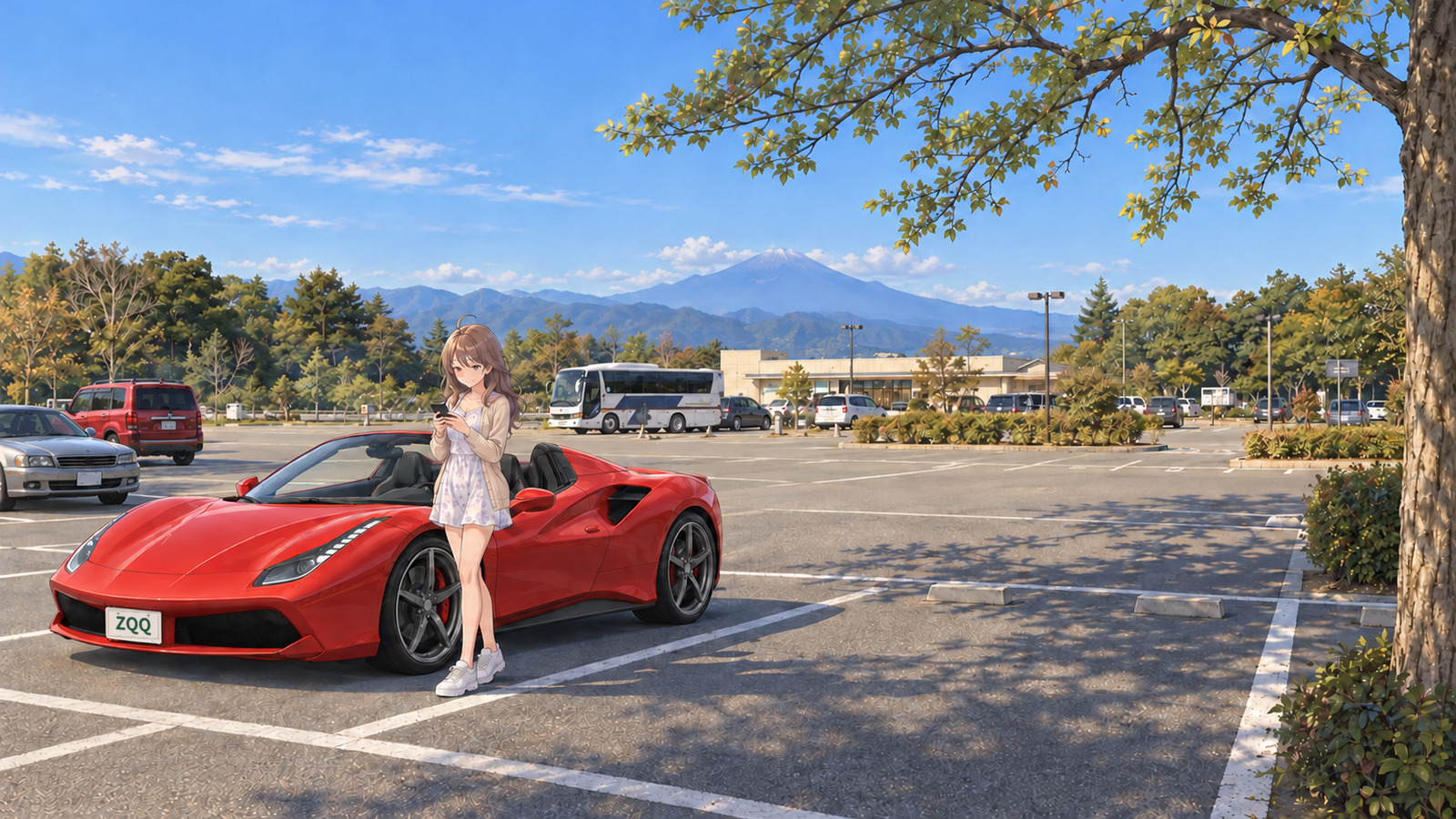
AutumnEarly October, on an afternoon in the soft light
Choosing a photo to send my friend beside the car
In early October, I headed to Nihondaira from Ariake thinking I’d be back the same day. In the afternoon, I parked at the summit and walked the outdoor viewing walkway at Yume Terrace. The light was soft, and Mount Fuji, the mountains layered in front of it, and the city below all made for a beautiful view, whichever way I turned. I kept walking a little, stopping to lift my phone, then moving on and raising it again. Before I knew it, I’d filled my phone with almost identical photos.
I opened the photos on my phone beside my parked car, ready to look through the ones I’d taken on the walkway. Holding it in both hands, I looked down at the screen. I wanted to send my friend a view with Mount Fuji in it, but I just couldn’t choose which photo. I scrolled back and forth, going over the same few again and again.
I liked the ones where I’d framed the mountain large, too. But today my finger kept returning to the shots that included the mountains in front and the city below. I wanted my friend to see how wide the view felt in person. When I opened one taken from a little farther back, a smile crept over my face. Maybe this is the one.
When I looked up, I saw the same Mount Fuji beyond the building. The trees still held their green, and I was comfortable spending the afternoon in a cardigan. I wasn’t ready to leave after only looking at photos, so I lowered my phone and looked back and forth between the screen and the real view.
When I sent my pick to my friend, she replied right away: “Nihondaira is part of Japan’s Night View Heritage, and you’re going to leave with only daytime photos?” It was the first I’d heard of it, so I looked it up then and there. Sure enough, Nihondaira had been recognized as part of Japan’s Night View Heritage. I knew she was teasing me, but now that I’d found out, I couldn’t leave without seeing it for myself. “I’ll wait until dark and check it out properly,” I replied, taking her seriously. “That’s the spirit,” she shot back.
While I waited for dark, I stopped at the tea room on the second floor of Yume Terrace. The menu had Nihondaira sencha, roasted green tea and Japanese black tea. I couldn’t settle on just one, so I chose a tasting set with three kinds of tea from Shizuoka. I slowly savoured them one by one; each had a different aroma and taste, and I was just as unable to pick a favourite as I’d been with the photos.
By the time I left the tea room, the sun was starting to sink. The air had turned a little chilly, so I pulled my cardigan closed. I heard the outdoor viewing walkway is free and open all day. I waited there for a while as one light after another came on across Shizuoka. The view I’d photographed dozens of times during the day gradually turned into a night skyline, and I stayed on the walkway until I’d watched it all happen.
I took just one photo of the city at night and sent it to my friend. I’d taken ages to choose a daytime photo, but the moment I took this one, I knew it was the one to send. In our chat, it sat beside the photo I’d sent in the afternoon, and the same place looked like an entirely different scene. Her only reply was, “See?” I was a little annoyed, but I had no comeback. I chuckled at the screen. I got back much later than planned, but on the nighttime drive down the mountain, I kept my eyes on the stretch of road lit by my headlights and took each bend one at a time.
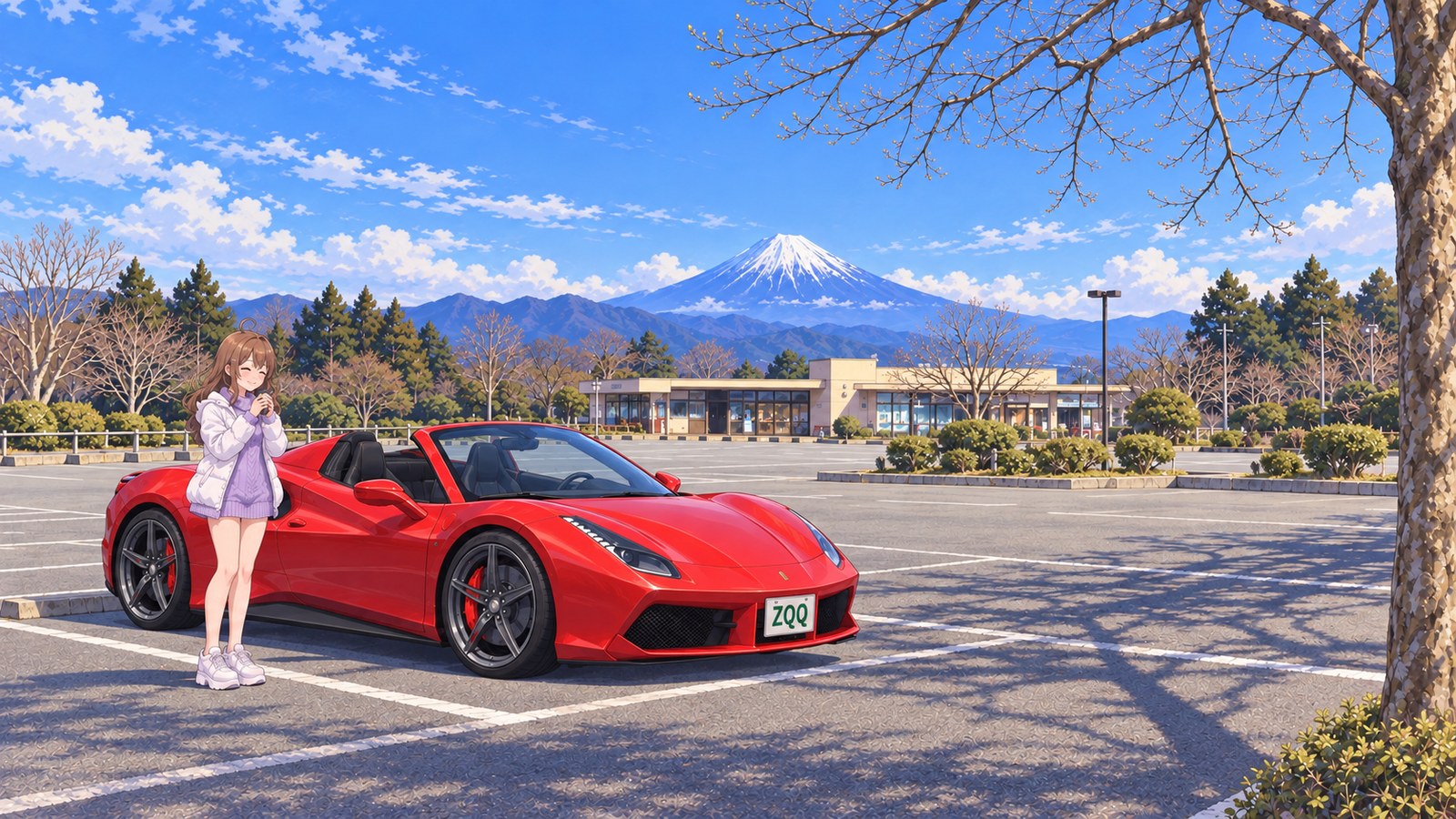
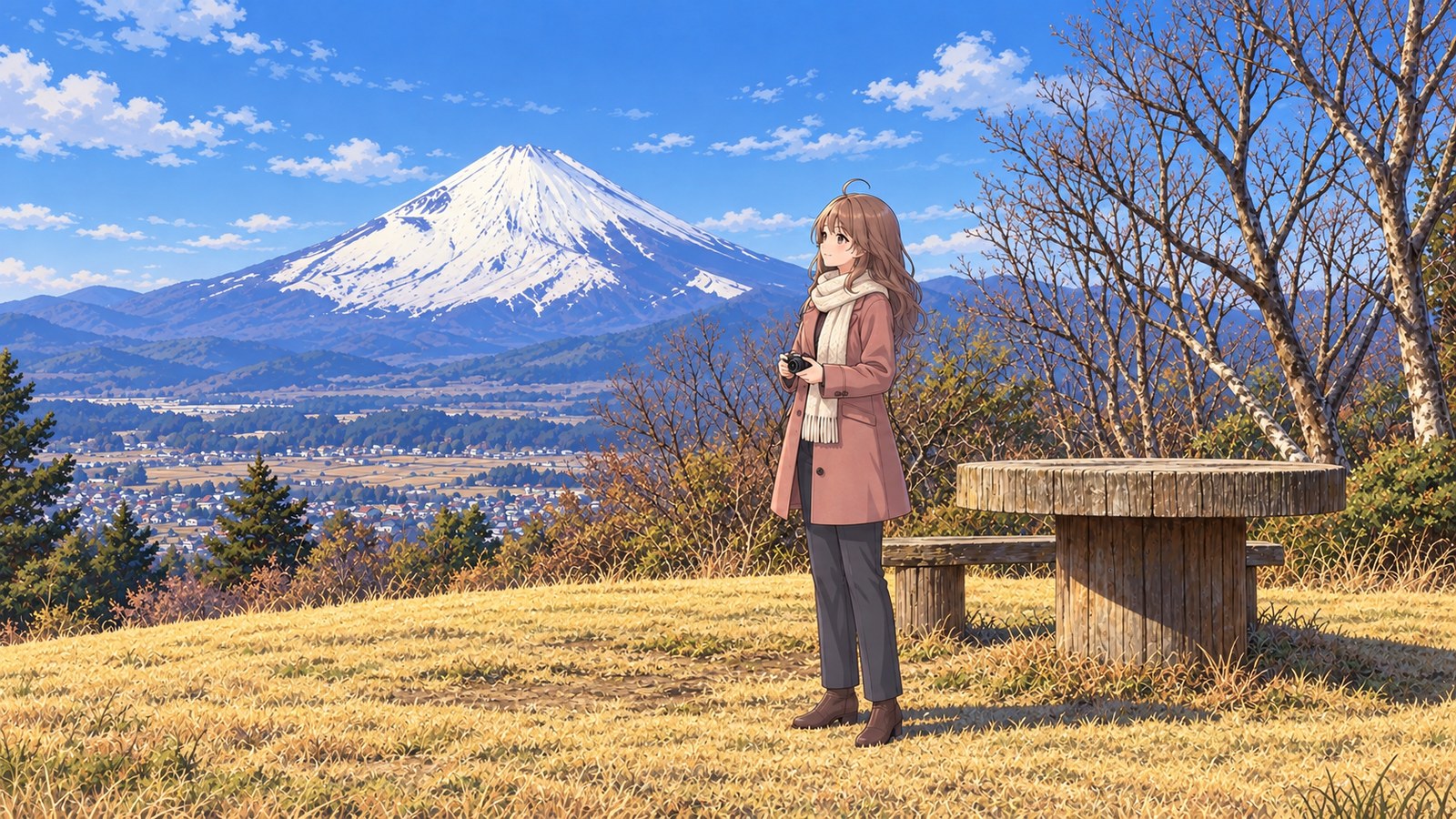
WinterA clear winter morning
I went looking for Shimizu Port and the Southern Alps from the walkway
On a clear winter morning, I drove from Ariake to Nihondaira for a day trip to see Mount Fuji under its coat of snow. I headed to the summit with the top down. The cold air slipped past my ears, but the sun warmed my shoulders, so it wasn’t as cold as I’d expected. When I pulled into the summit car park and switched off the engine, everything suddenly went quiet, leaving only the sound of the wind.
Standing beside the car in my down coat, I wrapped both hands around a travel mug. Under the white down jacket, I was wearing a lavender knit. I took a sip of the Nihondaira sencha I’d prepared at home, then put the lid back on and left the mug in the driver’s seat. The snowy summit peeked out from behind the low building.
On the way to Yume Terrace’s viewing walkway, I noticed bare branches casting long shadows across the pavement. With no leaves, even the finest twigs showed clearly on the ground, and I crouched to follow the tip of a shadow with my eyes. I tried weaving around the shadows one step at a time, but there were too many branches, so I eventually gave up. I imagine this spot would be covered in leaf shadows in summer, but in winter you can see the shape of every branch so clearly.
Out on the walkway, the wind felt colder than in the car park, so I pulled the collar of my down coat close around my neck. The air was clearer out there, and Mount Fuji’s outline looked sharper than it had a moment ago.
I’d heard you can see as far as Shimizu Port and the Southern Alps from Nihondaira. As I made my way along the walkway, I looked for them and spotted the port area below. Sunlight glittered off the sea, and I squinted as I studied the harbour. I compared the port’s shape with the map app and tried to pick out where the quays were.
In the other direction from Mount Fuji, the peaks of the Southern Alps stretched far into the distance. Unlike Fuji, which rises alone above everything, they ran together peak after peak, too many for me to follow to where they ended. I’d come just to see Mount Fuji, but every time I spotted one, I wanted to point it out—then I’d notice another, over there. Each peak must have its own name, but I couldn’t tell which was which. I decided to look them up on a map when I got home and remembered where the tallest one seemed to stand in relation to Mount Fuji.
I wanted to fit Mount Fuji and the Southern Alps into one shot, so I panned my phone sideways for a panorama. When I checked the screen, Fuji was stretched a little at the seam, and I laughed to myself. I thought about taking it again, but it looked as if the hurried sweep of my hand had made it into the photo, too, so I kept it.
When I got back to the car, the sun was higher, and the long branch shadows from earlier had grown much shorter. Even the tree shadows in the car park had shrunk to little patches around the trunks. I liked being able to tell how long I’d spent on the walkway just by the length of the shadows.
The story sections are fiction inspired by this location. For accurate information, please consult official tourism and information websites.
Travel photos4 images
-
Nihondaira summit area, Shizuoka City, Shizuoka Prefecture · Spring
-
Nihondaira summit area, Shizuoka City, Shizuoka Prefecture · Summer
-
Nihondaira summit area, Shizuoka City, Shizuoka Prefecture · Autumn
-
Nihondaira summit area, Shizuoka City, Shizuoka Prefecture · Winter
What I’d like to try on this trip
Nihondaira sencha
Shizuoka tea that you can also try at the Yume Terrace tea room. I’d love to sip hot sencha and savour its aroma while looking out at the winter scenery.
What to see here
A cup of tea, then Mount Fuji
Sip some hot sencha, then look up at the snowy peak. I’d love to come to Nihondaira in winter just to take a break like that.
Wide-open views from Yume Terrace
From the observation level, you can see Mount Fuji, Suruga Bay, Shizuoka City and more. I kept changing where I stood, comparing Fuji with the mountains layered in front of it.
A walk around the summit
Nihondaira summit area
- Yume Terrace to the ropeway
- 3-minute walk
- Summit elevation
- About 300 m
Walking time from Yume Terrace to the Nihondaira Ropeway. After enjoying the view, you can explore the summit area on foot, too.
Once you’ve climbed up to Nihondaira, park the car and explore the summit area. I’d love to walk between Yume Terrace and the ropeway and see what view I find next.
More Spot Guides
If you enjoyed this story, you might like these places too. I've gone back to each of them in different seasons, again and again.