Imari, Saga Prefecture
Exploring Ōkawachiyama, the Village of Secret Kilns Taking Home a Wind Chime’s Song among Rocky Peaks and Chimneys
Ōkawachiyama was once home to the Nabeshima family’s official kiln for the Saga domain during the Edo period. Around 30 pottery workshops still carry on the tradition today. I’ll tell you about my July walk through the village and the moment I carried my wind chime back to the car.
A summer walk through Ōkawachiyama, its porcelain wind chimes, and Imari sweets.
SummerA July morning
Taking Home a Wind Chime’s Song among Rocky Peaks and Chimneys
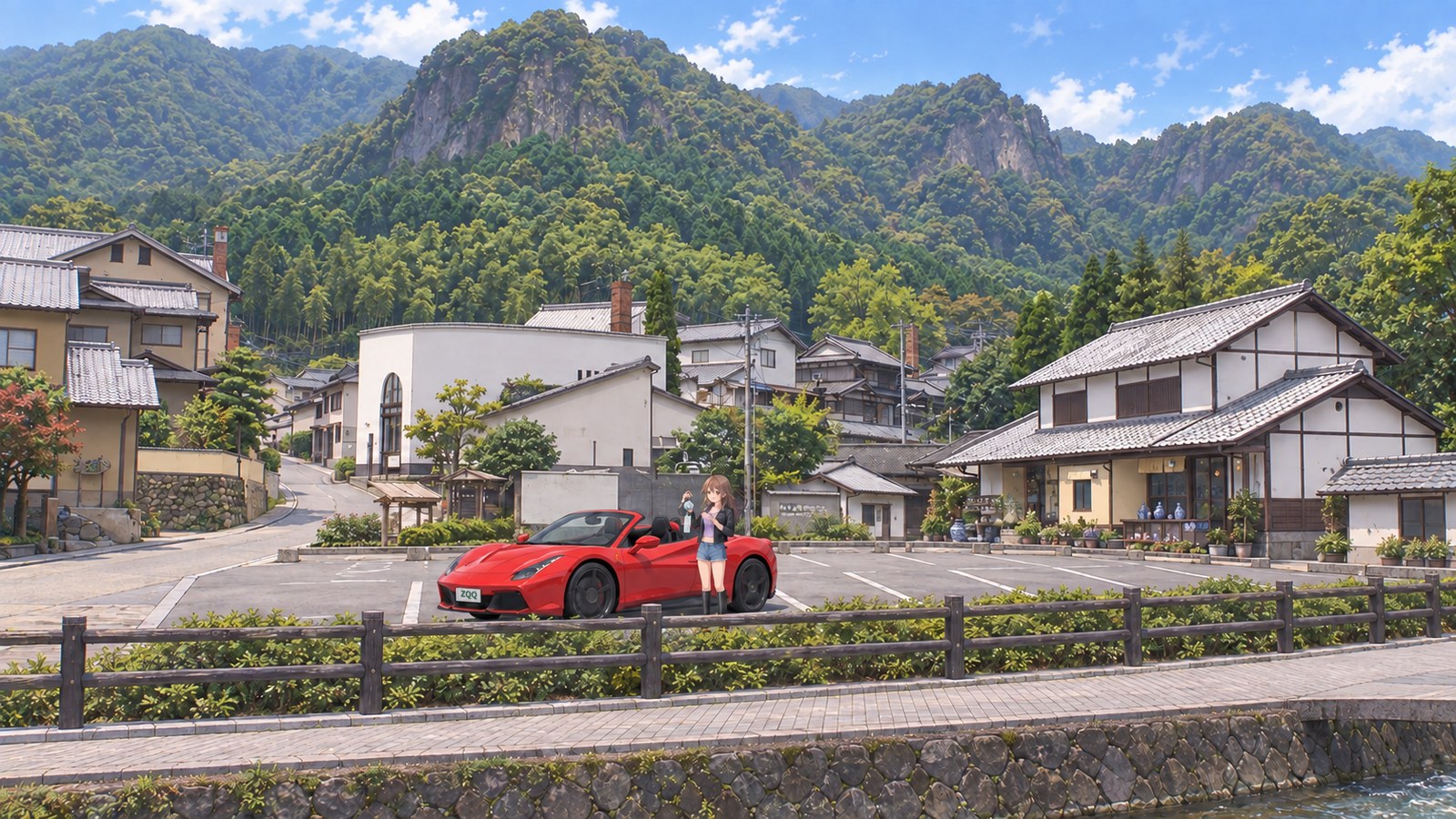
When I reached the entrance to Ōkawachiyama, rocky mountains rose beyond the rooftops of the pottery workshops. It was a July morning. I parked my red convertible and spent a while looking up at the view. The brick chimneys stood out against the mountain slopes, bringing the village and its natural surroundings together in a single scene. I’d come to choose a piece of pottery, but the scenery had me completely absorbed before I’d even started walking.
Once I’d parked and started along the street lined with kilns, I heard a wind chime. In summer, porcelain wind chimes decorate the shopfronts here. I stopped and waited for a breeze, hoping to hear that little note again. Now the view of the mountains and chimneys had a sound to go with it. I found myself slowing my pace.
I heard that, in the Edo period, this was the Nabeshima family’s official kiln for the Saga domain. Knowing that around 30 pottery workshops still use traditional techniques made me want to look more carefully at the pieces in front of me. These palm-sized pieces had been made right here, in a village surrounded by great mountains. I lingered for a while in front of the wind chimes I liked, unable to decide which one to choose.
Once I’d picked out the wind chime I wanted to take home, I headed back to the car park. Beside the car, I lifted the wind chime by its short string. It swayed at my fingertips, and I found myself smiling as I remembered the sound I’d heard in the village. A moment ago, I’d been looking only at the scenery; now I wanted to take in the wind chime I’d bought, too. I couldn’t bring myself to put it back in the box.
After walking through the village, I had an Imari-yaki manju. It’s a sweet shaped like a lidded tea bowl, with fine crackle lines on the surface like pottery glaze. Looking at its shape before taking a bite made me think of the wind chime I’d chosen that day. It made me smile that after looking at pottery, even my sweet was shaped like a piece of tableware. I took my time over the next bite, too.
After putting the box with my wind chime in the car, I looked up once more at the rocky mountain beyond the village. It was the same view as when I arrived, but now I could also remember the sound I’d heard at the pottery workshops. I wonder if hanging this wind chime at home will bring the village streets back to me. Taking home a little keepsake I’d chosen there made me feel as if I could bring the whole summer day with me. I was already looking forward to the drive back.
The story sections are fiction inspired by this location. For accurate information, please consult official tourism and information websites.
Local specialty
Imari-yaki manju
Imari-yaki manju from Etoile Horie is a sweet modeled after a lidded tea bowl, with a surface pattern recreating the cracks in ice-crackle-glazed pottery. Its filling combines egg-yolk bean paste with milk-flavored bean paste. I enjoyed its shape and flavor after walking through the village.
Highlights
The legacy of the Nabeshima family’s official kiln
Ōkawachiyama was home to the Nabeshima family’s official kiln for the Saga domain during the Edo period, and around 30 pottery workshops still use traditional techniques. Knowing that history changed the way I looked at even the wind chime in my palm.
Choose a porcelain wind chime by its sound
Every porcelain wind chime has a different tone. At the kiln workshops, I enjoyed choosing one by its sound as well as its shape.
Road details
Road to Ōkawachiyama
In Ōkawachiyama, park your car and walk along the street lined with kilns. I kept stopping because I wanted to hear the wind chimes again.
Before packing away the pottery you bought, take one more look at the village scenery. I found myself reluctant to leave, still holding my wind chime.
More Spot Guides
If you enjoyed this story, you might like these places too. I've gone back to each of them in different seasons, again and again.