Wakasa, Saba Kaido
Kumagawa-juku After the latticed townhouses, a break with a kuzu sweet
At Kumagawa-juku, I’d like to leave the car and walk beside the water channel. Latticed townhouses and tiled roofs continue along the street, with water sounding near my feet. On an early-summer afternoon, let’s make the stop include time to enjoy sweets made from Kumagawa kuzu.
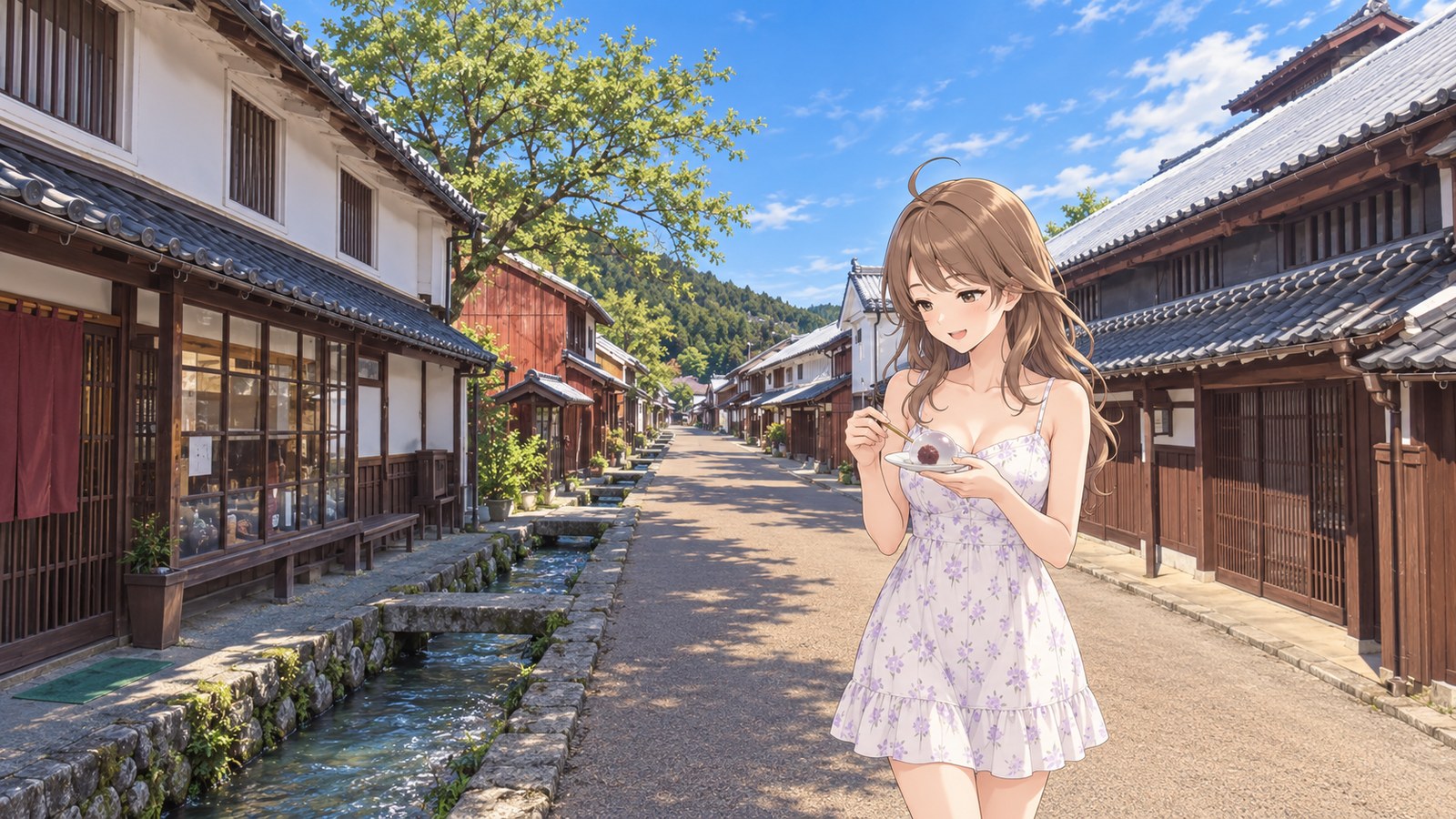
This time, early summer in late May. On a street with green trees in view, I’m tasting kuzu manju while looking at the townscape.
SummerAn early-summer afternoon in late May
Beside the water channel, a sweet that gives a little wobble
I walked from the car park to Kumagawa-juku’s street. Latticed townhouses lined it, and water flowed along the edge. I’d intended to look all the way to the distant roofs, but the first thing to catch my attention was the water sounding at my feet.
Stopping in my white floral dress, I looked at the kuzu manju on its plate. Bean paste showed through the translucent exterior; as I brought the pick closer, the sweet wobbled. I hadn’t tasted it yet, but that alone made me laugh.
A bite brought soft kuzu and the bean paste’s sweetness together in my mouth. As I enjoyed Kumagawa’s speciality, the townhouses continued before me. I was glad I’d included this kind of break in an early-summer afternoon detour.
Short stone slabs crossed the channel towards the houses. It felt different from looking at a big river: water passed right beside the places people lived. Once I finished eating, I wanted to photograph these little details too.
If I sent pictures to my driving friend, I’d choose one of the townscape and one of the sweet. She likes sweet things too, so planning a walk here together would probably be easy. It’s lovely to arrive by car, then take time enjoying a place on foot.
Looking at the roofs farther down the street, I wondered where to stop next. Simply walking forwards revealed small differences in window lattices and eaves. While the sweet’s flavour still lingered, I’d walk a little farther through the post town.
The story sections are fiction inspired by this location. For accurate information, please consult official tourism and information websites.
What I’d like to taste here
Kumagawa kuzu manju
Marushin in Kumagawa-juku features kuzu manju, kuzu mochi and other sweets made with Kumagawa kuzu. One bite brought the soft kuzu and sweet bean paste together, making me glad I’d chosen this break with a view of the townhouses.
Places I’d like to stop
A water channel beside the road
A traditional water channel runs beside Kumagawa-juku’s old road. I’d like to feel how close the townhouses and water are by walking there myself.
A post-town story beginning in 1589
Asano Nagamasa made Kumagawa a post town in 1589. I’d like today’s detour to take me through a town that prospered on the route between Wakasa and Kyoto.
Leave the car to walk the post town
Kumagawa-juku’s historic road
- Length of the townhouse-lined road
- About 1.1 km
- Beside the road
- A water channel beside the townhouses
Enter the street from the west entrance car park, then look at roofs, lattices and flowing water.
Wakasa’s history guide describes townhouses lining both sides of about 1.1 km of road. I’d like to stop as I walk, taking in the small differences between lattices and roofs.
More Spot Guides
If you enjoyed this story, you might like these places too. I've gone back to each of them in different seasons, again and again.