Takahashi City, Okayama Prefecture
Exploring Fukiya Furusato Village Walk among the red-painted lattice houses and make your own handkerchief
Fukiya, in Takahashi City, Okayama Prefecture, grew prosperous through bengara production. In late May, I wandered its historic streets, admired the former Fukiya Elementary School, then tried a hands-on activity using bengara paint. Make room for a bowl of soup curry at lunchtime, too.
This is the story of my late-May stroll and the bengara-painted handkerchief I made along the way. I’ll show you the fun of making something by hand to take home as a reminder of the town.
SpringLate May
After admiring the latticework, I made a handkerchief with bengara
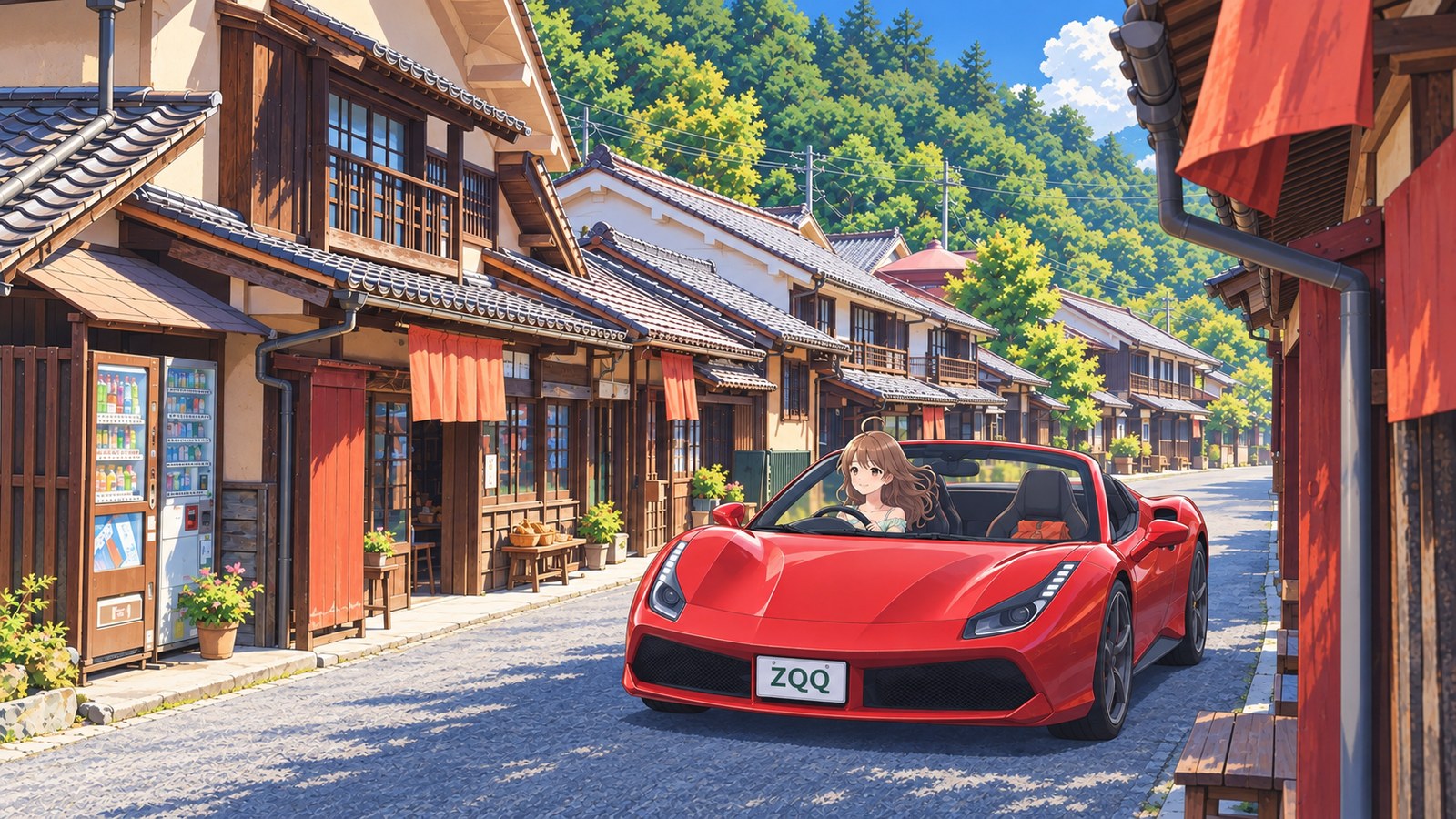
In late May, low eaves came into view on both sides as I left the mountain road and entered Fukiya’s streets. I wore an off-the-shoulder top and arrived in my red convertible with the roof down. Once I was in the village, I kept both hands on the wheel, taking it slowly and watching the road ahead. Getting close to all the little details of the houses was something to save for when I parked and went for a walk.
I parked at Shitamachi Car Park, then came back to take a closer look at the lattice on the houses I’d just passed. The wooden lattice was painted with bengara, with Sekishu roof tiles above it. It wasn’t just the color that caught my eye; I found myself studying the fine wooden patterns and the way the eaves overlapped. I’d seen the whole streetscape in photos, but on foot, even a single window could stop me in my tracks.
I learned that bengara made in Fukiya was used not only on buildings but also on ceramics and lacquerware. I’d thought it was just there to make the town look beautiful, so I was amazed to learn it had found its way into so many different things. As I looked at the houses, I wondered whether pigment shipped from here might still be found on vessels and buildings far away.
I tried making a handkerchief with bengara paint. I meant to keep the pattern simple, but soon I wanted to add a few more lines. Drawing them as straight as the lattice I’d just seen was harder than I expected. When I spread out the finished cloth, some of the lines were a little crooked. Somehow, they felt like a little signature of my own, so I kept looking at it again and again.
For lunch during my walk around town, I had bone-in chicken soup curry. As I dipped each spoonful of rice into the soup, the chicken’s savory flavor filled my mouth. Maybe because I’d been so absorbed in the scenery and making my handkerchief, a warm lunch felt especially welcome. Knowing I could take my handkerchief home made me want to check my bag for it even while I was eating.
After admiring the wooden schoolhouse at the former Fukiya Elementary School, I headed back to the car. The town I’d just walked through must have been here when children came to learn, too. The handkerchief in my bag was another memory from my day in town. Once I was back in the car, I kept my eyes on the road and both hands on the wheel as I eased onto the road home. I was already looking forward to unfolding the handkerchief when I got home.
The story sections are fiction inspired by this location. For accurate information, please consult official tourism and information websites.
Local specialty
Fukiya bone-in chicken soup curry
Soup Curry Shop Tsukushi in Fukiya serves bone-in chicken soup curry. I stopped for a warm bowl of soup curry and rice during my walk through town. As I savored the rich chicken flavor, I found myself thinking back to making my handkerchief—and taking my time over lunch.
Highlights
A town built on bengara
Fukiya was shaped by merchants who made their fortunes from bengara production and roha, the raw material used to make it. The streets of Sekishu-tiled houses with bengara-painted latticework have been designated a Japan Heritage site under the title “Birthplace of Japan Red.” After seeing the lattice up close and learning how far the pigment had traveled beyond the town, I wanted to take another look.
A wooden schoolhouse in use until 2012
The former Fukiya Elementary School continued to serve as a school until 2012. After preservation work, it reopened as a museum in 2022. Looking at the wooden schoolhouse made me imagine the walk home for children who’d studied here. It’s a place worth visiting alongside the historic streets.
Turn the bengara you admired into something of your own
In Fukiya, you can make a handkerchief or bag using bengara paint. After looking closely at the latticework, I made a handkerchief of my own. Even the slightly crooked lines feel worth keeping. I discovered how much fun it is to make something with my own hands while traveling.
Road details
Streets in Fukiya’s historic district
This street is lined with merchant houses featuring bengara-painted latticework. I drove slowly down it in my red car, then parked at Shitamachi Car Park and explored on foot. I got a close look at the fine latticework on the windows and found myself stopping again at one of the houses I’d already passed.
I didn’t just admire the streets from the car; I parked at Shitamachi Car Park and explored on foot. Getting close to the window lattice made me want to double back to houses I’d just passed.
More Spot Guides
If you enjoyed this story, you might like these places too. I've gone back to each of them in different seasons, again and again.