Kurayoshi, Tottori Prefecture
Exploring Kurayoshi Shirakabe Dozo-gun A stroll along the Tamagawa and a skewer of Utsubuki Koen Dango
Come wander the streets beside the Tamagawa in Kurayoshi, Tottori Prefecture, where buildings from the Edo and Meiji periods still remain. On my June visit, I lingered in the evening light with a skewer of Utsubuki Koen Dango, savoring the dumplings coated in white bean, azuki and matcha pastes. I loved taking in the storehouses and little bridges up close.
This is my story of savoring dango by the Tamagawa on a June evening. Come trace that slow stroll with me, past the little bridges that caught my eye.
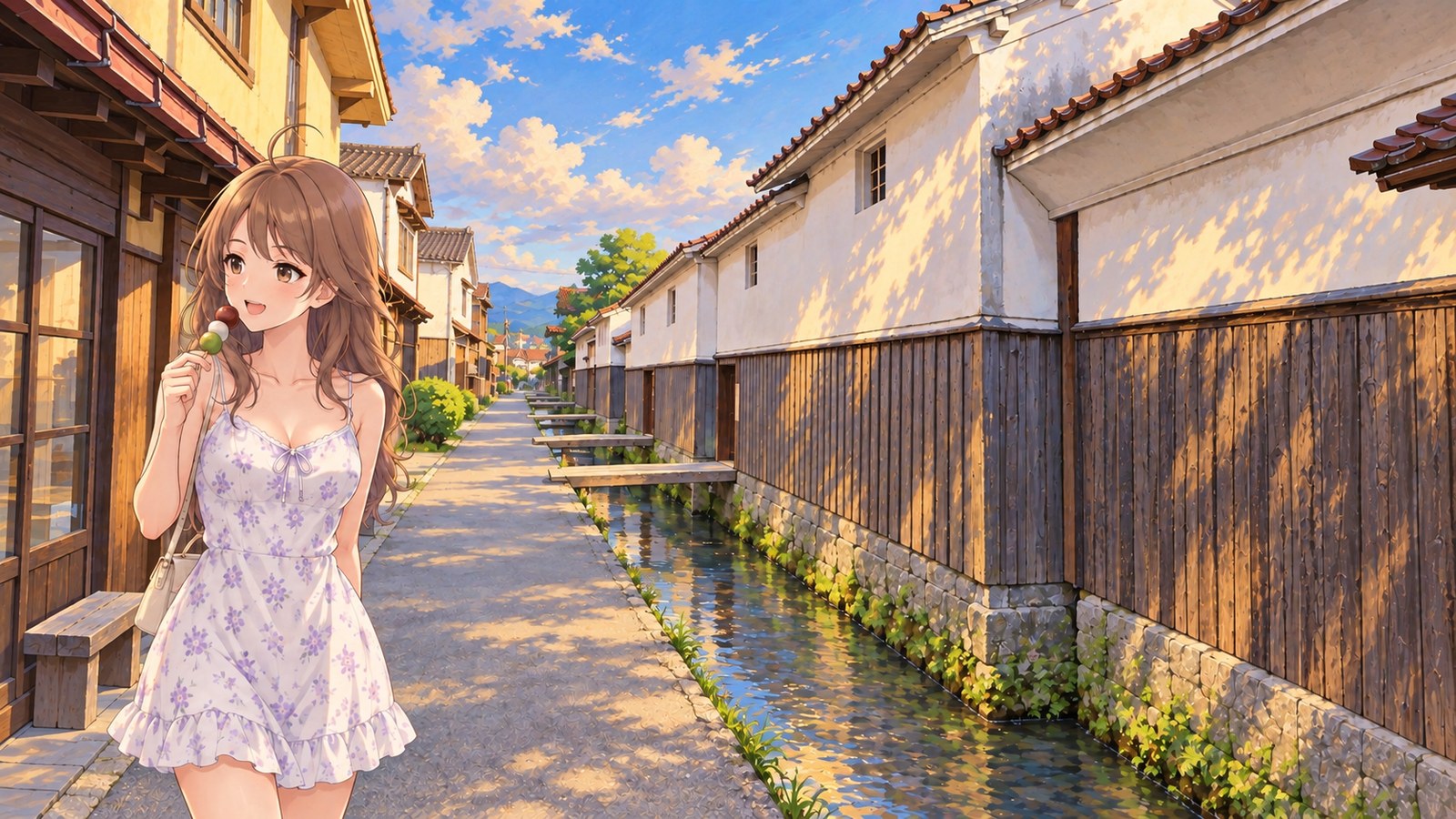
SummerA June evening
Savoring dango beside a little bridge on the Tamagawa
As I wandered along the Tamagawa on a June evening, tree shadows stretched across the white storehouse walls. On the left were the shopfronts; on the right, a little stream and, beyond it, a row of storehouses. Wearing a floral spaghetti-strap dress, I made my way slowly down the lane between them. The town looked lovely from a distance, but I was glad I could wander so close and take it all in on foot.
Several low stone bridges cross the Tamagawa, each leading to a storehouse doorway. I’d expected big bridges for visitors, so I was surprised by how short these were. Each one is just long enough to reach the storehouses across the stream. With the water and doorways so close together, I found myself imagining the daily rhythm of life here.
I stopped on the shop side of the street for a bite of Utsubuki Koen Dango. The little skewer held dumplings coated in white bean, matcha and azuki pastes. I tried the white one first, then took little bites of the matcha one. It was fun tasting a new flavor with each dumpling; before I knew it, I was paying more attention to the dango than the view.
Nibbling as I looked around town gave me the perfect excuse to pause every so often. If I’d hurried through, I might have missed the wooden boards beneath the windows and the doorway across the bridge. When I bit into the last azuki dumpling, its sweetness filled my mouth, and I wished that last bite could last a little longer. I glanced at the empty skewer, then looked back at the storehouses.
I’d heard the town took shape as a castle town around Utsubuki Castle during the Muromachi period. Most of the storehouses standing today date from the Edo and Meiji periods, though buildings from other eras remain too. I’d been looking at all the old houses as if they were alike, but each had been built at a different time and put to a different use. That made walking beneath the unbroken line of eaves even more enjoyable.
By the time I was ready to leave, I was thinking less about the street ahead and more about the little bridge where I’d stopped earlier. I doubled back for another look, and the shadows on the white walls had grown longer since I arrived. I ate dango, stopped to admire the bridge, and walked down the same street again. Taking my time like that felt just right here. Next time, maybe I’ll remember to take a photo before I finish the skewer.
The story sections are fiction inspired by this location. For accurate information, please consult official tourism and information websites.
Local specialty
Utsubuki Koen Dango
Utsubuki Koen Dango are three-colored skewered rice dumplings made with locally produced glutinous rice flour, with each dumpling coated in one of three pastes: tebo white bean paste, azuki bean paste or matcha paste. You can also buy them at the Ishitani Seikado store in Akagawara, within the Shirakabe Dozo-gun district. I loved savoring each flavor in turn; by the time I finished the last azuki dumpling, I was already wishing I had another skewer.
Highlights
White walls and Sekishu roof tiles along the Tamagawa
Many of the buildings in Kurayoshi Shirakabe Dozo-gun date from the Edo and Meiji periods, and the area is designated a National Important Preservation District for Groups of Traditional Buildings. The white walls and red Sekishu roof tiles along the Tamagawa are among the town’s main draws. I loved seeing the little bridges and doorways up close as I walked around.
A streetscape shaped by its castle-town past
This area first took shape as the castle town of Utsubuki Castle during the Muromachi period. In the Edo period, samurai residences were built around a jin’ya, a local administrative compound. Buildings from the Edo, Meiji, Taishō and Shōwa periods still remain. Knowing that the street I walked held so many different eras made me want to stop and look more closely at each house.
Route details
Street along the Tamagawa
This is a lovely street for strolling past white-walled storehouses and roofs of red Sekishu tiles. I stopped for dango and took in the little bridges over the Tamagawa. When I came back along the same street, the shadows on the white walls had shifted, and I wanted to keep wandering through town as the evening wore on.
Walking along the Tamagawa, I loved comparing the little bridges and storehouses. Even while I was eating dango, I kept getting drawn back to the view; I wanted to stretch my evening stroll a little longer.
More Spot Guides
If you enjoyed this story, you might like these places too. I've gone back to each of them in different seasons, again and again.